


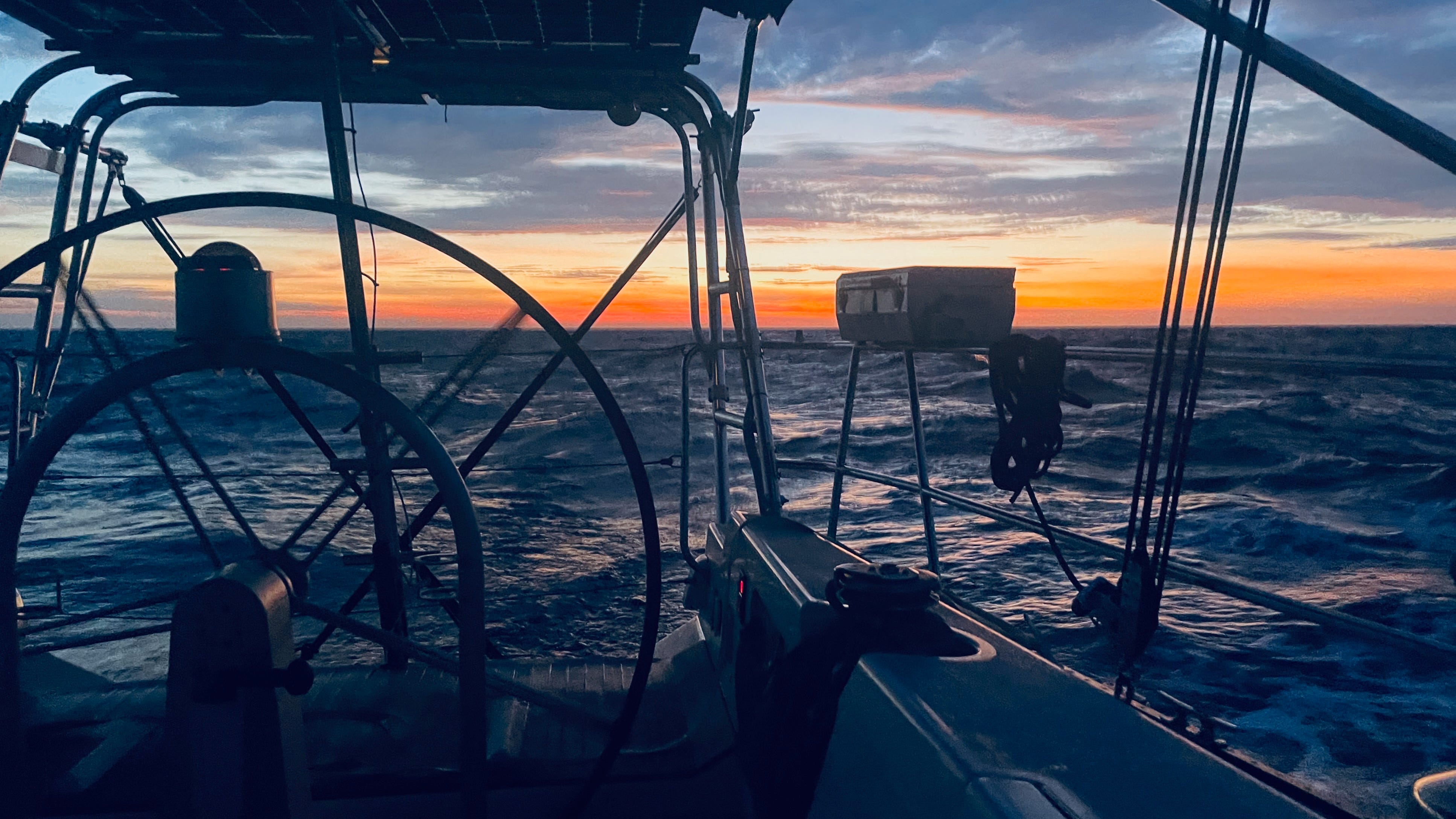
A day out of Grenada, after four windless days at sea, Peter tells me we’re running out of fuel, and can’t reach our destination under motor. We had left for Grenada with a full tank, and additional jerry cans of diesel, more than enough given our normal fuel consumption and the distance to travel.
Hearing this news left a knot in my stomach. I wasn’t sure what it all meant exactly. There was very little wind which meant sailing against the current would end up taking who knows how long as the current could push us back? Could this mean when the trade winds came back that we would get caught battling big seas the rest of the way there? Doing so would be rough on our bodies and increase the chances of something breaking on our boat.
Before we set off on this challenging passage to Grenada, we first had to sail to Curaçao which was the next island east of Aruba and then to Bonaire. The ABC islands (Aruba, Bonaire and Curaçao) are three Dutch islands located in the Southern Caribbean sea north of Venezuela. While we were very much looking forward to seeing these islands, we were also slightly apprehensive, since the sea can be a cruel mistress. We did our best to find her in a favorable mood!
After spending years in Central America and the Latin American culture, dropping into these Dutch islands, all part of the Kingdom of the Netherlands, provided some very welcome changes. We loved having a bigger variety of food in the grocery stores with a greater selection of European wine and other products that we’ve become accustomed to having in the US.
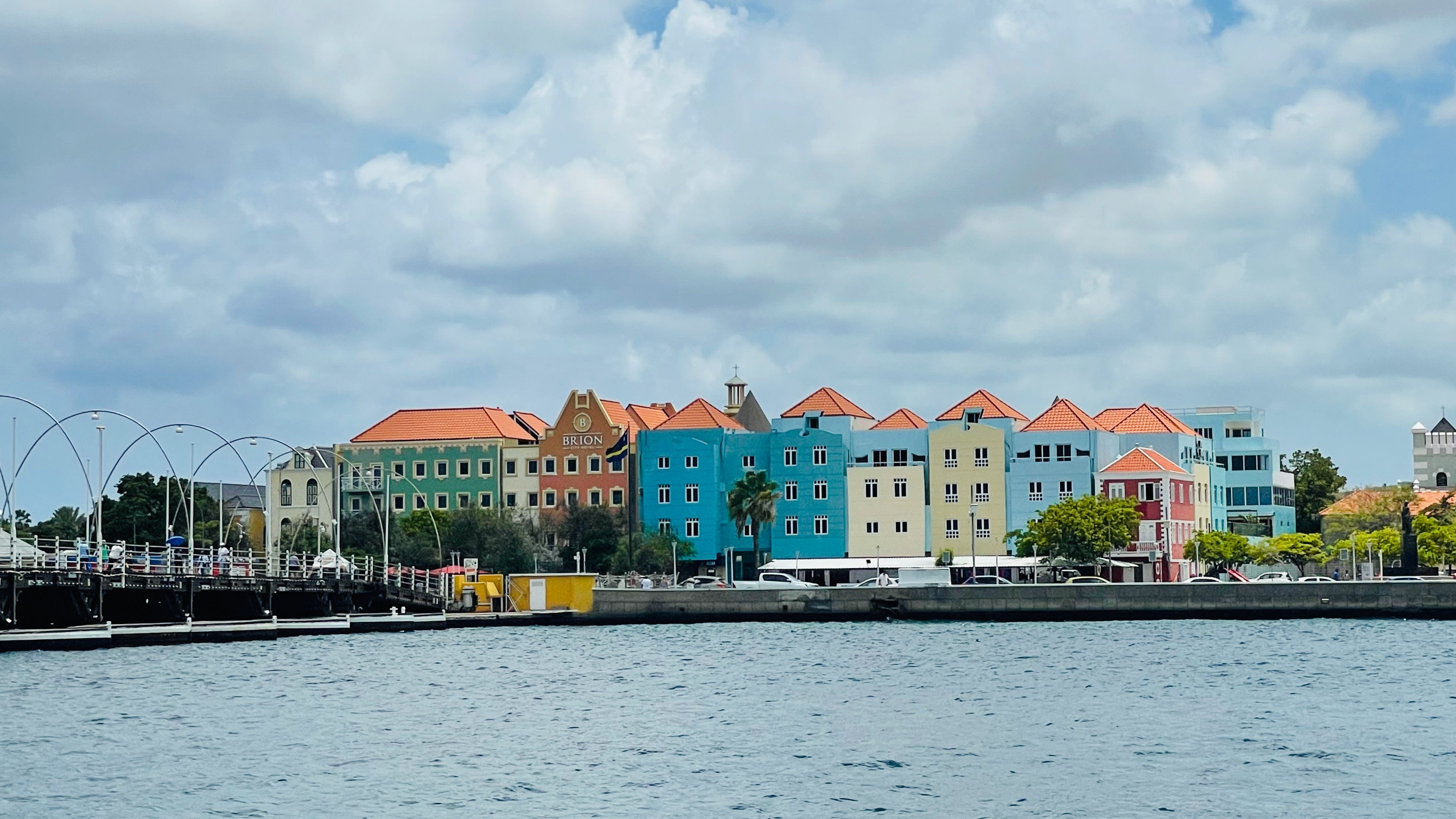
We enjoyed all three of these islands for different reasons. Aruba had more of an energetic, resort and tourist vibe while Curaçao was more laid back with a richer Dutch culture, colorful buildings, and an elaborate pedestrian bridge that opened for ships along its waterfront. Curaçao also has a large community of sailors who anchor in Spanish Waters, a bay large and protected for many boats to safely wait out hurricanes. We loved watching all the wing foilers zipping past our boat in this bay. All of these islands are more dry and arid compared to Central America with constant trade winds blowing 15 to 25 knots all day, perfect conditions for all kinds of water sports.
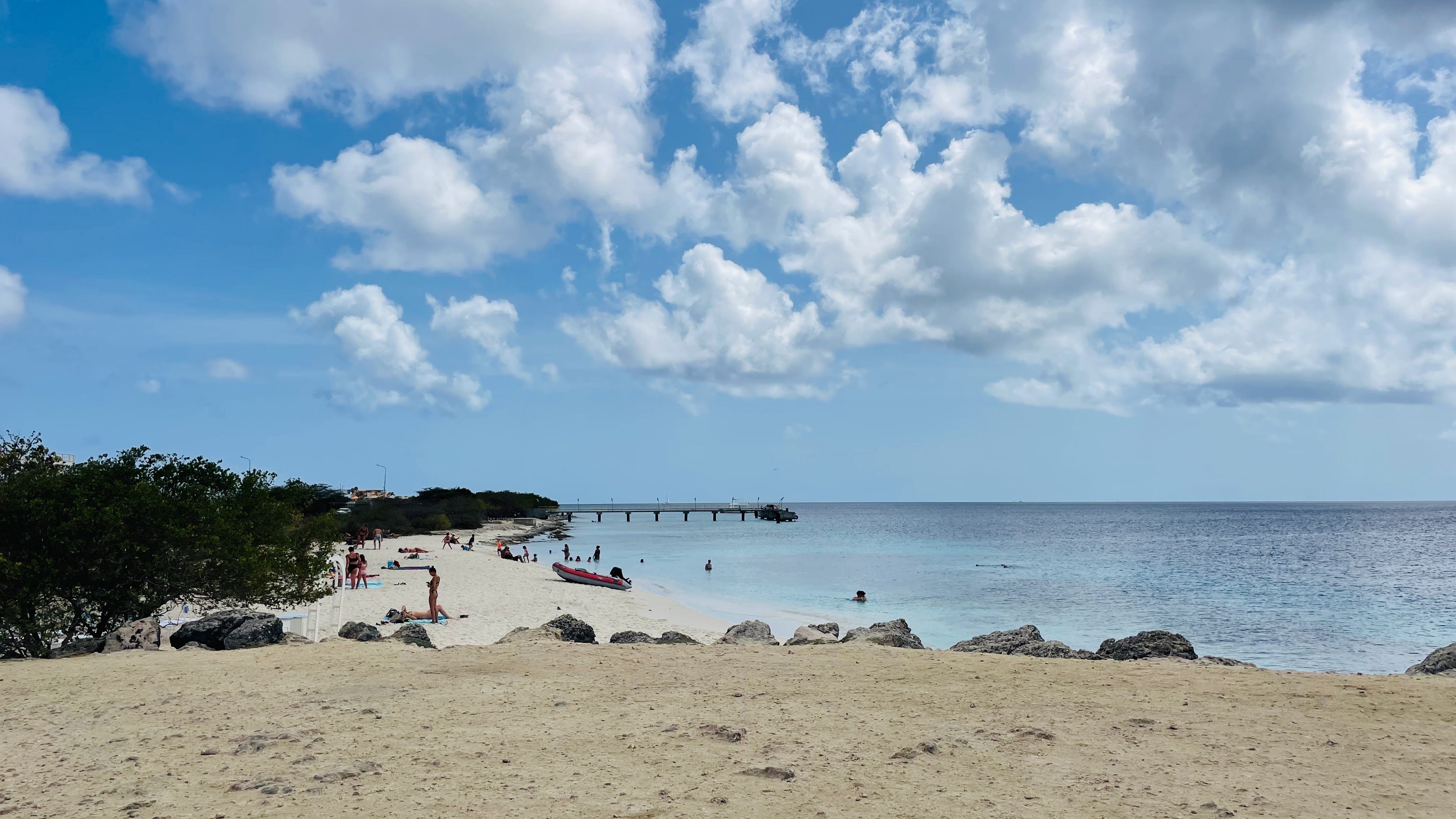
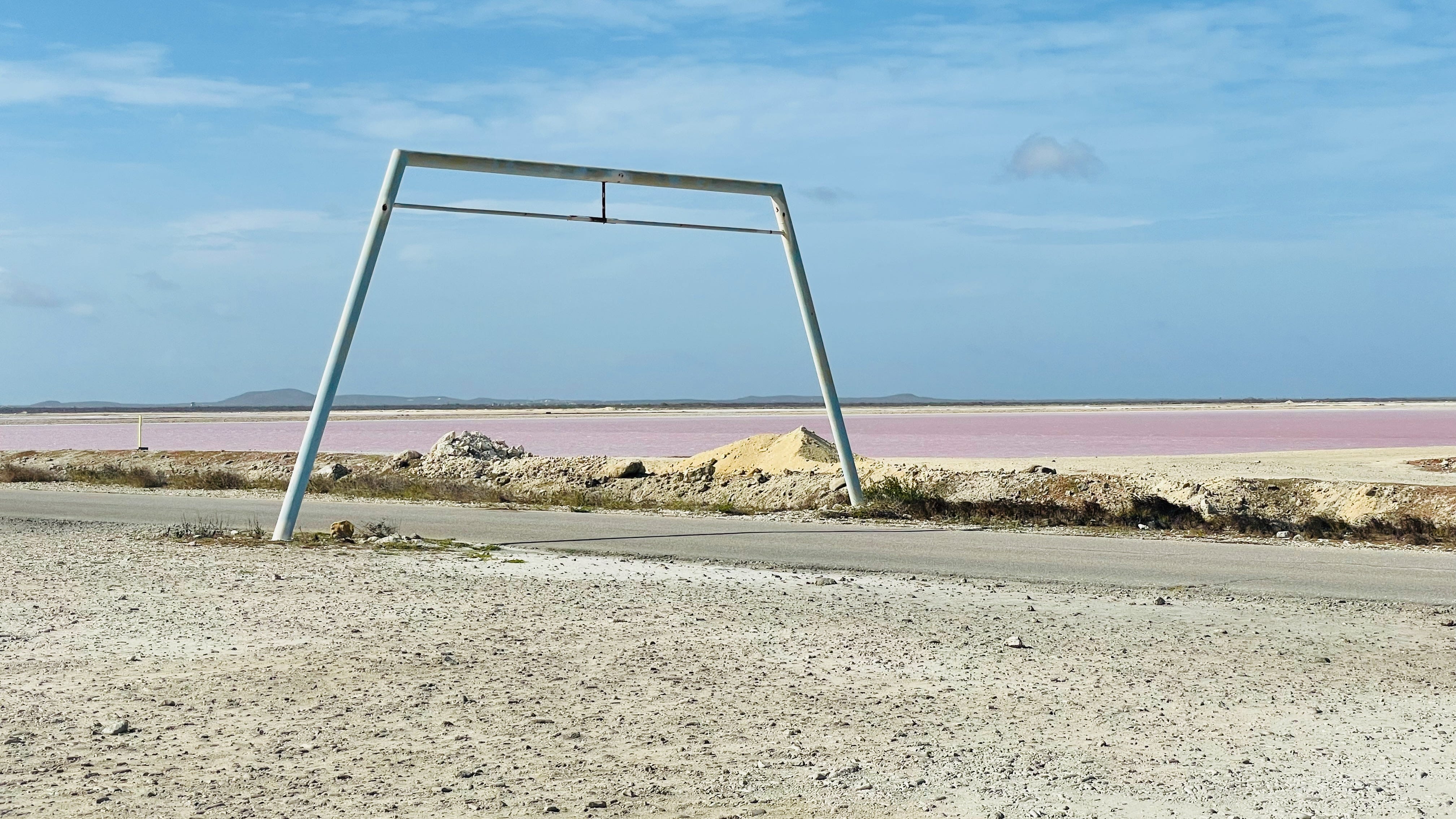
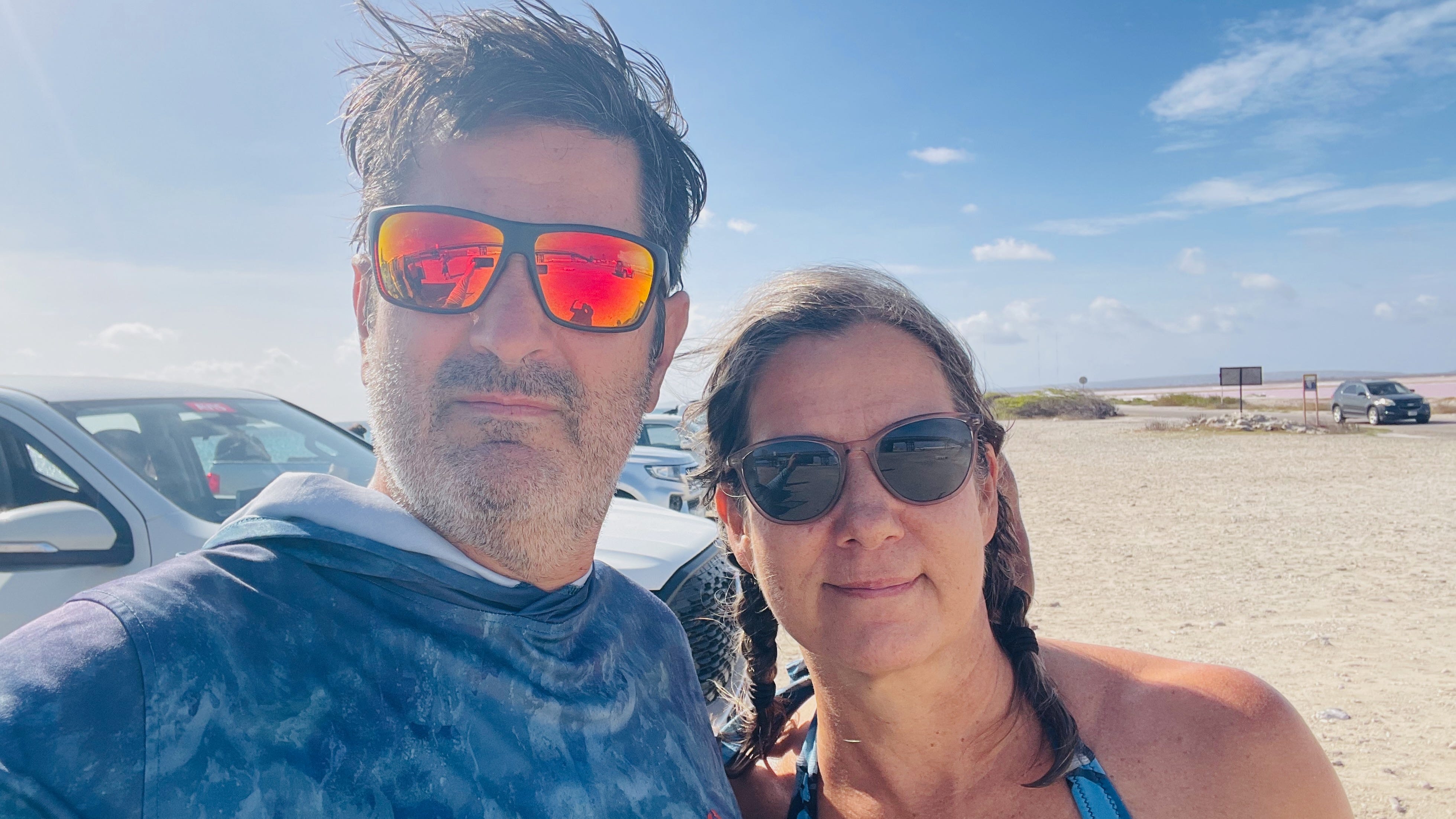
Bonaire is the smallest island of the three, with the biggest nature vibe. The water is a clear and brilliant turquoise, with a protected marine park that encompasses the entire coastline of the island, with a very healthy ecosystem. Since there is no spear fishing allowed, or fishing generally, we saw some of the largest parrotfish we’ve seen yet. Bonaire is focused on keeping their waters healthy and vibrant since most of their visitors come to the island to dive and snorkel. The water had lots of fish and animals living along the reef close to shore for us to explore straight off our dinghy. On land there was a sanctuary of pink flamingos that we could see roaming freely in the distance and also some large, natural pink salt flats.
In the below video you can see some of the underwater sea life and in the next video, the water from above.
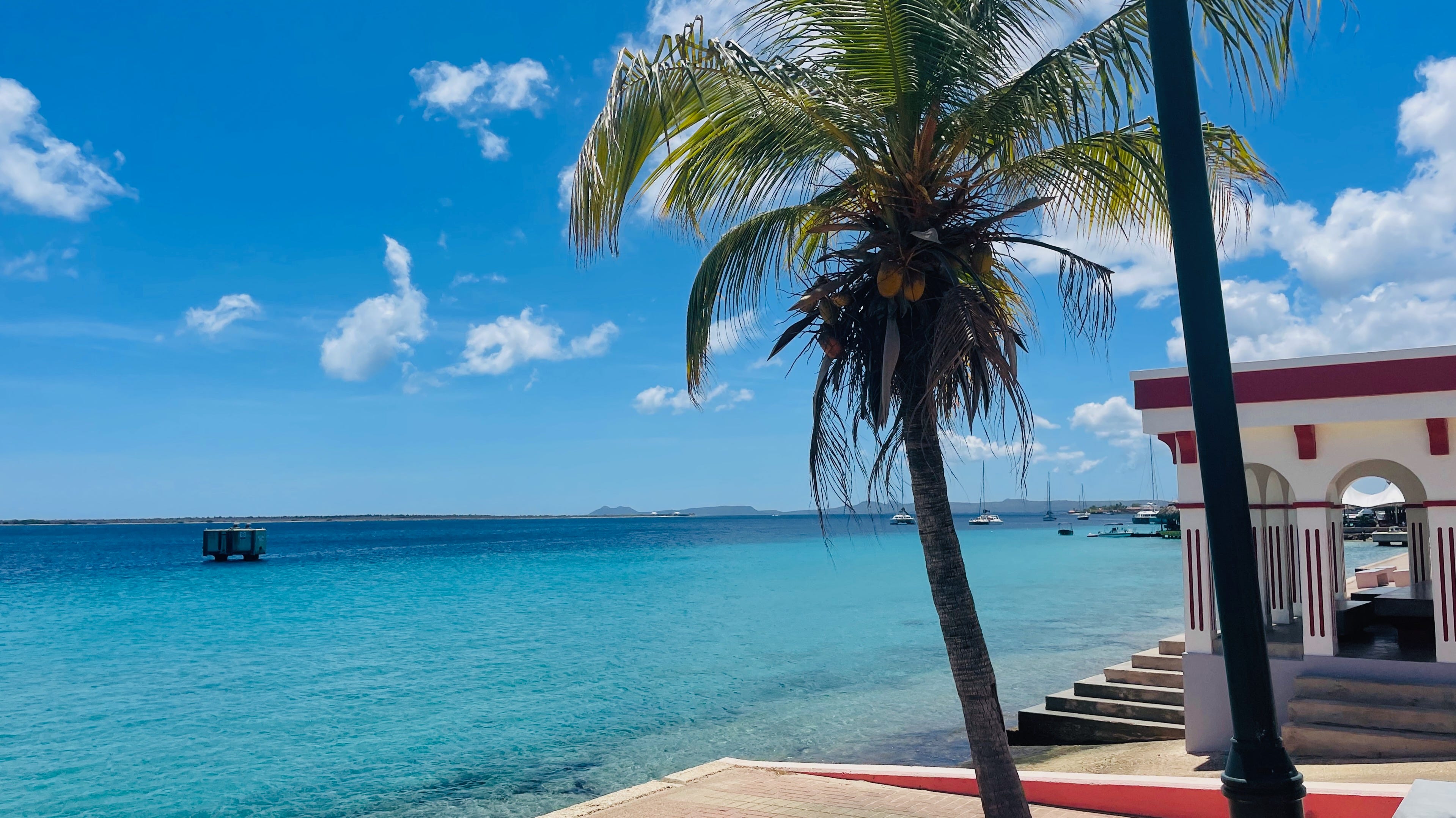
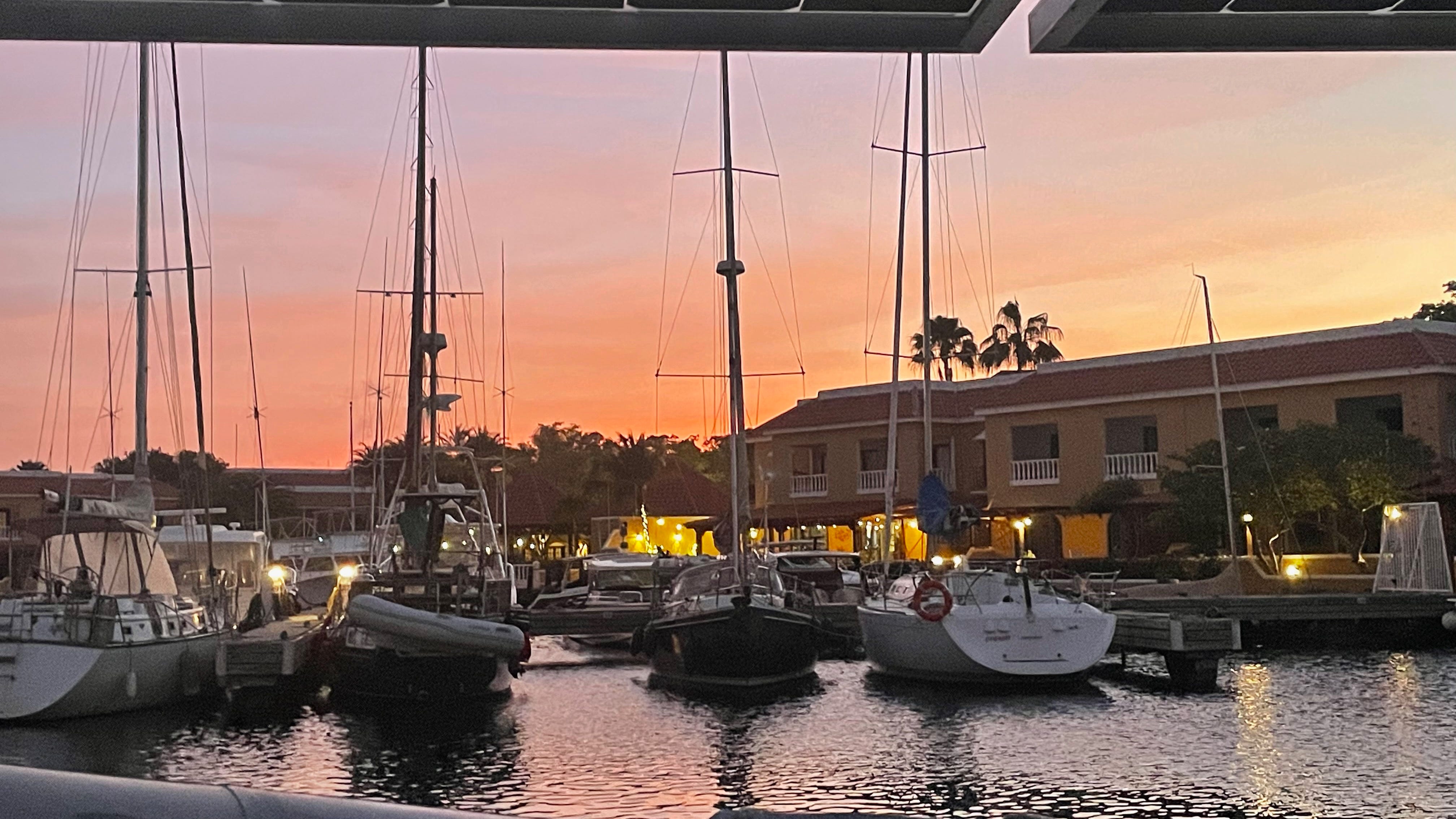
The passages from Aruba to Curaçao and then to Bonaire are fairly short, with each island protecting its approach by breaking the waves and flattening the seas somewhat, making it relatively easy to find weather windows suitable for the shorter jumps. Even so, we spent a month, more or less, on each island before moving on. Waiting on a weather window for the longer passage from Bonaire to Grenada, though, gave us more than enough time to explore the small island before we could leave.
The passage from Bonaire to Grenada is nearly 390 nautical miles. We were expecting it to take up to five days which would be our longest offshore passage to date. We planned to motor sail, since we were looking for a window with very low waves, which means nearly no wind. The passage is lengthened additionally by the Guiana current, running at speeds approaching three knots against us on this stretch, which would slow our speed over ground by over forty percent.
Our friends had other travel commitments so we were planning to do this passage on our own. We were a little nervous about sailing past Venezuela, due to past reports of piracy along the coast. Usually, these reports boil down to incidents of fishermen approaching boats to ask for food, fuel, or just a cold drink, so we knew the chances of real piracy were low. Even so, we planned to stay well offshore, some 125 nautical miles north of Venezuela.
We filled our fuel tank and the extra ten jerry cans to make sure we had enough fuel to motor all the way to Grenada. The current is so strong that you never know how long it’s going to take. So we stored what we thought was accurate and hoped for the best.
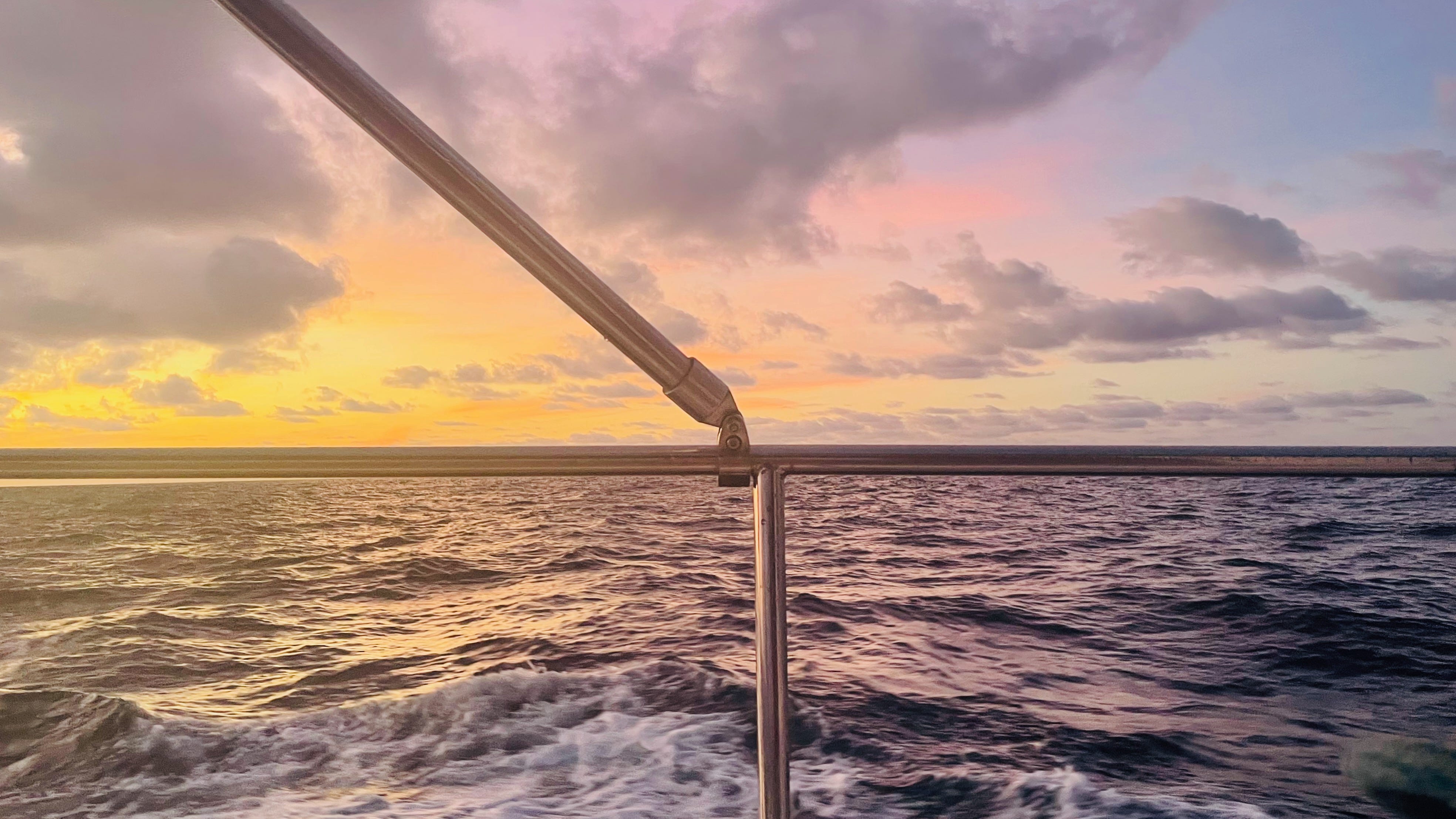
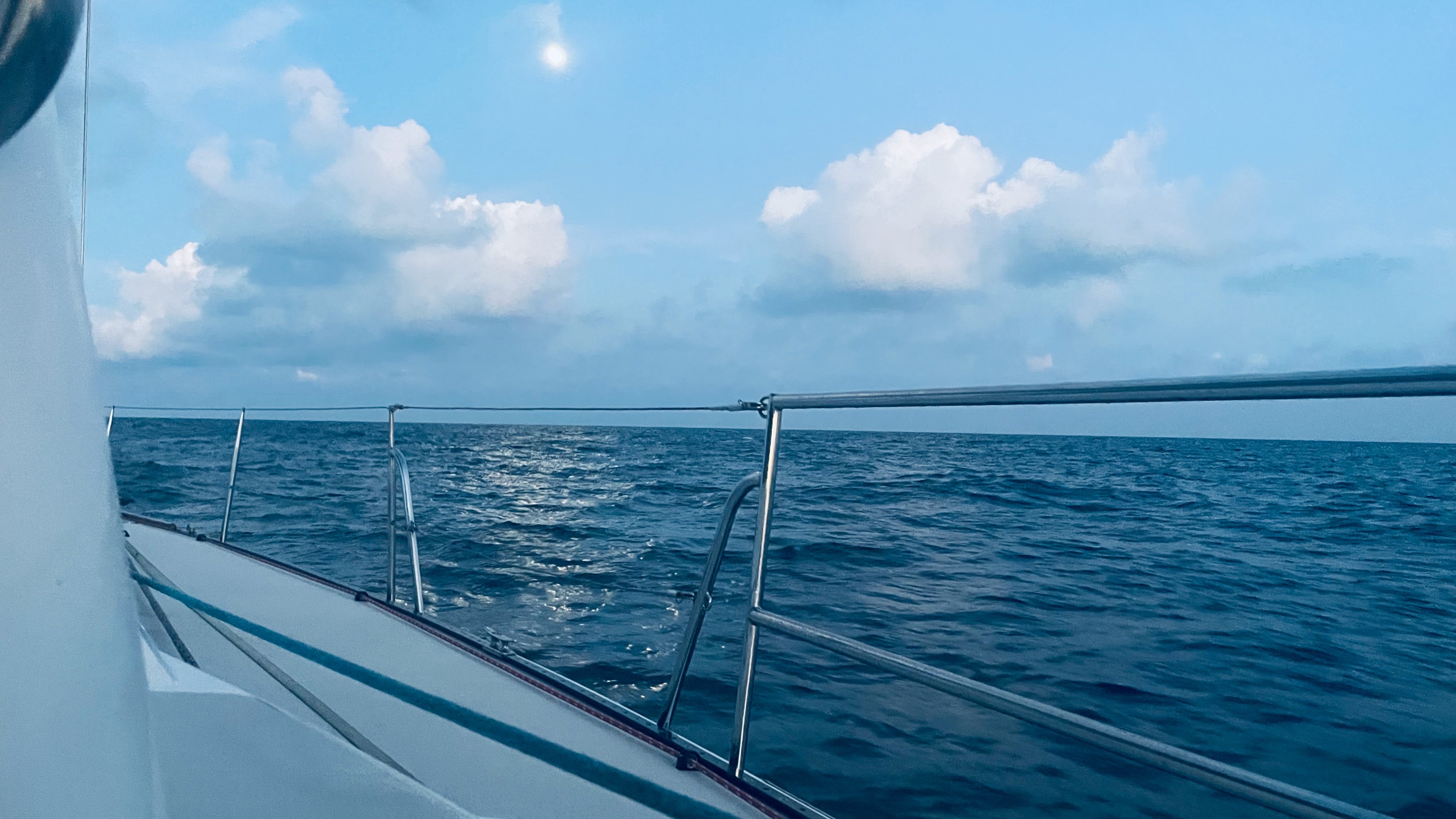
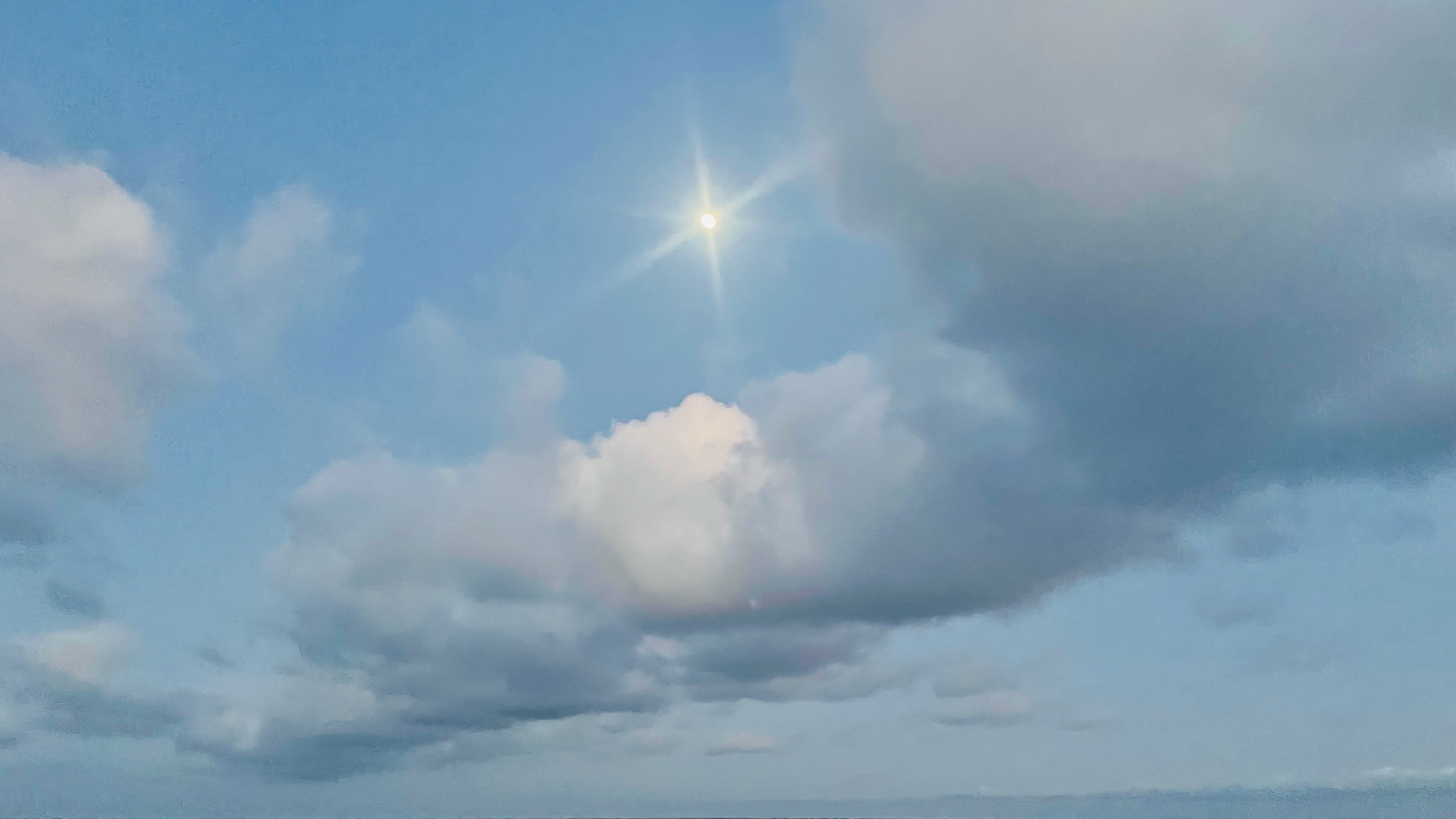
We had beautiful weather and a waxing full moon with us the whole way. We couldn’t have asked for a better weather window. The current was unexpectedly strong however, running at times up to three knots against us, often 2.7, and rarely dropping below 2.5. All we could do was keep our speed through the water up, and wait.
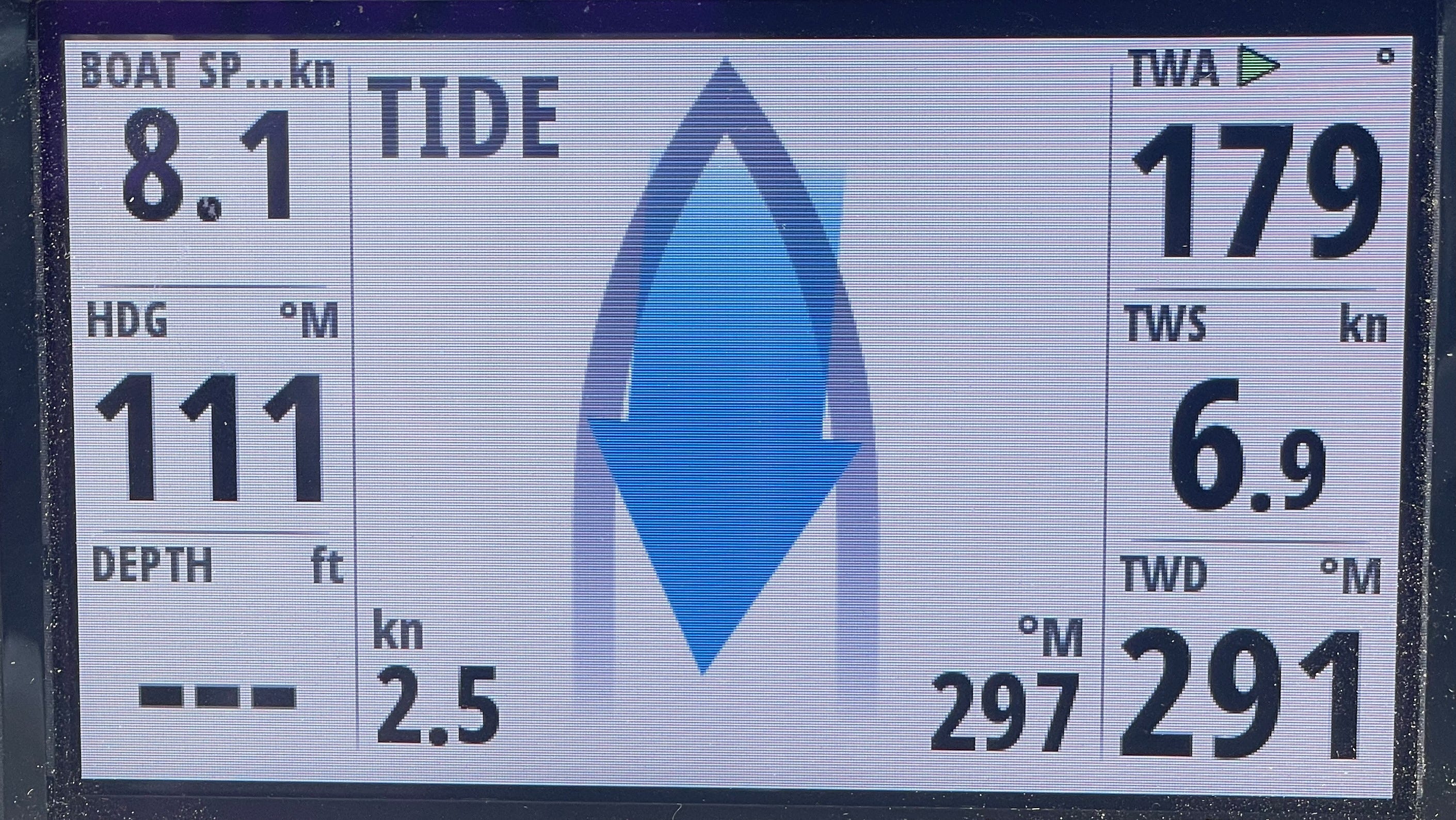
Which brings us back to Peter sharing with me that he didn’t think we had enough fuel to get us all the way there. He was doing the math over and over as the days passed, and we got closer to our destination, but we just weren’t going to make it. Pushing into the current was burning through our fuel much faster than we anticipated.
Hearing this news of course made me worry but after so much time and so many miles sailing into the unknown, my gut sensed it would work out one way or another. We were in touch with our friends Kyle and Leah who were simultaneously sailing down from Guadaloupe to Grenada. They were expected to be there a day or so after us. We shared our current state of affairs and Kyle said if it came down to us needing fuel to get into port, he would sail out of his way to bring us some. It was a very generous and kind offer and hearing that was enough to calm my nerves.
As we got closer, we were also approaching the end of our windless weather window, and the wind picked up enough for us to sail, but it didn’t raise the seas too much. How fortunate! We put out full sails and tacked away from Grenada, which sounds counter intuitive, but that is how we would eventually get the right angle to arrive at Grenada rather than sailing past it into the Atlantic Ocean. Since we were only depending on the wind, we couldn’t take the straight line any more which also meant it would take us longer than the 5 days we were planning.
Once we turned the engine off after so many days of it dominating our senses, we could feel the natural rhythm of the boat’s movement on the waves that you see in the above video. Our experience became so much more easeful that we stopped caring how long it would take us to arrive. It’s amazing what nature can do to calm the nervous system.
The night was gorgeous with the full moon on the water. I was mesmerized by the light’s movement against the waves. It was like liquid silver pouring over dark watery shadows. I sat there witnessing this show for hours and decided to let Peter sleep while nature took its course.
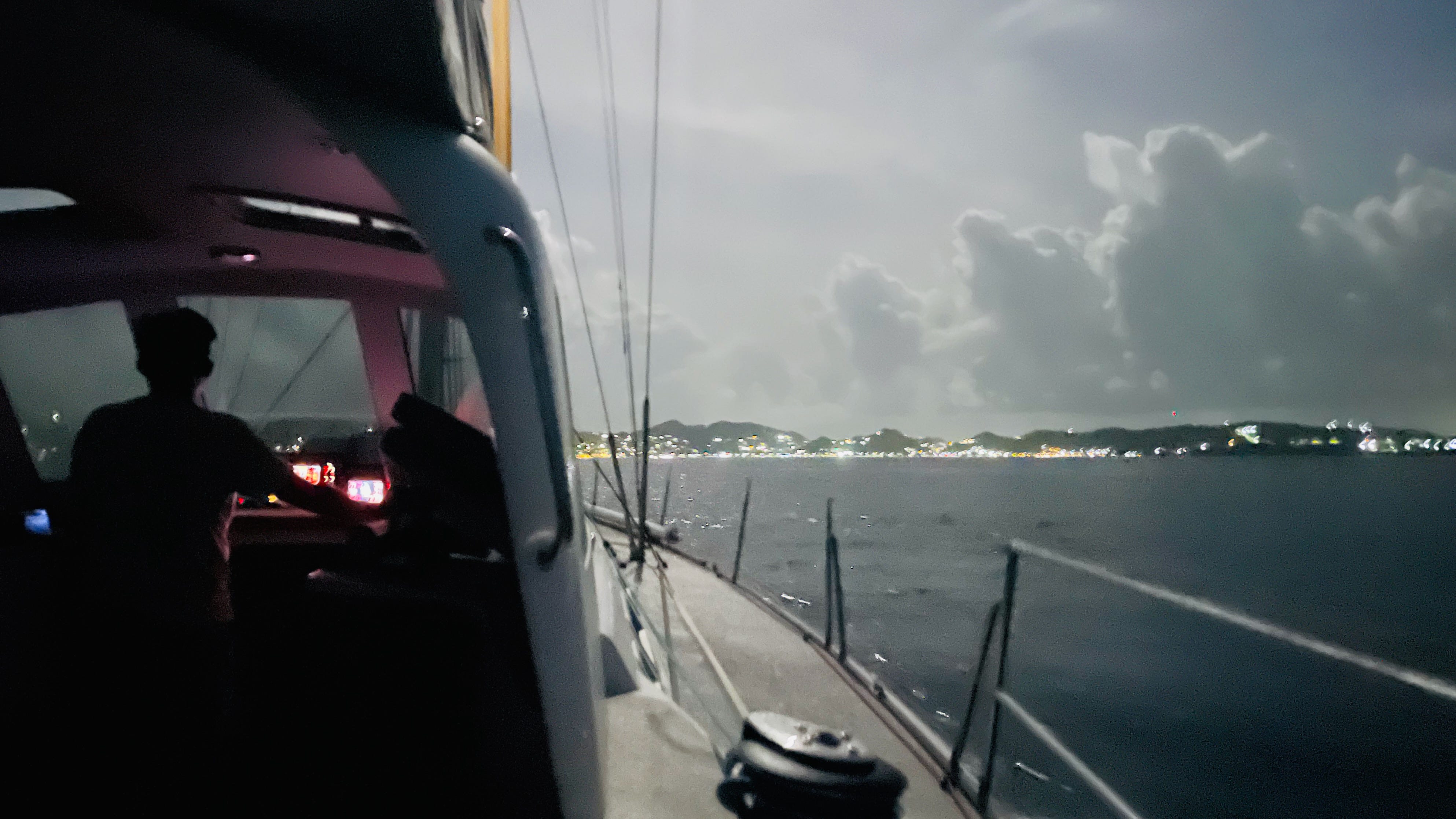
When we were almost to port, we held our breath because we needed to use our engine and have enough fuel to get us to the anchorage. Once we got out of the bigger waves, we realized that it was the rolling of the boat that made the fuel in the nearly empty tank slosh away from pickup, causing the engine to suck air. Now that we were approaching the island, in the flat calm of its lee, the gauge was steady a bit under a quarter of a tank. We had enough to get us to port and to find a spot to anchor. We each let out a sigh of relief after almost a week at sea.
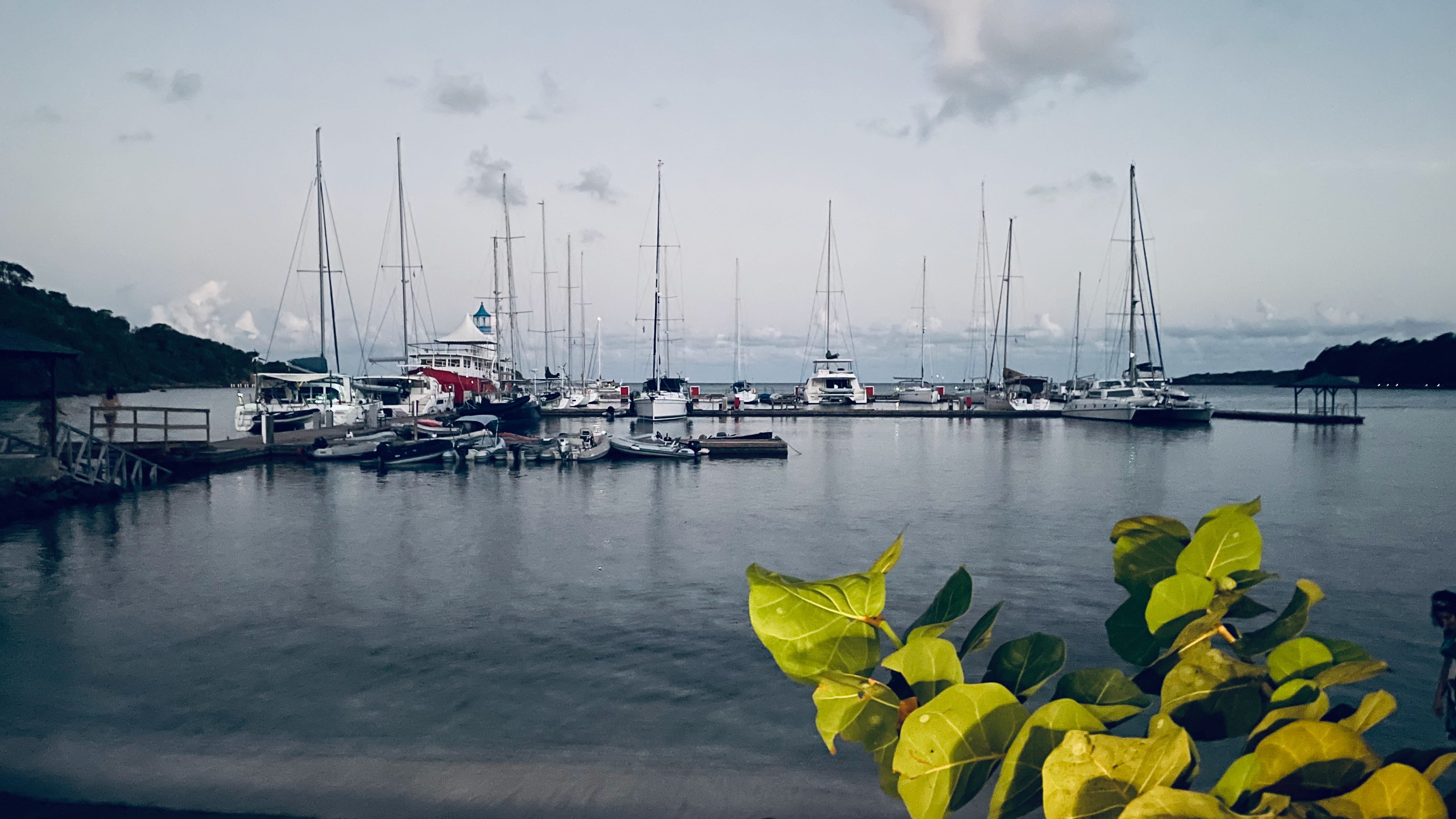
The very next morning we went directly to the fuel dock to fill up our tank before heading into the marina. We were looking forward to finally delivering our new mainsail to North Sails who could do the work in Grenada to custom fit it to our boom and rig. We reached our destination and rested on land for a day, which was enough time to feel more grounded and catch our breath.
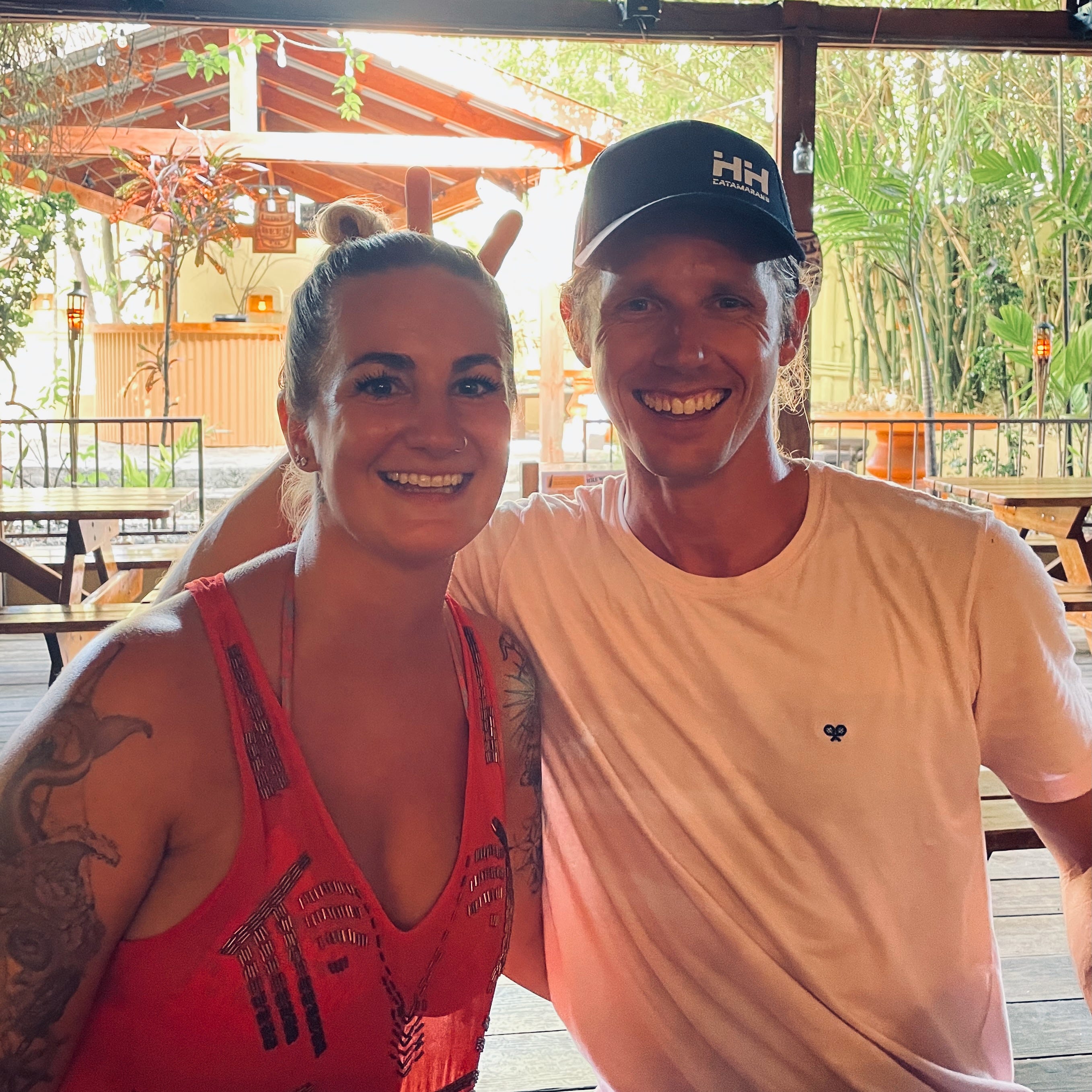
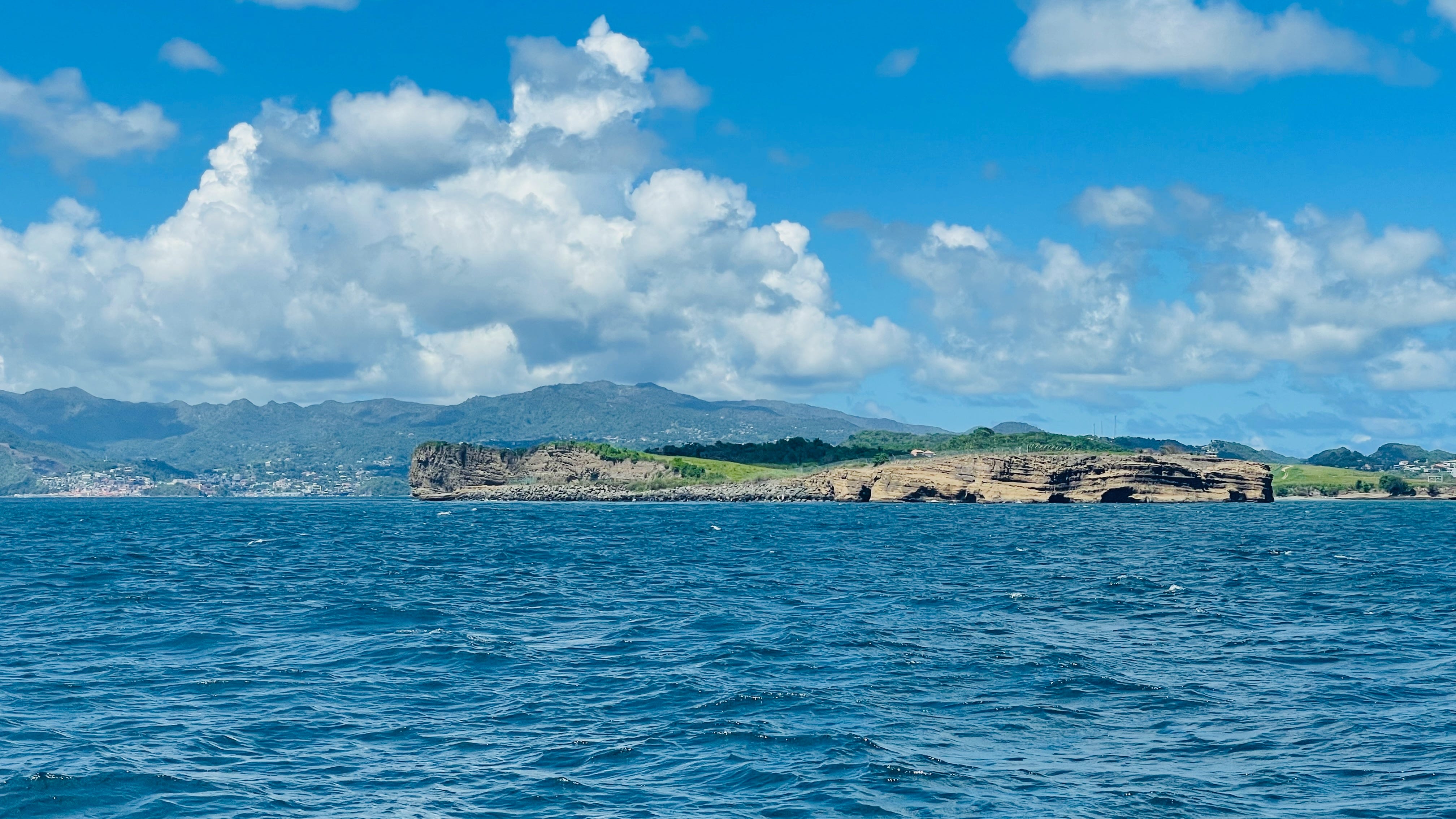
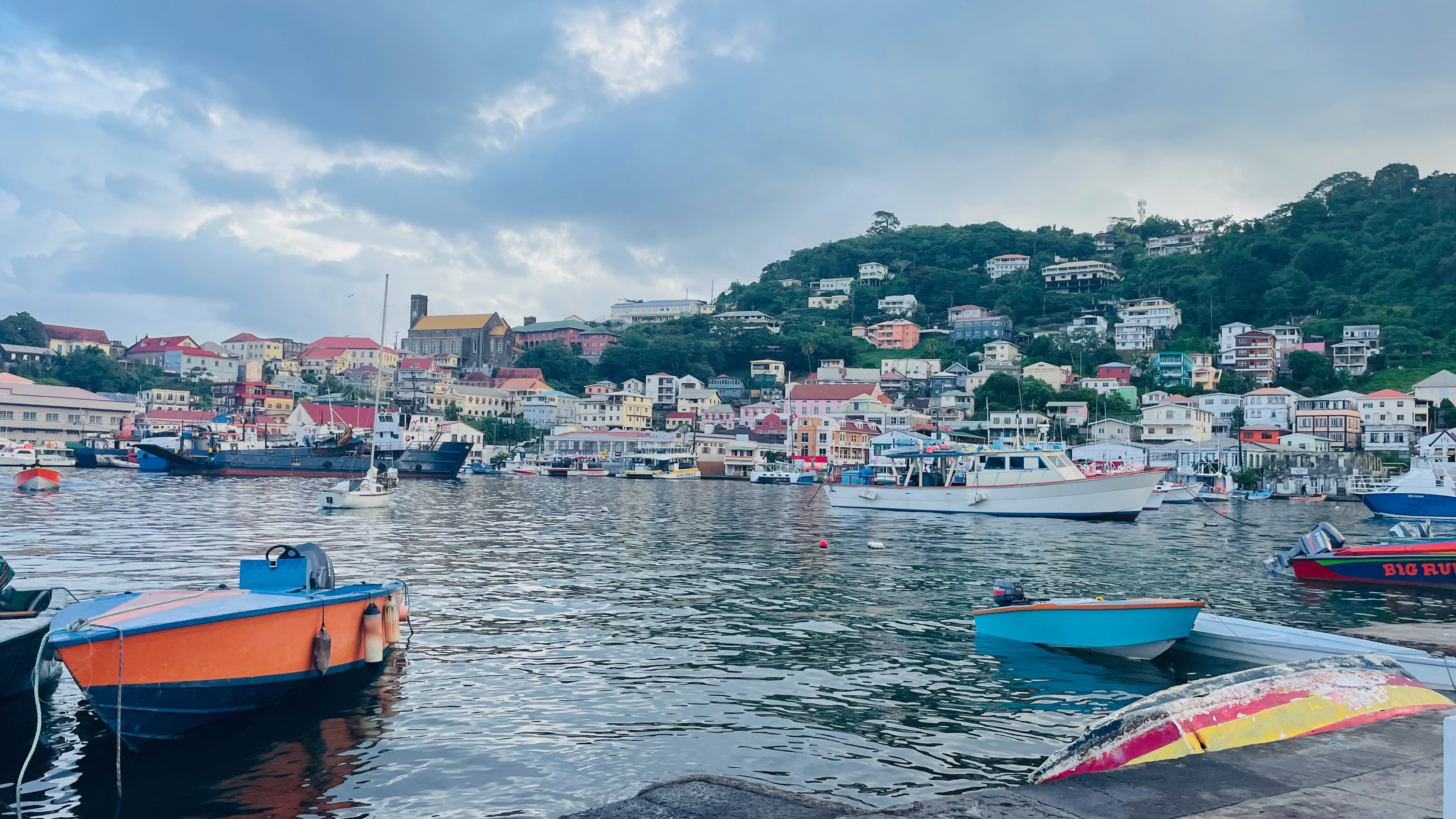
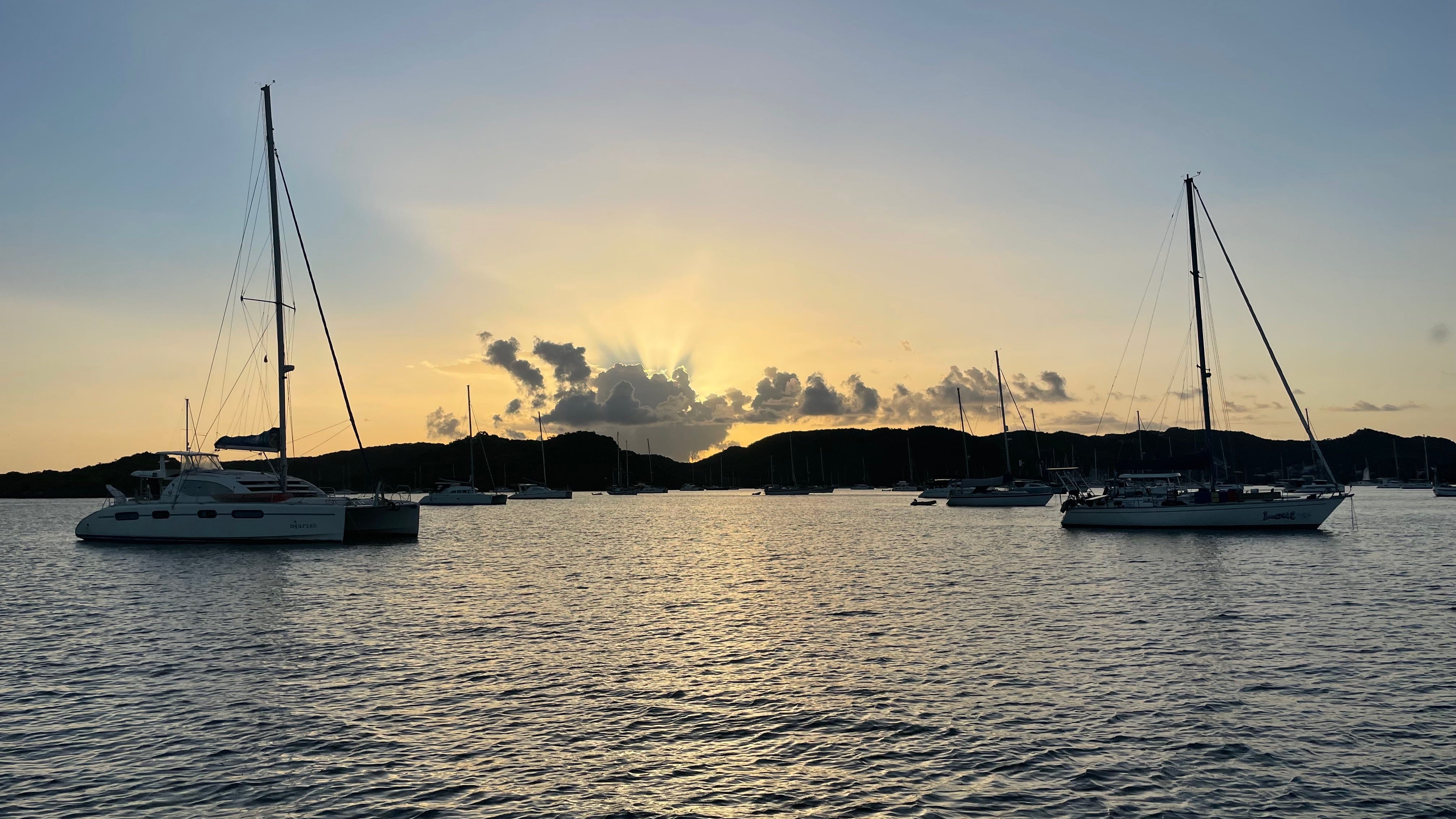
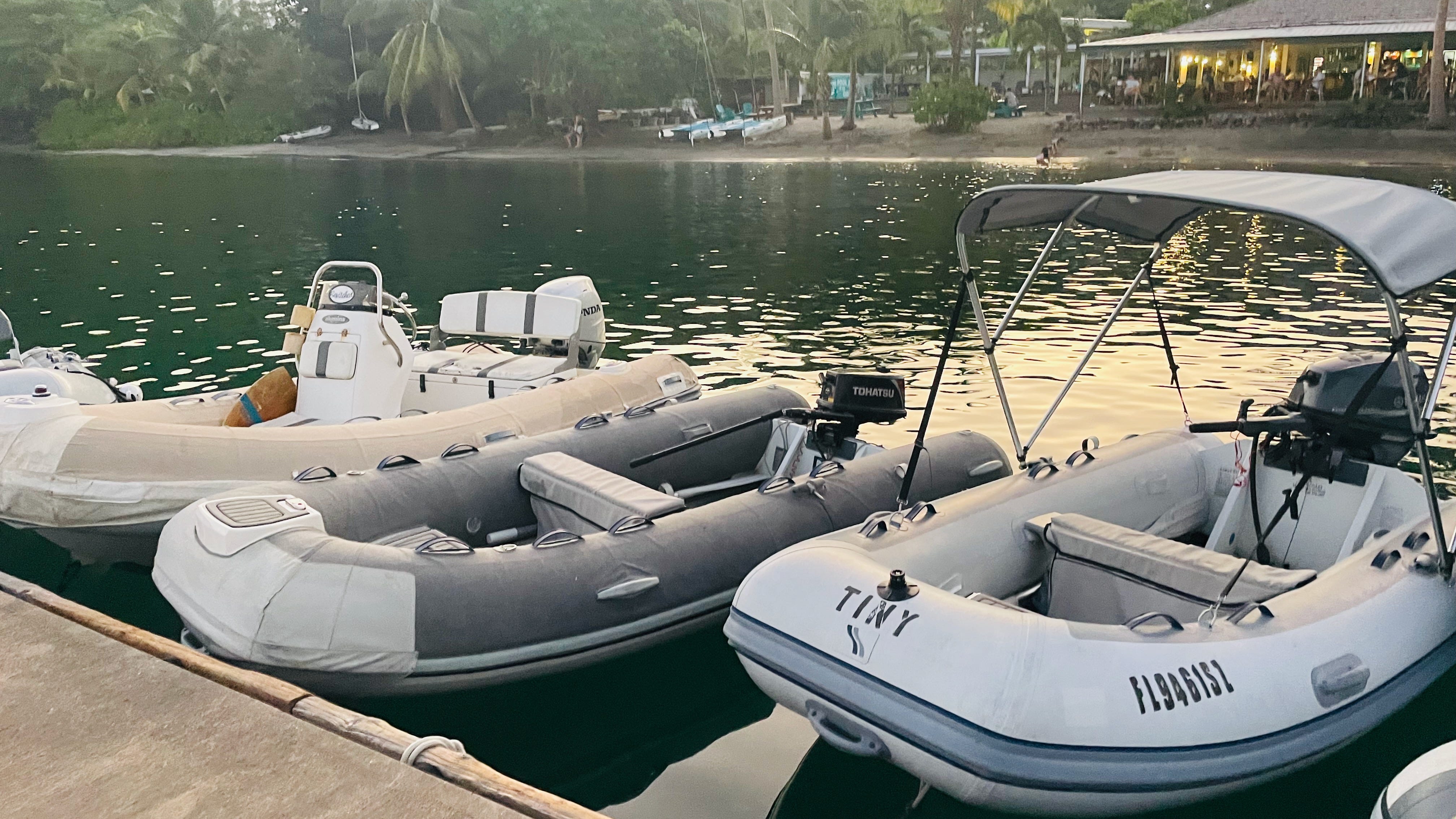
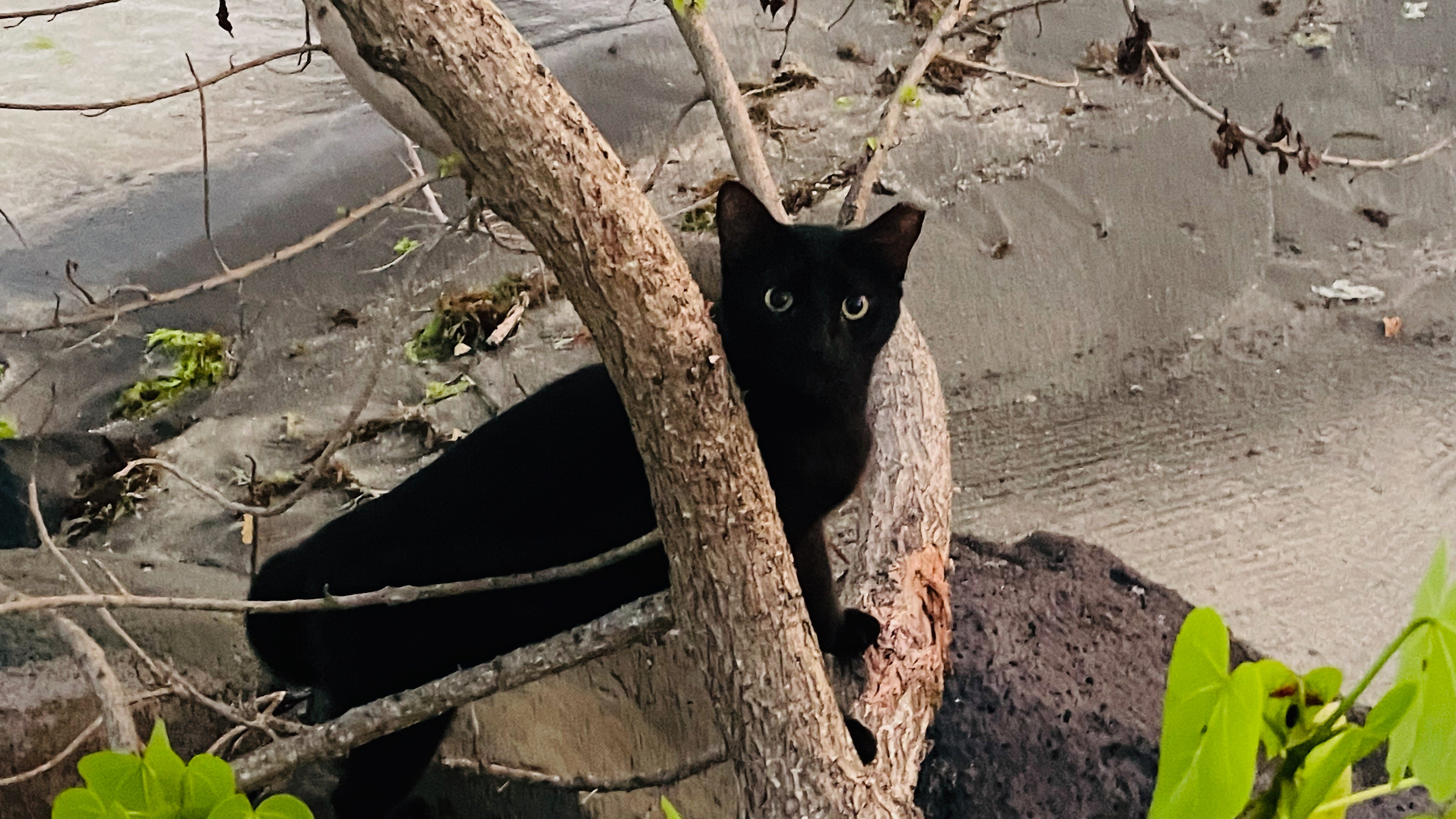
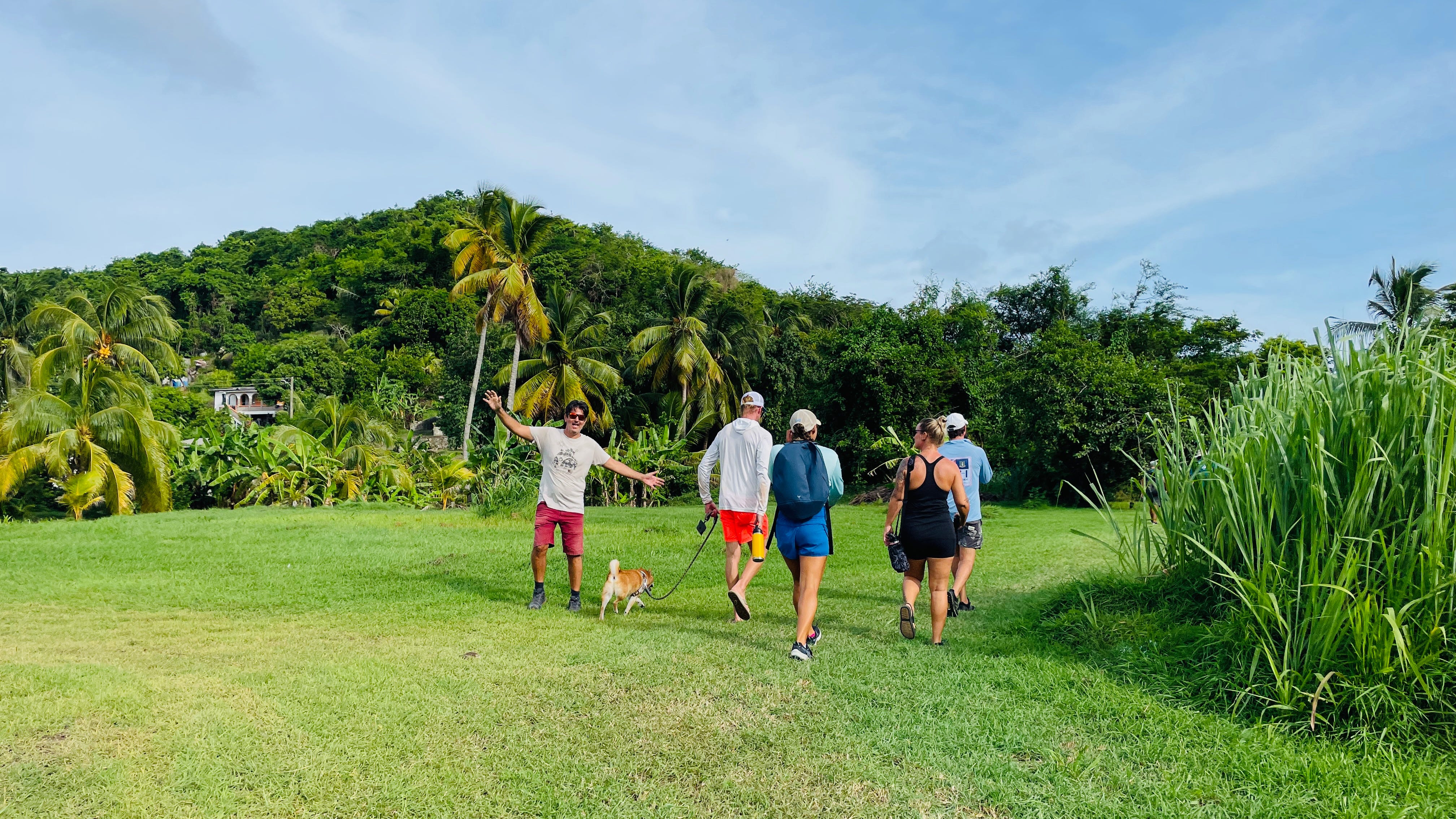
After arriving, one of the first local events was a hash. The hashes are monthly hikes that are organized for the community of Grenada. The people doing the hash can either walk or run the two to three mile loop. You learn where it starts and then you have to find the pile of shredded paper the organizers leave somewhere along the way so you know where to turn next. It was a lot of fun and a great way to explore the land of Grenada while meeting new people and enjoying the views. We meandered along the hills, past private homes, goats, tropical plants and flowers.
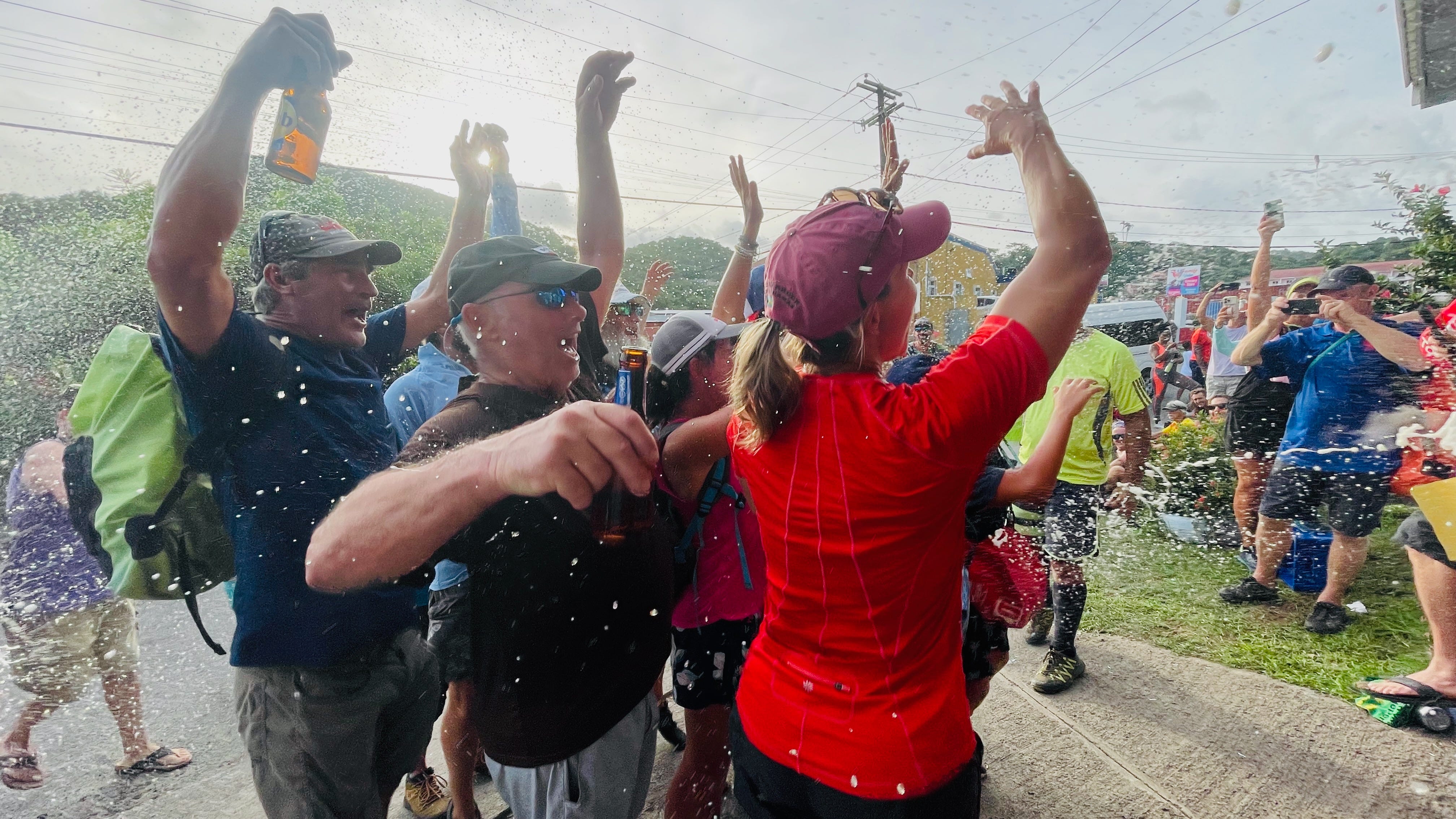
The people doing the hash for the first time got sprayed with beer when they got back to the starting line. We heard about this ritual and chose not to participate in it enabling Peter to take an awesome photo. I was appalled by how drenched everyone got in the process and was very happy to not leave smelling like a brewery!
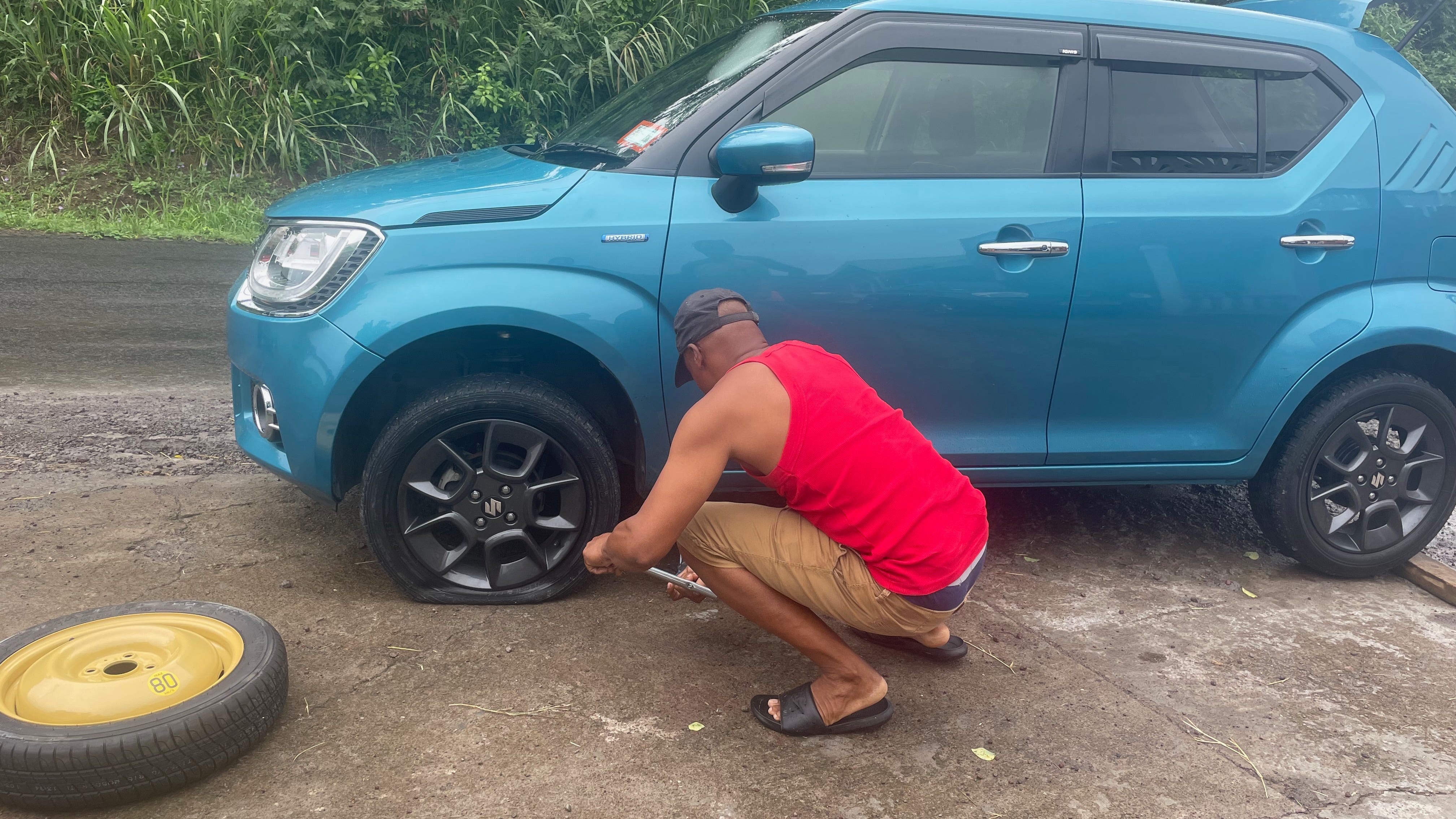
We rented a car to tour Grenada and visit the organic farm in the north but quickly got a flat tire. The roads are narrow and it was too easy to hit the curb in an effort to avoid the oncoming traffic! Within minutes someone stopped to help us change our tire which demonstrated a very generous and helpful Grenadian culture. We were back on our way in zero time and so grateful to the people who stopped.
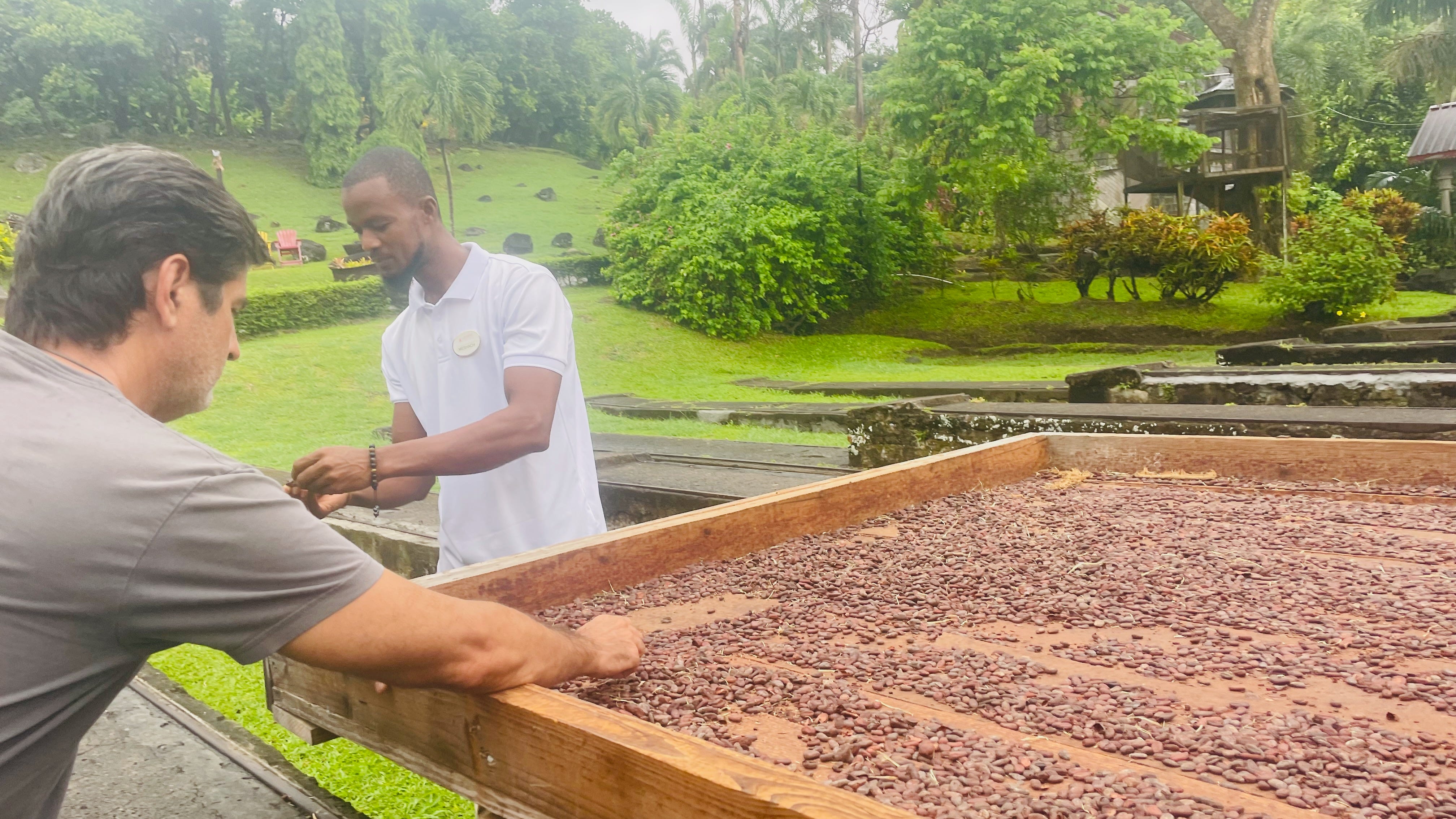
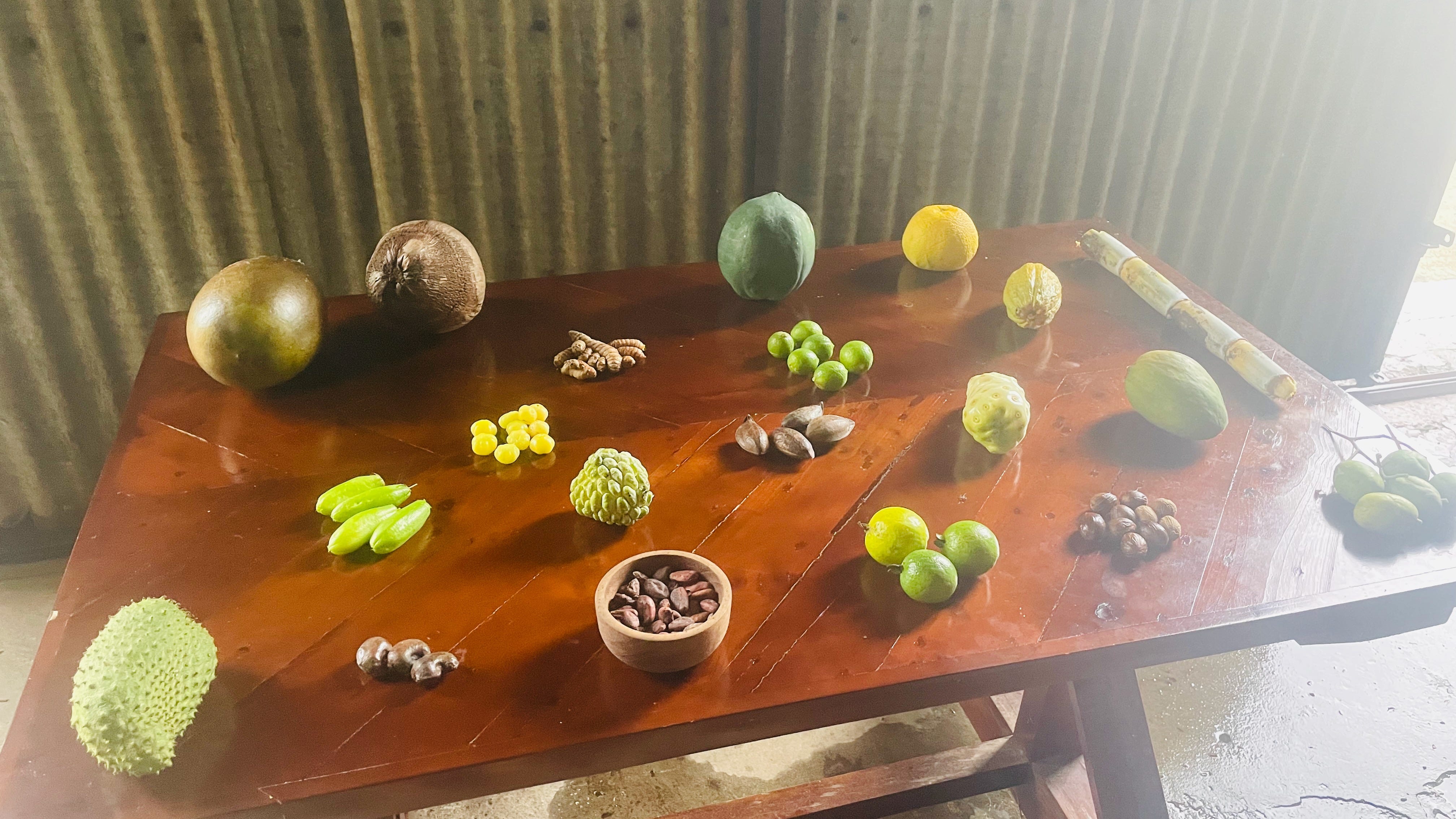
We visited The Belmont Estate Farm where they made chocolate. We bought many bars as gifts and loved the ones where they added nutmeg and cinnamon. Grenada is called Spice Island because these spices are grown in the wild all over the island. In addition to cacao and spices they also grew various kinds of tropical fruits like soursop, guava, lemons, limes and bergamot oranges, mango, star apple, banana, papaya, avocado and coconut.
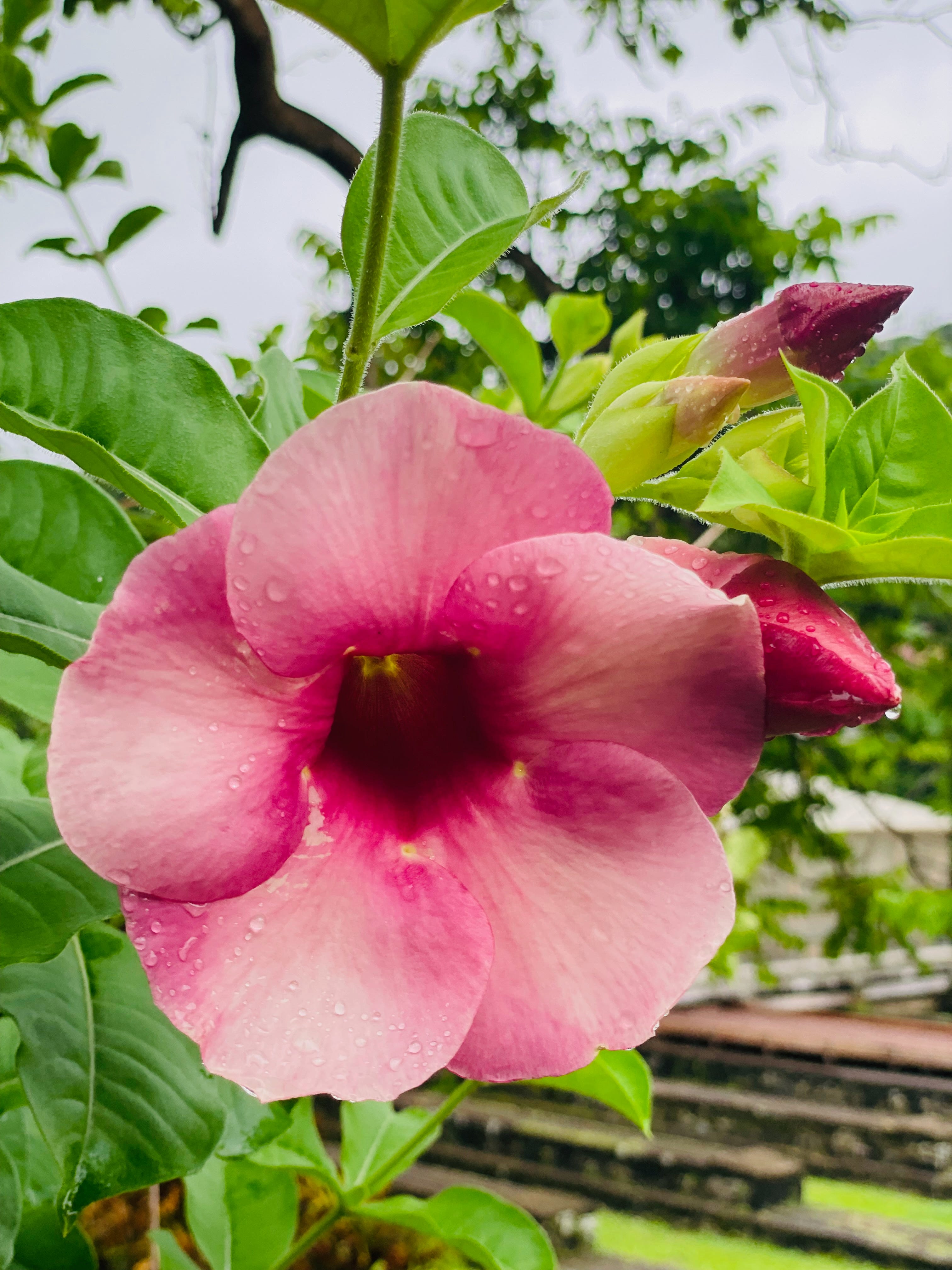
We were so excited to be in Grenada, reunited with friends after such a long passage and after the seven passages we sailed starting in Panama, against the wind, waves, and currents. We made it which finally meant we could start sailing off the wind rather than beating into it! (Not to mention, North could finally fix our mainsail, so we could use it again!) We couldn’t wait to explore this beautiful chain of islands that make up the Lesser Antilles. For now we are enjoying slowing down and experiencing all of the beauty and friendly, positive island vibes.
Thank you for reading Enchanted Voyage and we hope you’ll join us for the upcoming posts about our time sailing through the lovely Lesser and Greater Antilles.
It's great to hear where you are now and all about your travels and adventure. You two are looking great!
Next time you ran out of fuel consider allowing the trades to blow you all the way down to Hawaii!