


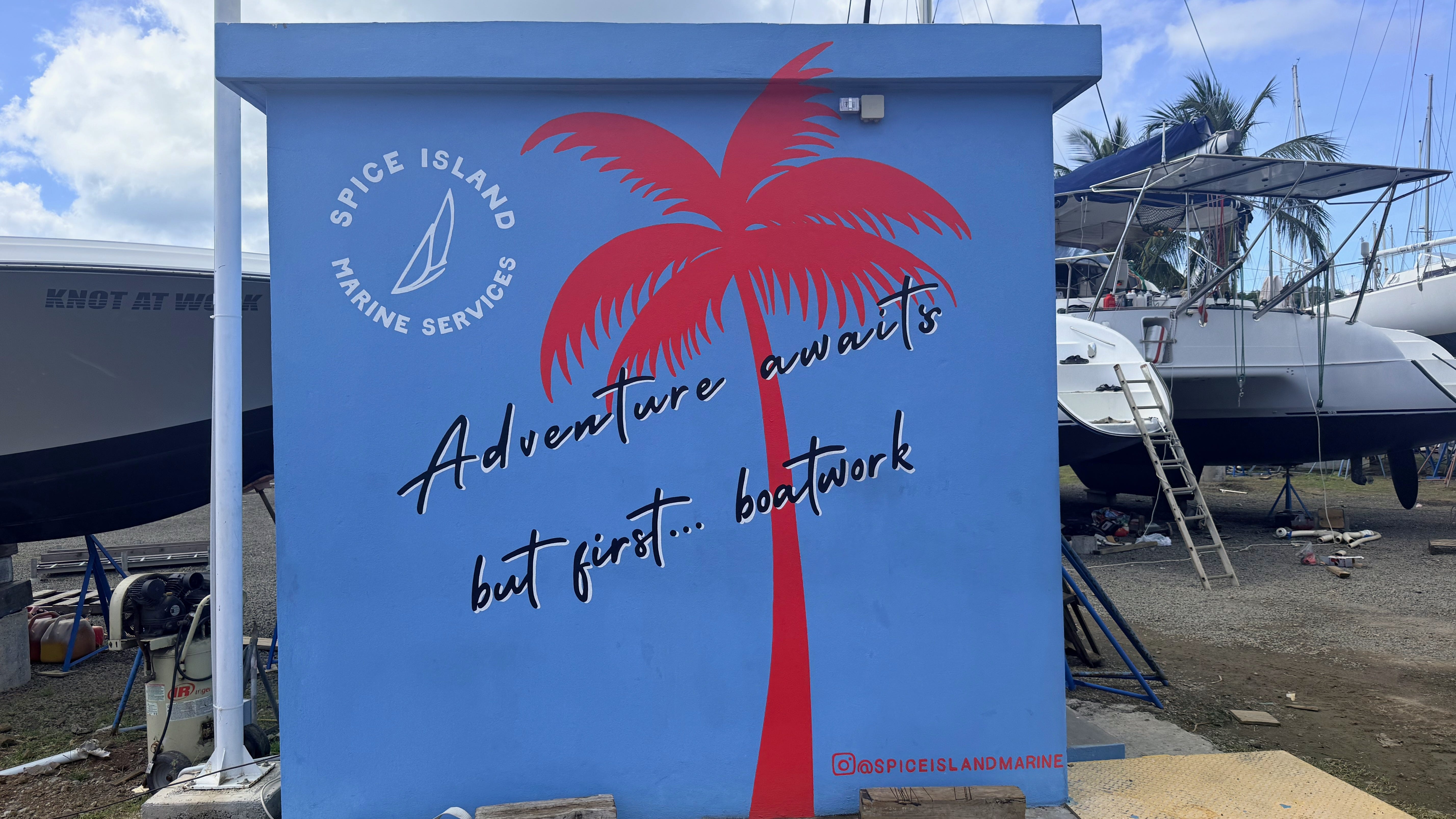
Our fourth season of sailing began in Trinidad—but not quite the way we had imagined.
We had left our boat in Trinidad while we flew back to the U.S. for a few months. Trinidad had seemed like a good, safe place to leave her during hurricane season. After all, the Caribbean is beautiful, but hurricane season has a way of reminding sailors that Mother Nature is very much in charge.
And then came Hurricane Beryl.
Beryl became a Category 5 hurricane and passed far too close to Grenada for our comfort. Watching the storm develop made us very glad we had made the decision to leave the boat in Trinidad rather than take our chances farther north in the Caribbean.
Once hurricane season was behind us, we were more than ready to get back to our boat. We were excited about the season ahead because this was going to be our first real opportunity to explore the Caribbean by sail. We had spent enough time dreaming about the turquoise water, beautiful islands and warm breezes. Now we were finally going to experience it.
But first, there was one rather large obstacle standing between us and the Caribbean.
The bottom of our boat.
Peter arrived in Trinidad ahead of me with a very specific mission: to oversee the conversion of our hull from traditional antifouling bottom paint to Coppercoat.
For non-sailors, this probably doesn’t sound particularly exciting. For us, it was a major project—and a very expensive one.
The advantage of Coppercoat is that it should significantly reduce the amount of scraping and cleaning we have to do underneath the boat. Barnacles seem to regard our hull as prime Caribbean real estate, and once they move in, they don’t exactly leave willingly. Keeping a large sailboat’s bottom clean is exhausting work, especially when you’re doing it over and over again.
Peter usually tackles the underwater portion with a hookah system, which supplies him with air while he works below the surface. I help with the sides of the hull, where I can stay at the surface and reach what I need to without spending quite so much time pretending I’m a scuba diver.
It is not glamorous work.
Unfortunately, the project didn’t get off to a very good start.
The Coppercoat shipment was late. Very late. The delays were partly related to the recent hurricanes and partly due to what appeared to be some good old-fashioned shipper mismanagement. Whatever the reason, Peter was stuck in the boatyard for weeks waiting for the materials to arrive.
There are worse places to be stranded, of course. Trinidad is an interesting and colorful place, and we were anxious to explore it. But there is a big difference between choosing to spend time somewhere and being stuck there because your boat is sitting on the hard and can’t go anywhere.
And every day that the boat sat in the yard was costing us money.
We also had to find somewhere to live while all of this was happening. We rented an apartment with air conditioning, which quickly became one of our favorite luxuries. Trinidad is hot. Really hot, and humid. The kind of hot where you can take a shower, dry off, and immediately feel as though you need another shower.
The apartment had a refrigerator, which was helpful, but no stove. That meant we were eating out mostly at nearby restaurants. Luckily, there were three nearby, but unfortunately, there were only three nearby.
Normally, having a refrigerator on the boat is a wonderful thing. But ours has a keel-cooled refrigeration system, which means the cooling plates rely on the surrounding water to keep the refrigerator cold. It works beautifully when the boat is floating.
It does not work so beautifully when your boat is sitting on land.
So while we were in the boatyard, the refrigerator on our boat was essentially a very expensive piece of furniture.
That meant we couldn’t stock the boat with food and cook our own meals. Instead, we became regulars at the local restaurants. Every meal became another little adventure—and another expense.
Finally, the shipment arrived and we managed to get a few days that were “dry enough” for the guys we had hired to do the sanding and apply the Coppercoat.
“Dry enough” is a relative term in Trinidad.
We needed several consecutive days without significant rain, and anyone who has spent time in the tropics knows that the weather doesn’t always cooperate with your project schedule. You can have sunshine one minute and a tropical downpour the next.
Peter wanted to be there to supervise the work. And I didn’t blame him. This was an expensive project, we had only so much Coppercoat, and there wasn’t exactly room for a major mistake. We certainly didn’t want to wait weeks for another shipment if something went wrong.
Meanwhile, I tried to make the best of our temporary life in Trinidad.
This is one of the funny things about cruising. You spend years imagining yourself sailing from island to island, dropping anchor in beautiful bays, swimming off the back of the boat and enjoying cocktails at sunset.
What you don’t picture quite as often is living in an apartment because your boat is on jack stands without air conditioning or refrigeration, eating restaurant food three times a day, and checking the weather forecast obsessively because you’re waiting for the humidity to cooperate with your bottom paint.
But that’s cruising.
Eventually, though, the sanding was done. The Coppercoat went on. And after weeks of delays, waiting, expense and uncertainty, we could finally start thinking about what we had really come to the Caribbean to do.
Go sailing.
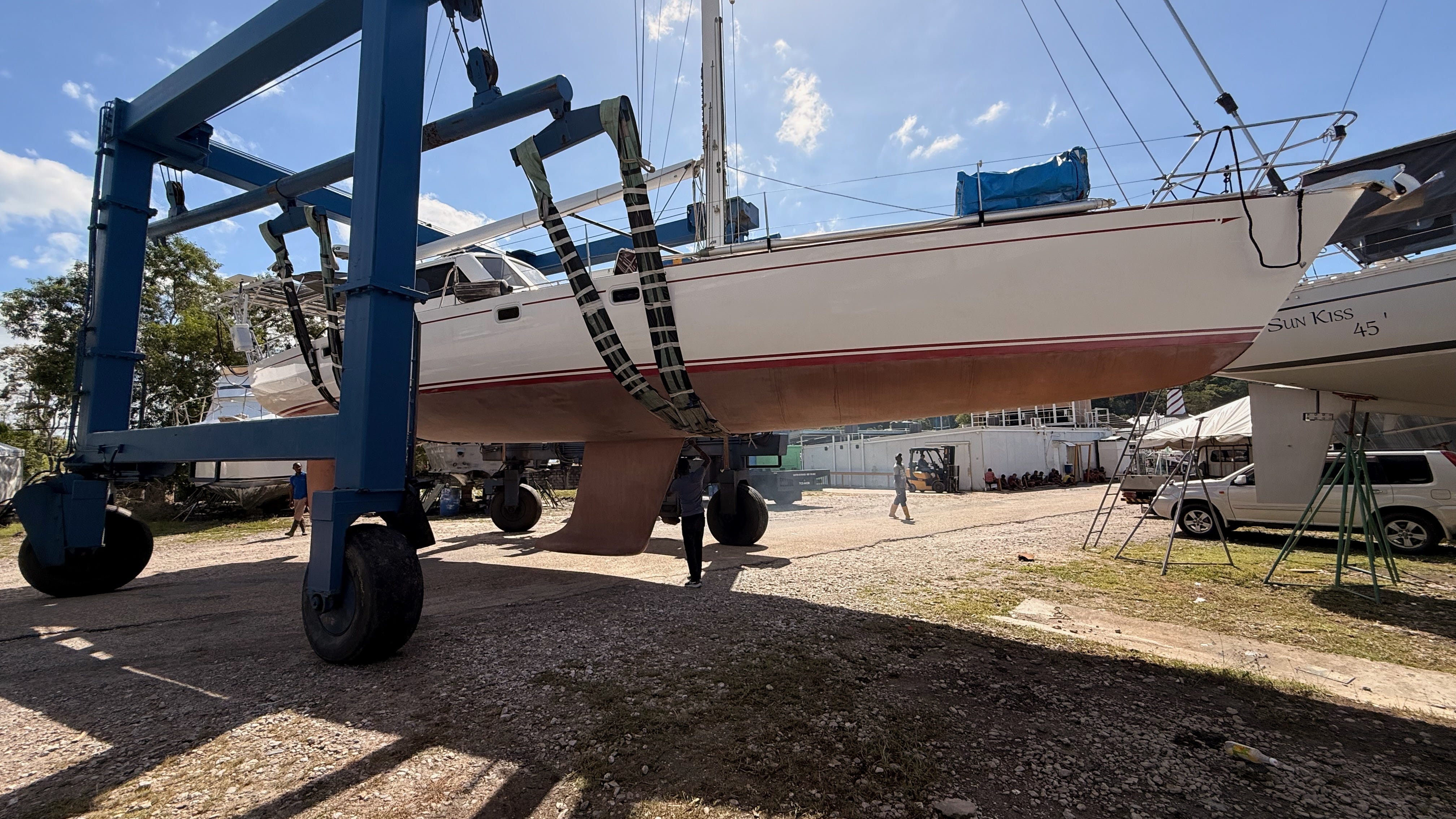
After spending two months longer in Trinidad than we had planned, the job was finally finished.
And then, almost magically, all of the frustration disappeared.
That’s one of the wonderful things about cruising. You can spend weeks worrying about a boat project, obsessing over the weather, watching money disappear and wondering when you’re ever going to leave. But the minute the dock lines are released and the boat starts moving, somehow most of it doesn’t matter anymore.
We were finally underway.
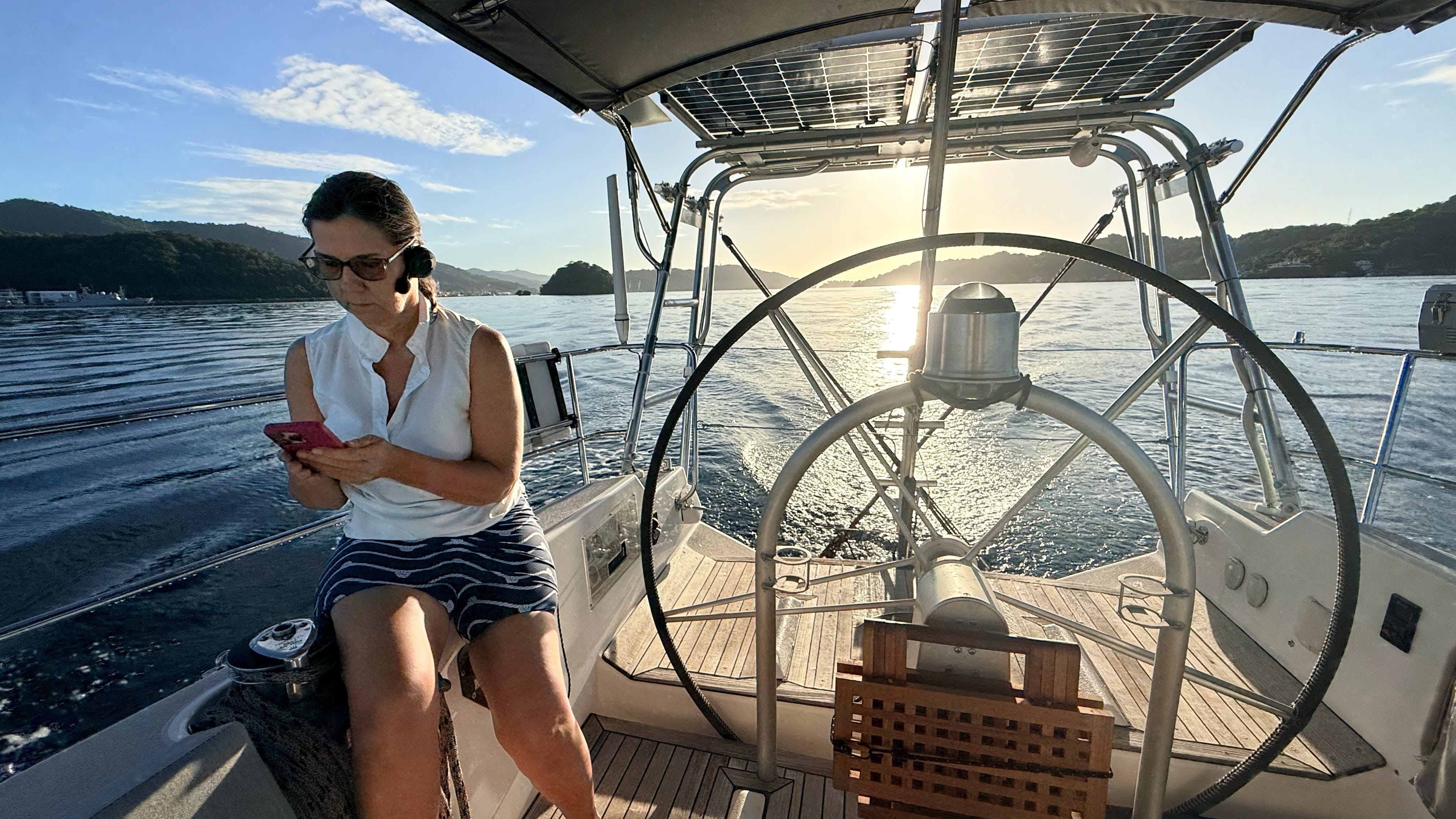
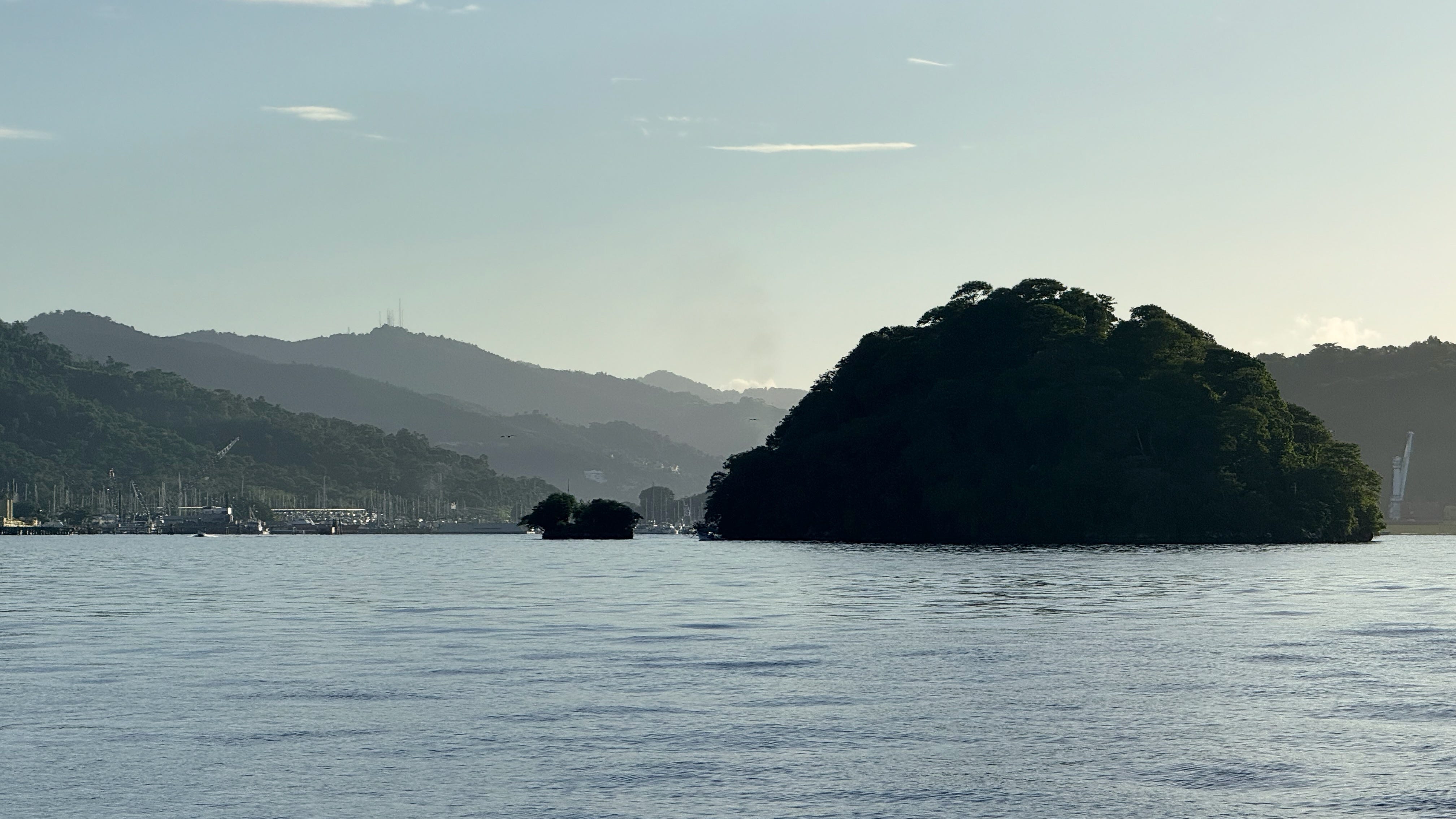
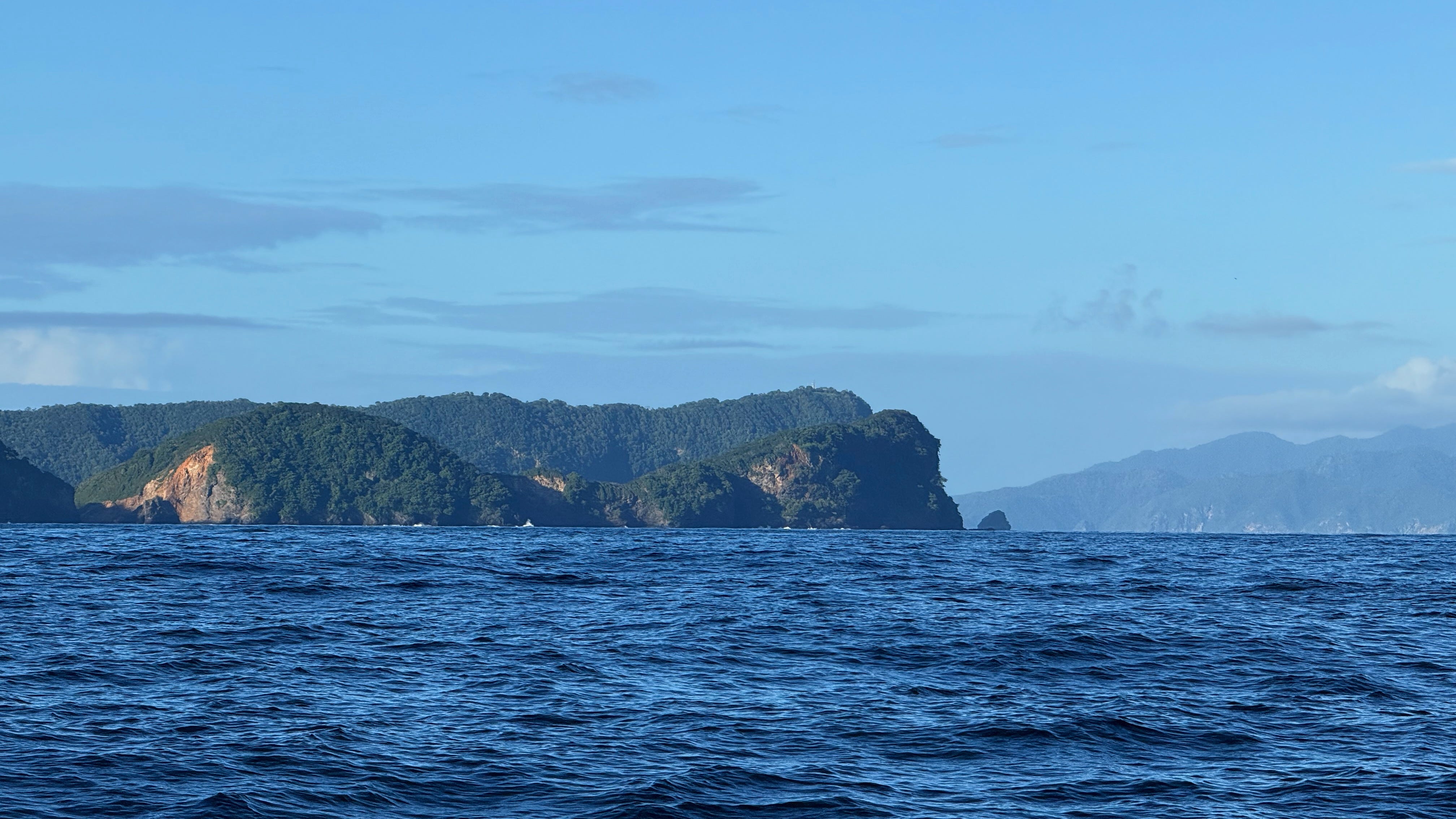
Our first passage took more than twelve hours, but we made it to our destination before sunset. There is something especially satisfying about arriving in a new place while there is still plenty of daylight left—especially after a long day at sea. You get to watch the landscape appear, find your anchorage and settle in without the added pressure of arriving in the dark.
Our first stop was on the southwest side of Grenada, where we had an important piece of equipment waiting for us.
Our mainsail.
We had given it to North Sails to be recut so that it would fit our boat properly, and we were thrilled to finally have it back. We had sailed all the way from San Blas to Trinidad and then spent the first part of this season without it. That was more than enough time to convince us just how important a mainsail is when you’re planning to sail up and down the entire chain of Caribbean islands.
It was long overdue. And it felt really good to have it back.
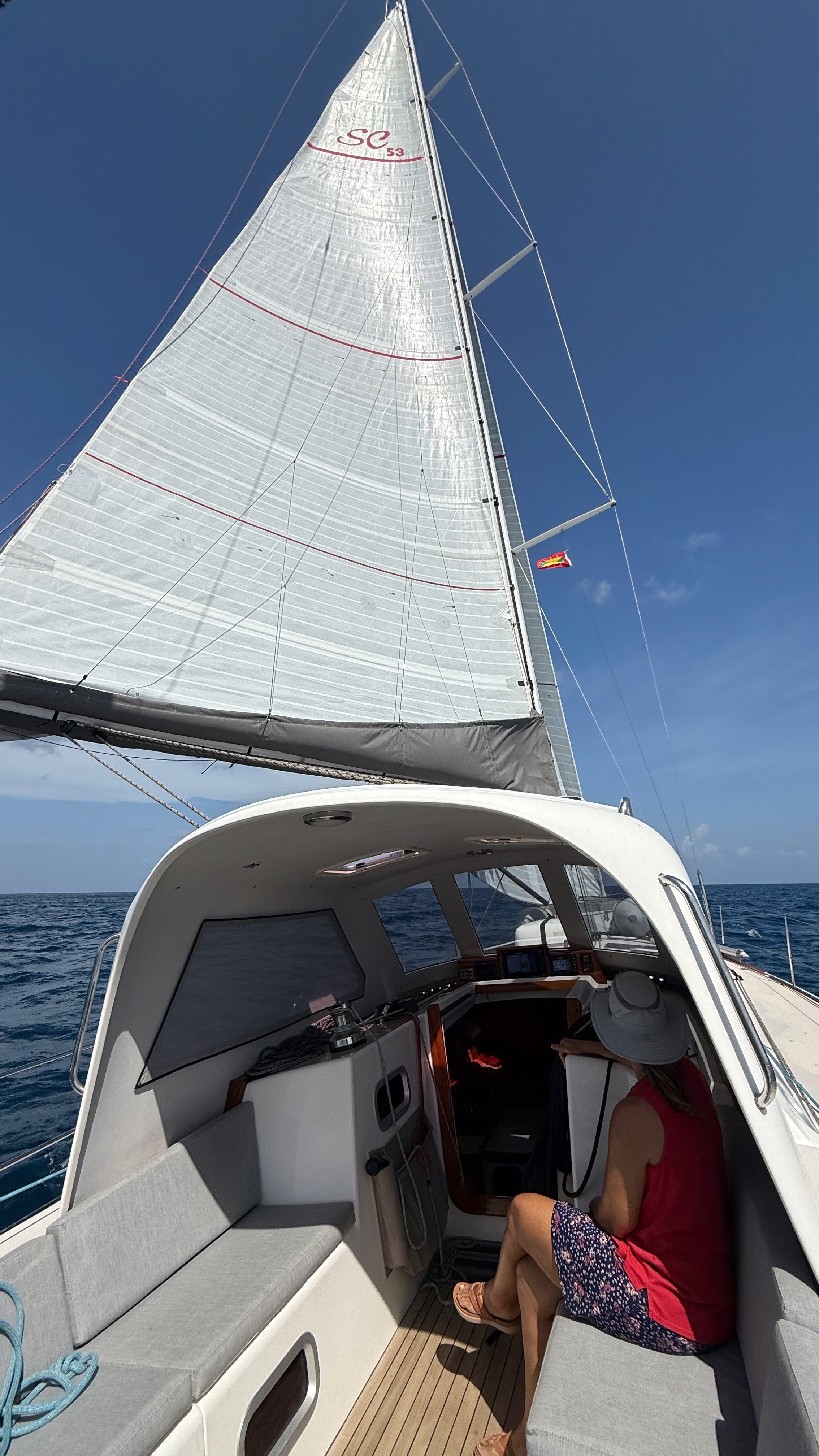
From Grenada, we continued north, and before long we reached Sandy Island.
Sandy Island immediately reminded us of our time in San Blas.
It’s really little more than a beautiful sand spit surrounded by impossibly clear water. The kind of place that makes you stop and think, How is this actually real?
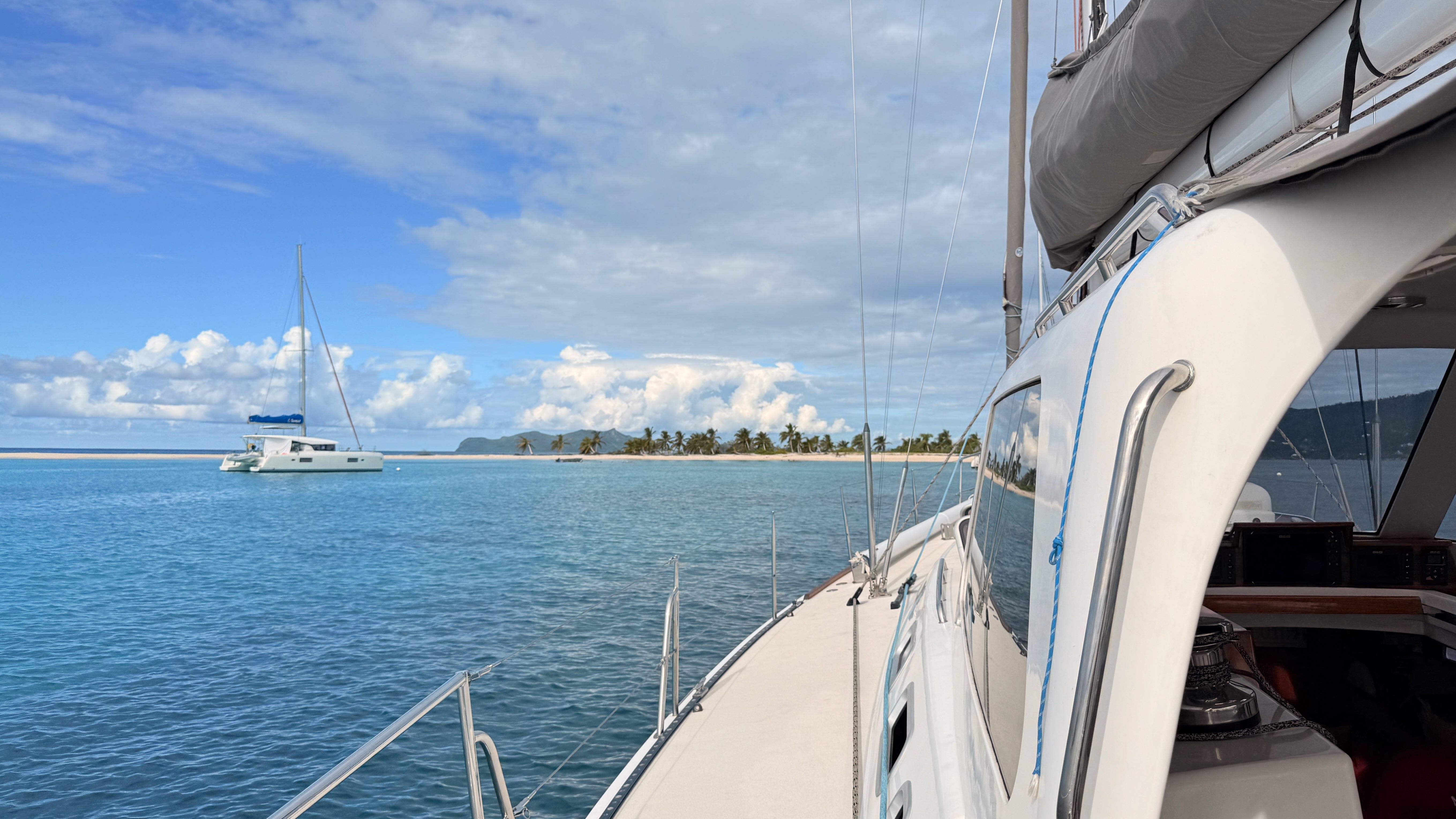
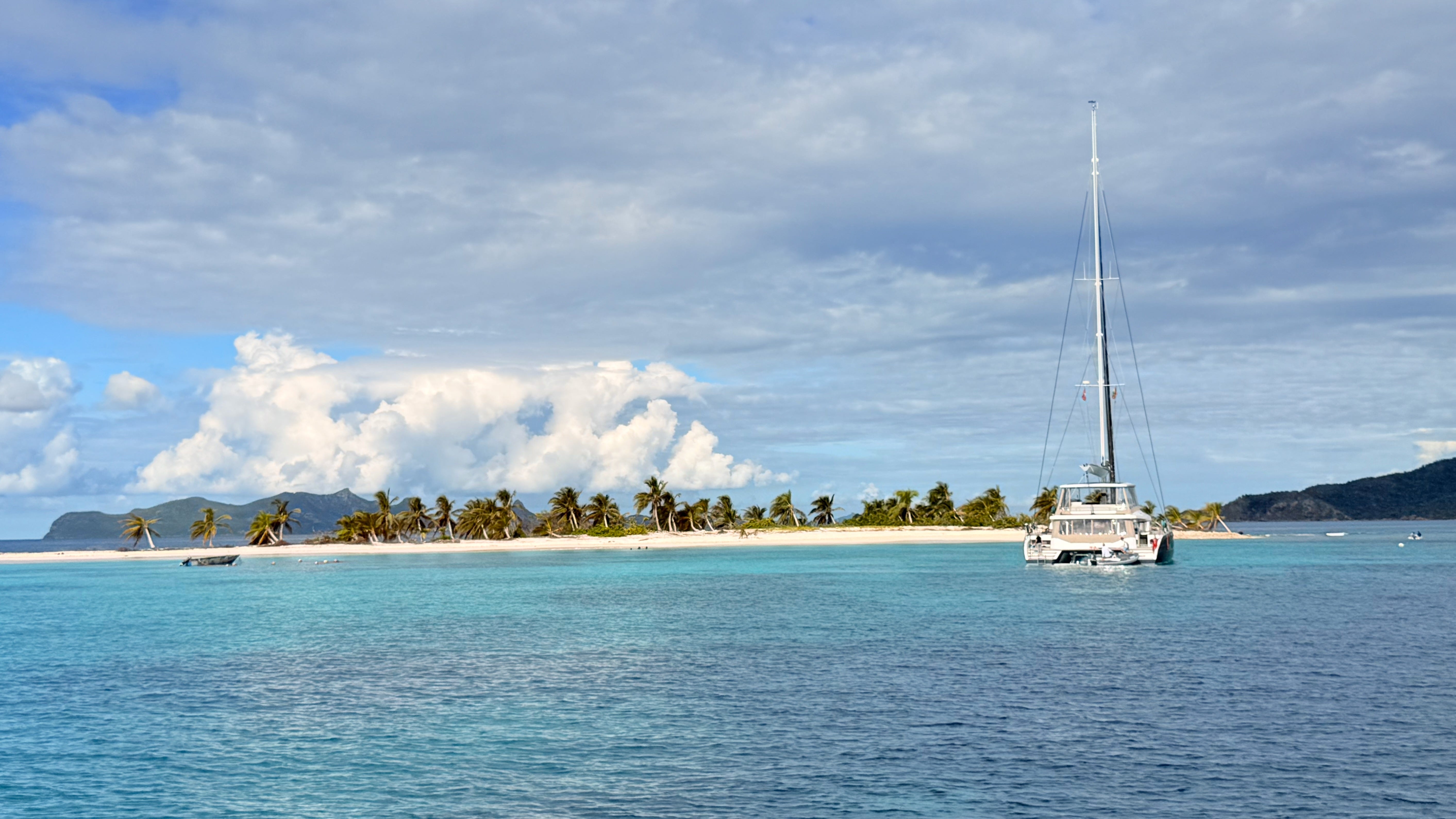
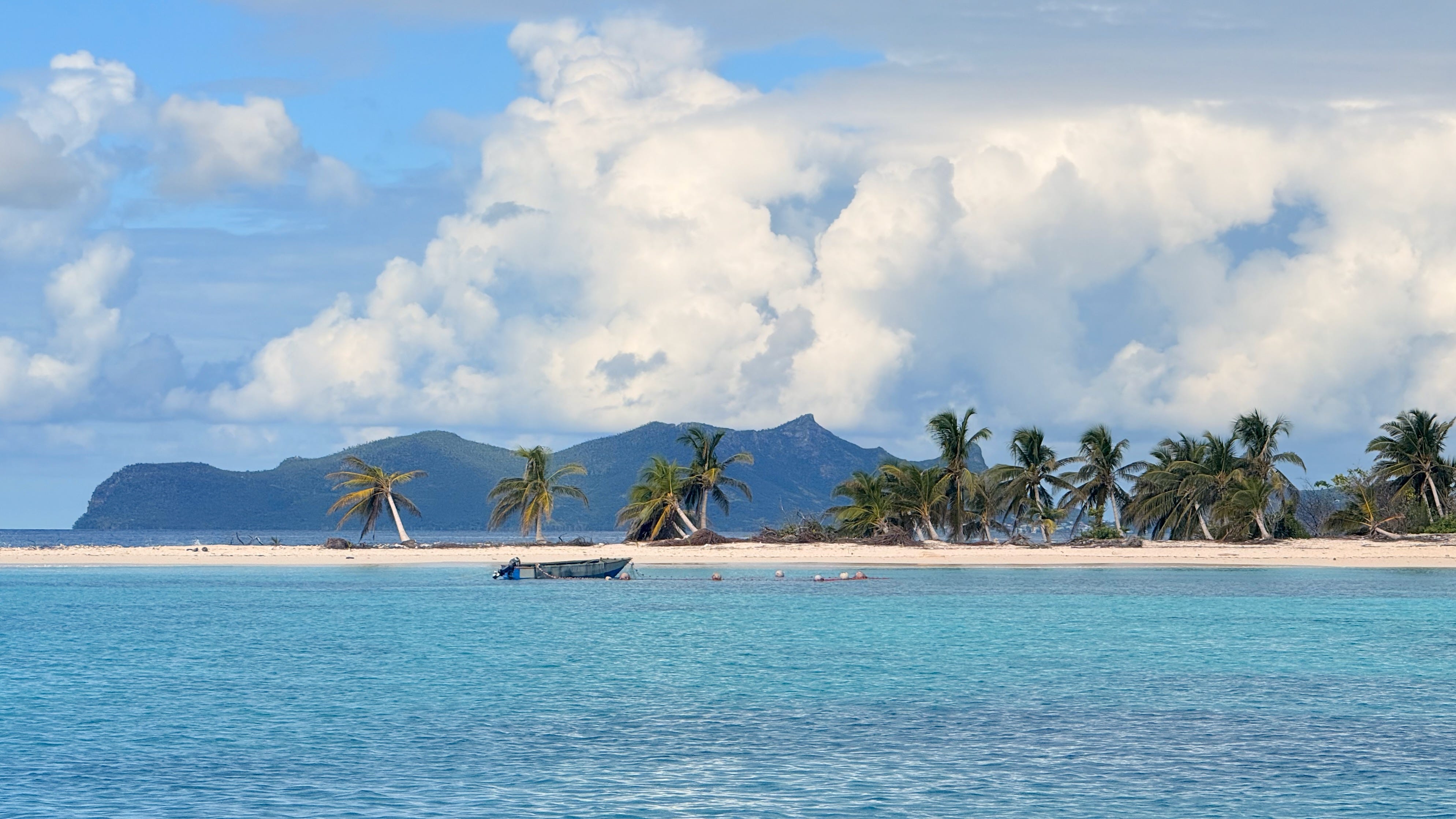
The water was filled with tropical fish, and everywhere we looked there was another little glimpse of life beneath the surface. We even watched a school of skipjacks feeding on some of the smaller fish.
This was the Caribbean we had been waiting for.
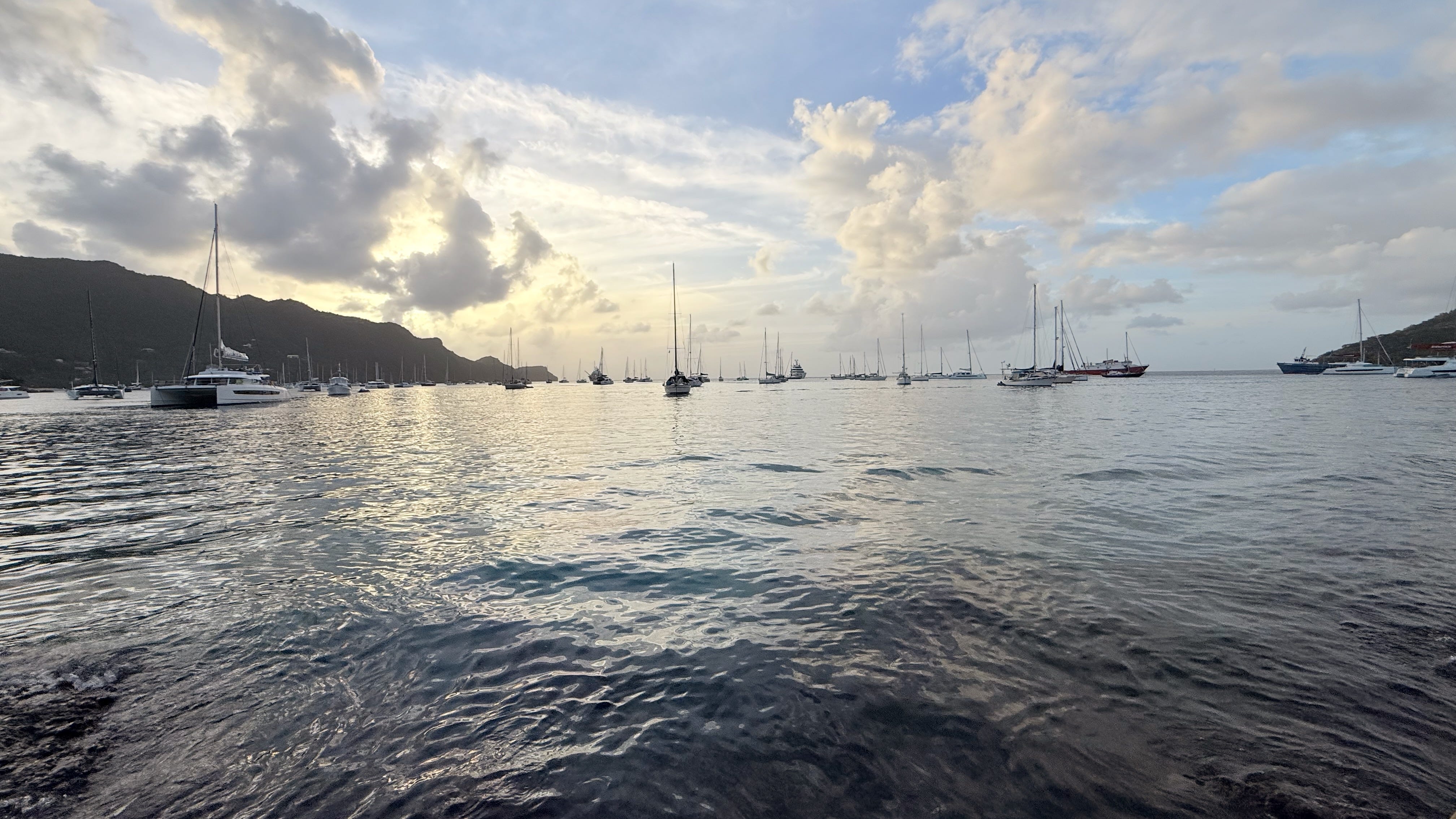
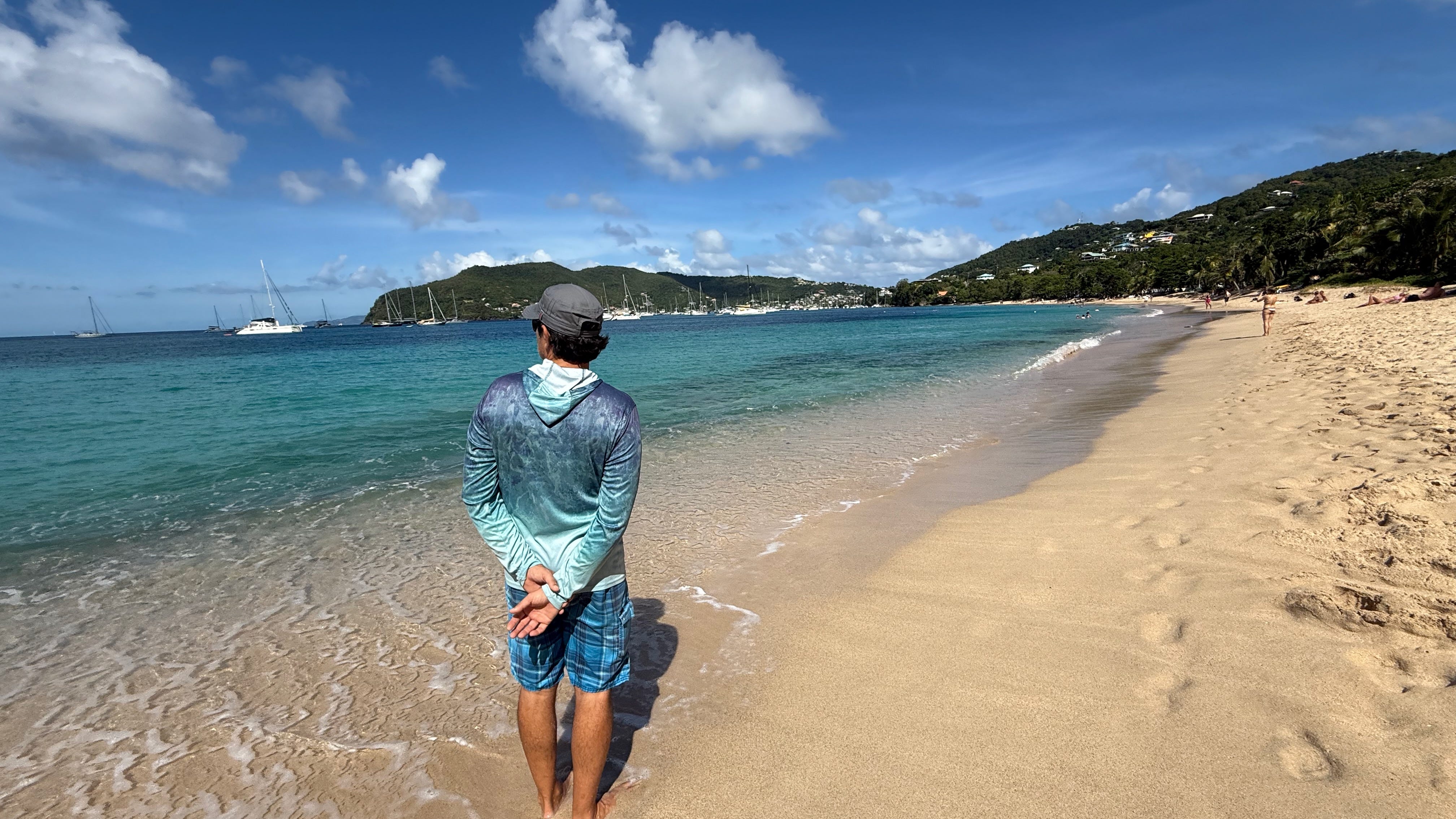
Our next stop was Bequia, part of St. Vincent and the Grenadines—and one of our favorite places to simply relax.
There are some places you visit because there are spectacular things to see. And then there are places you return to because life just seems easier there.
Bequia is one of those places for us.
It’s incredibly convenient for cruisers. Laundry is picked up from the boat and delivered back to you. If you need help with a boat project, there are people who can help. There are restaurants, supplies and all the little services that make life aboard a boat considerably easier.
And then there are the other cruisers.
At the beginning of the season, Bequia was filling up with boats whose crews were just getting started on their own Caribbean adventures. The anchorage had that wonderful feeling of possibility—boats arriving, friends reconnecting, plans being made and everyone talking about where they had come from and where they were headed next.
We stayed for two weeks.
It was exactly what we needed.
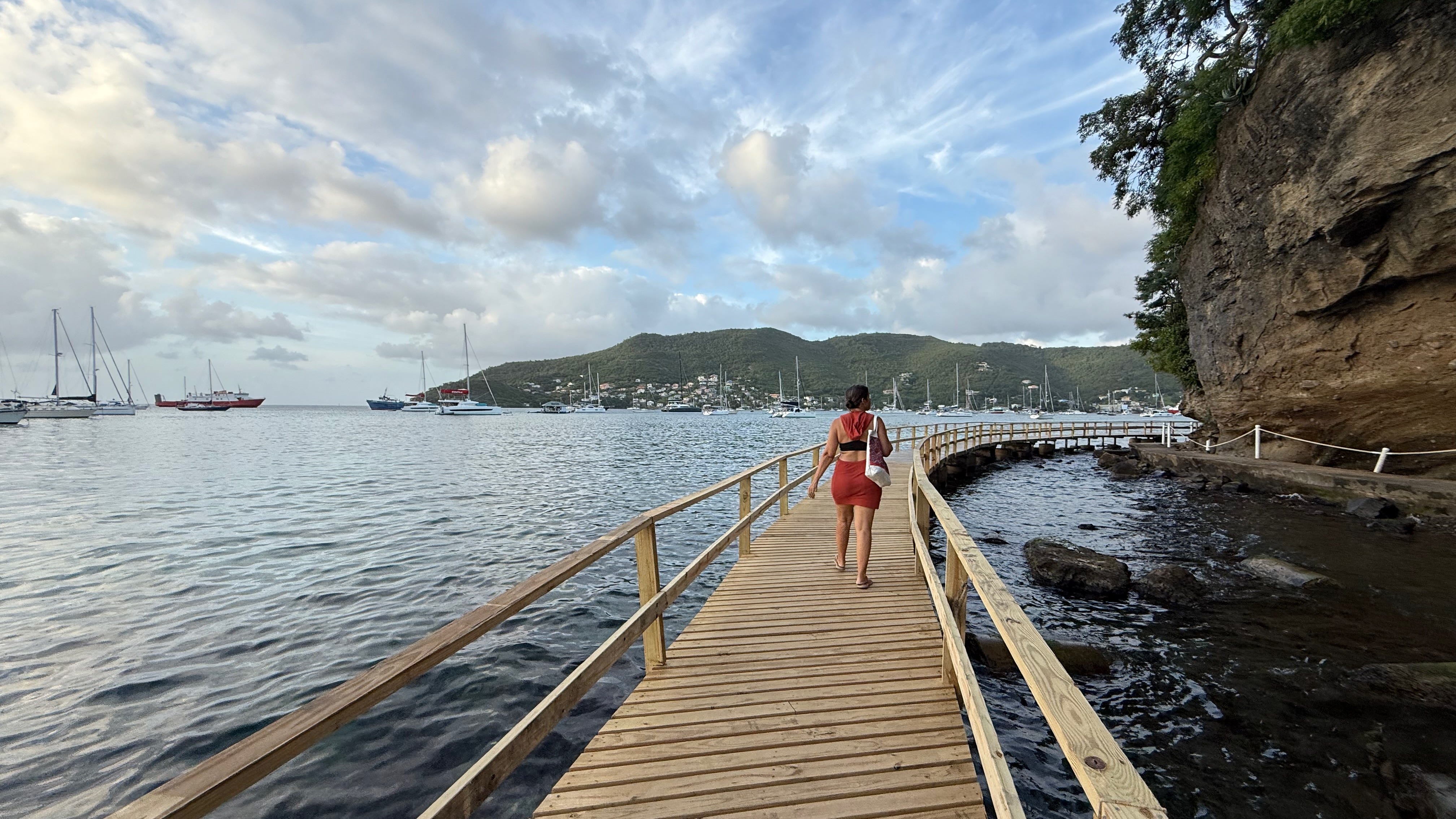


But eventually, even Bequia couldn’t keep us.
We had friends waiting for us in Martinique.
Kenzy and Karyne were already there, and we hadn’t seen them since Cartagena. We were eager to catch up, so after two weeks of relaxing in Bequia, it was time to move on.
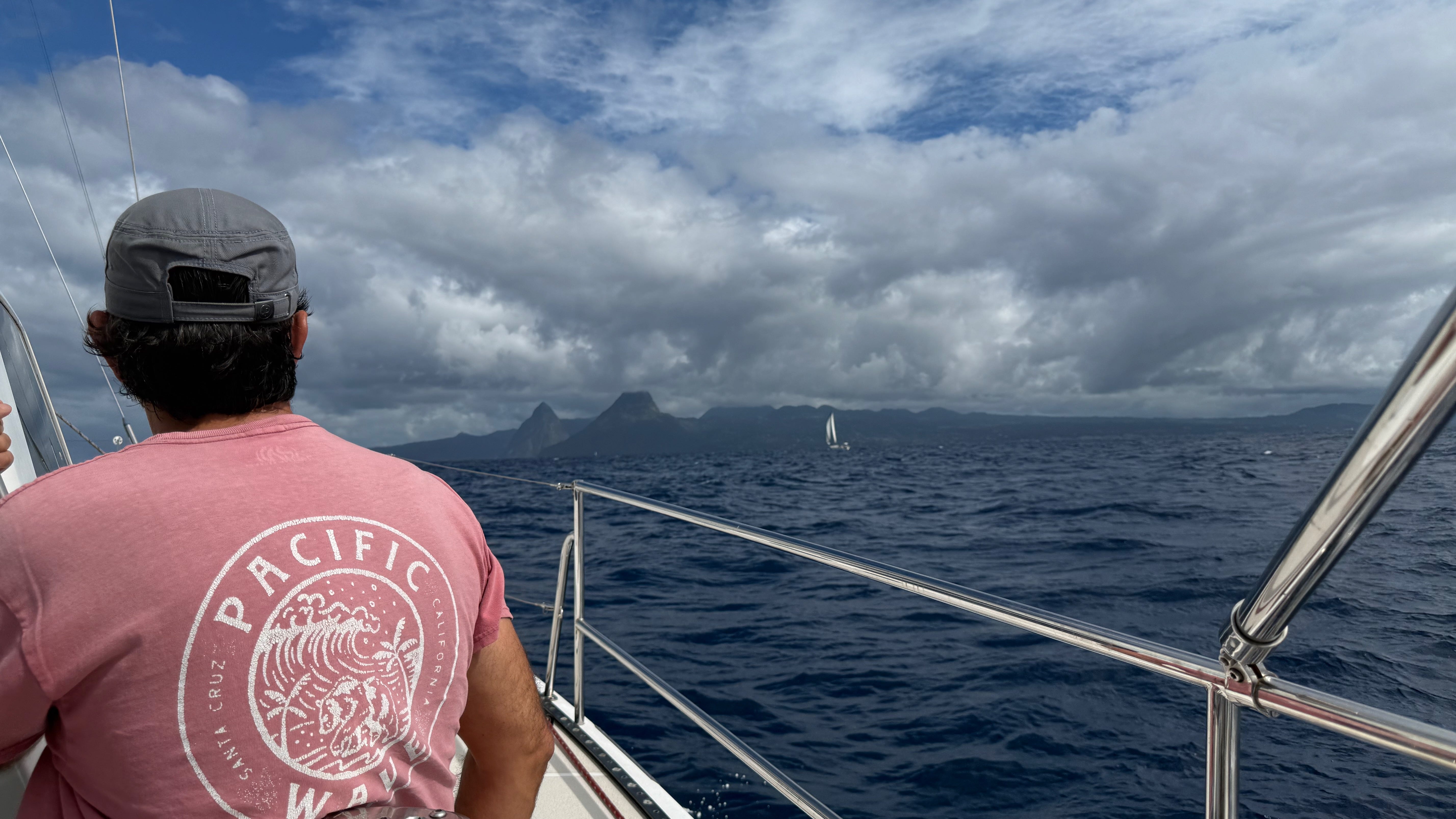
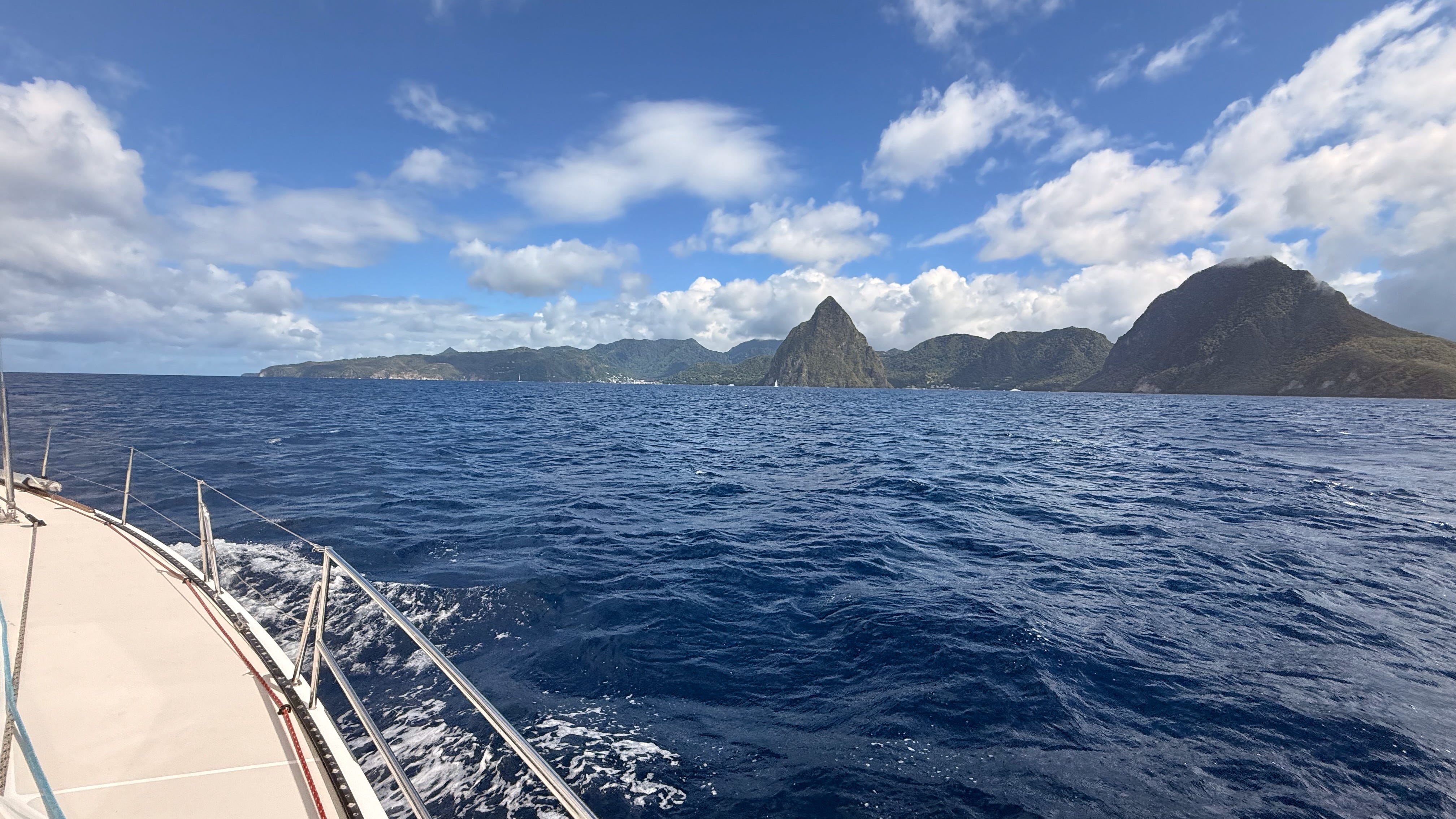
We stopped in St. Vincent for a quick overnight, just long enough to get some sleep before heading out early the next morning.
And what a beautiful sail it was.
No squalls.
No drama.
Just good wind, beautiful scenery and the kind of day that reminds us exactly why we chose to travel this way.
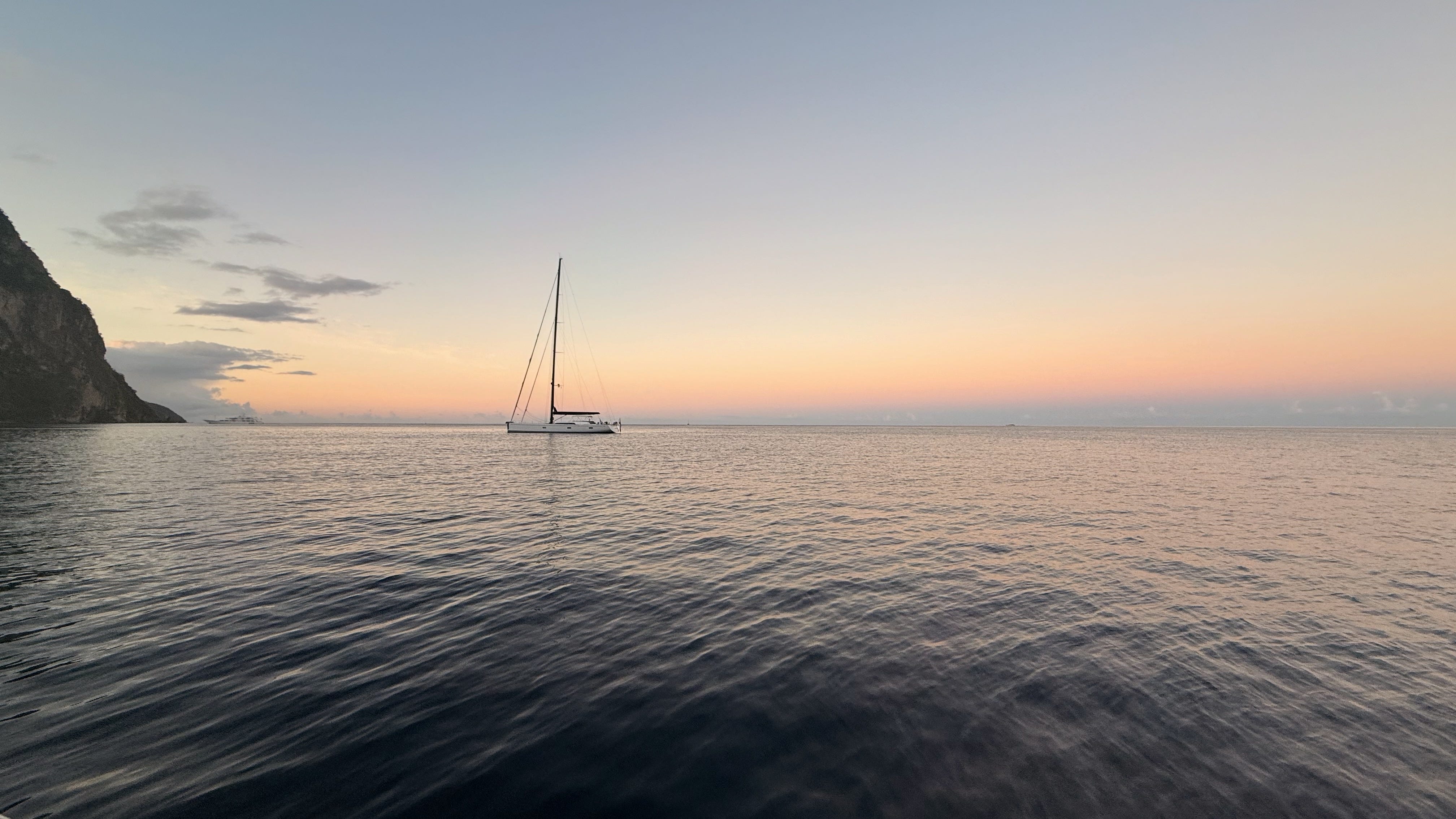
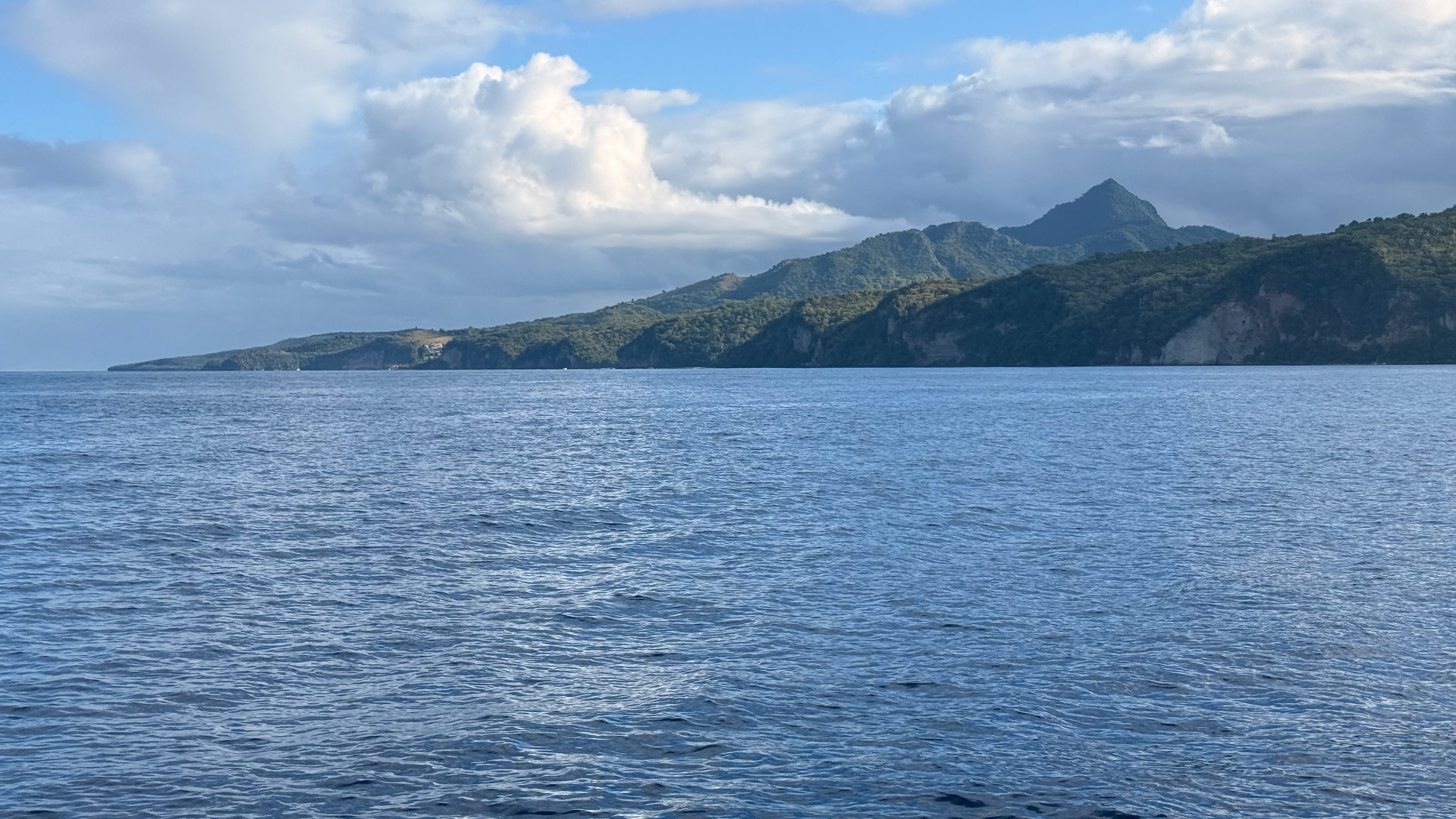
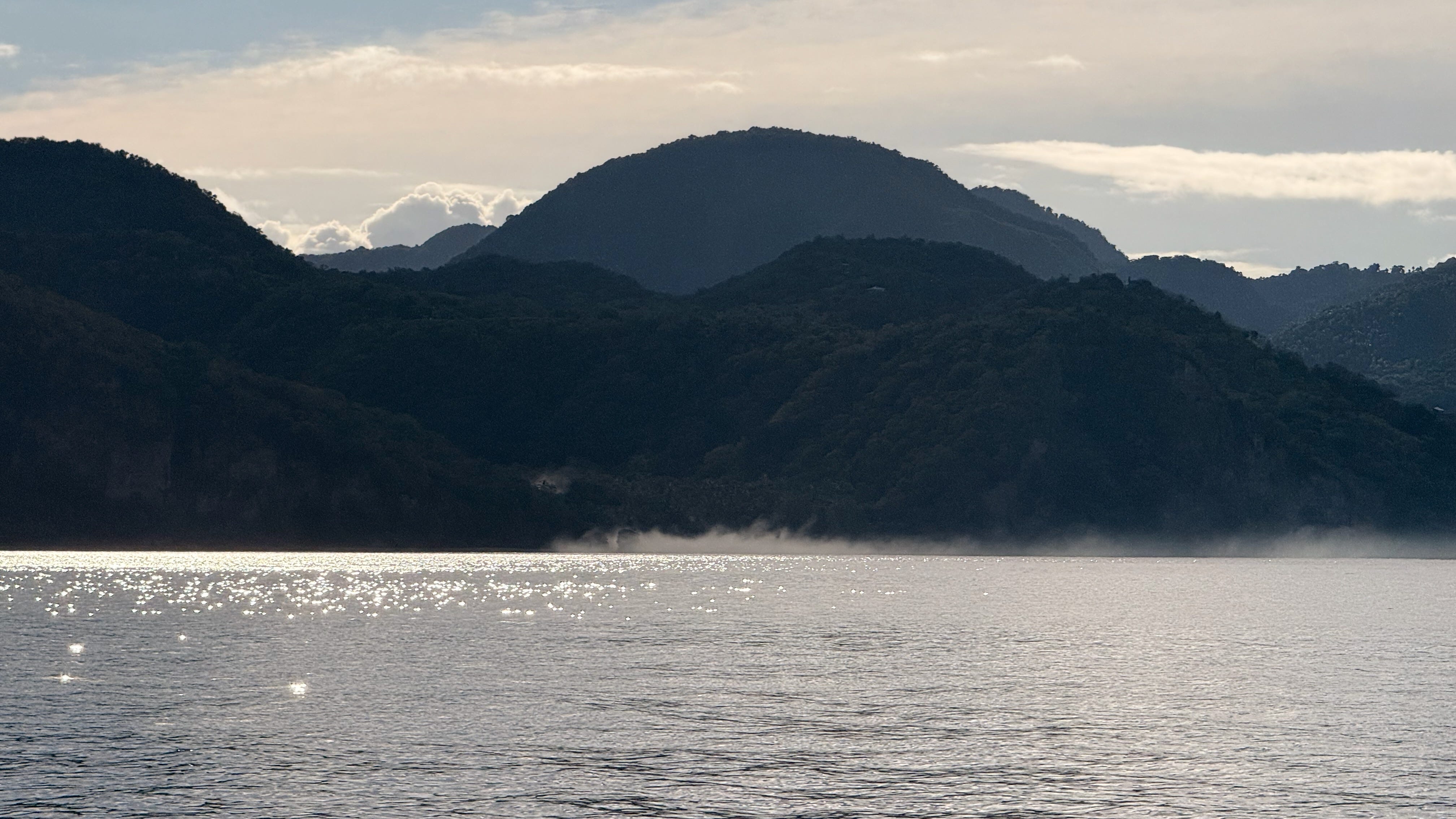
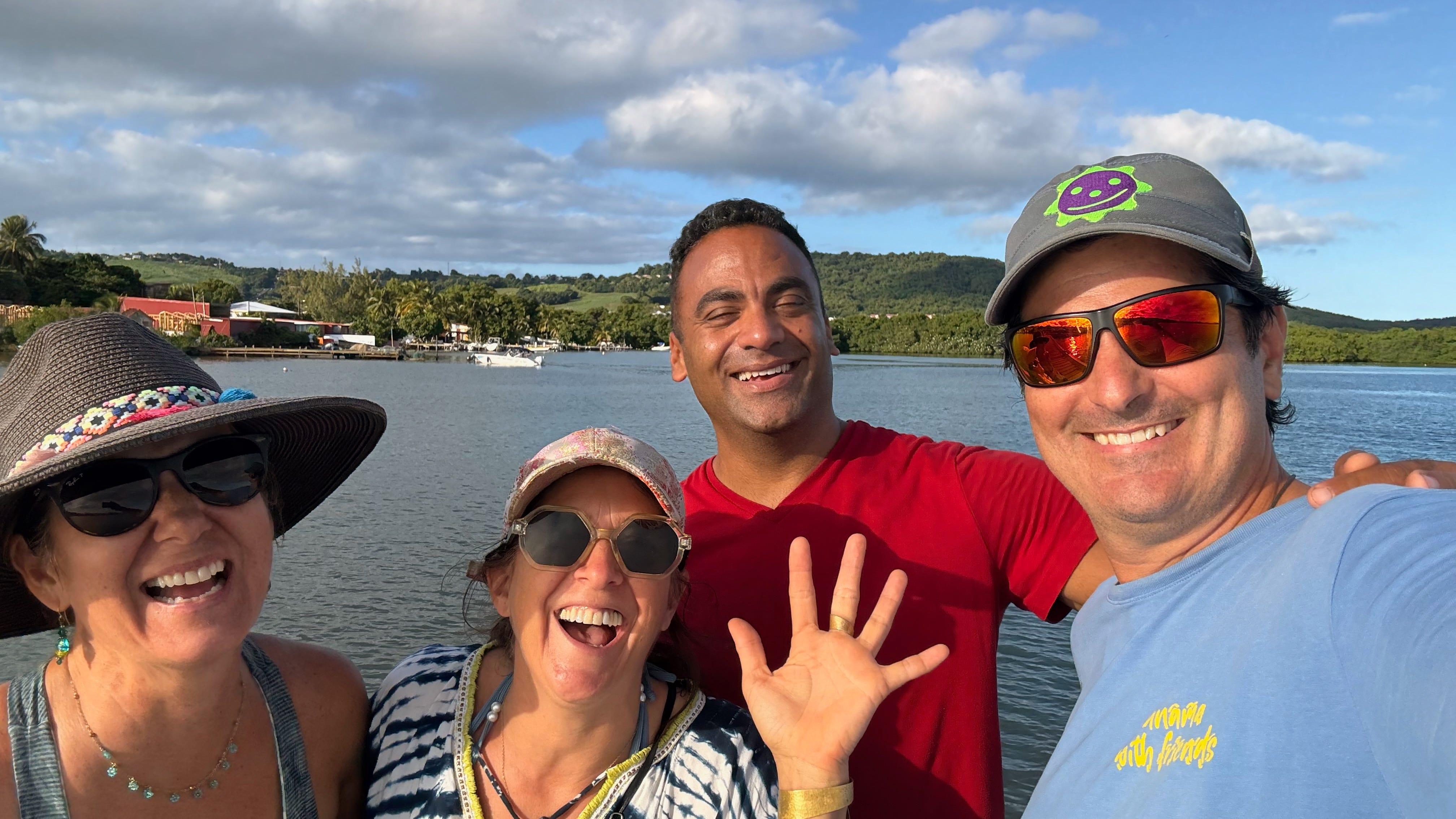
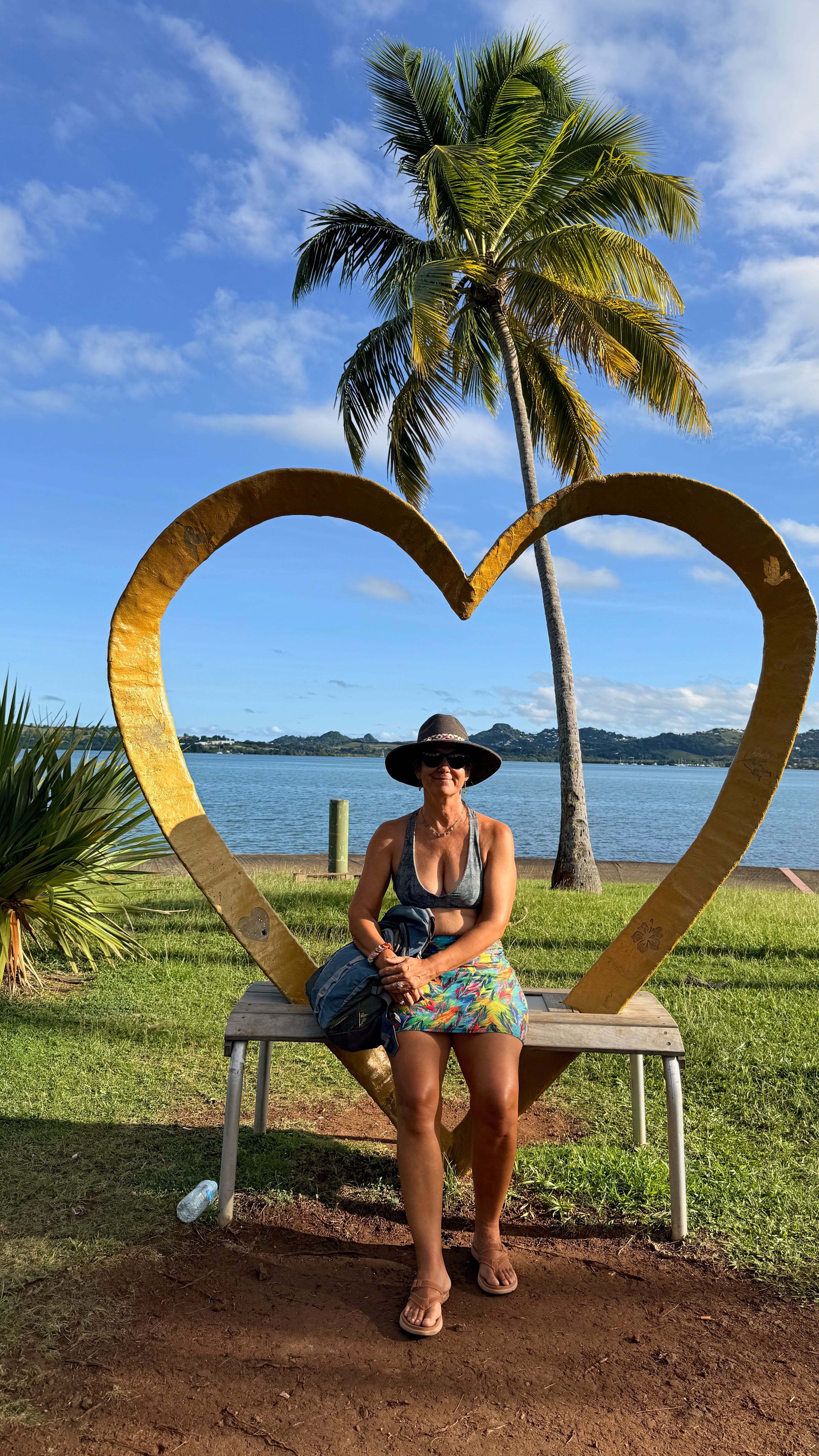
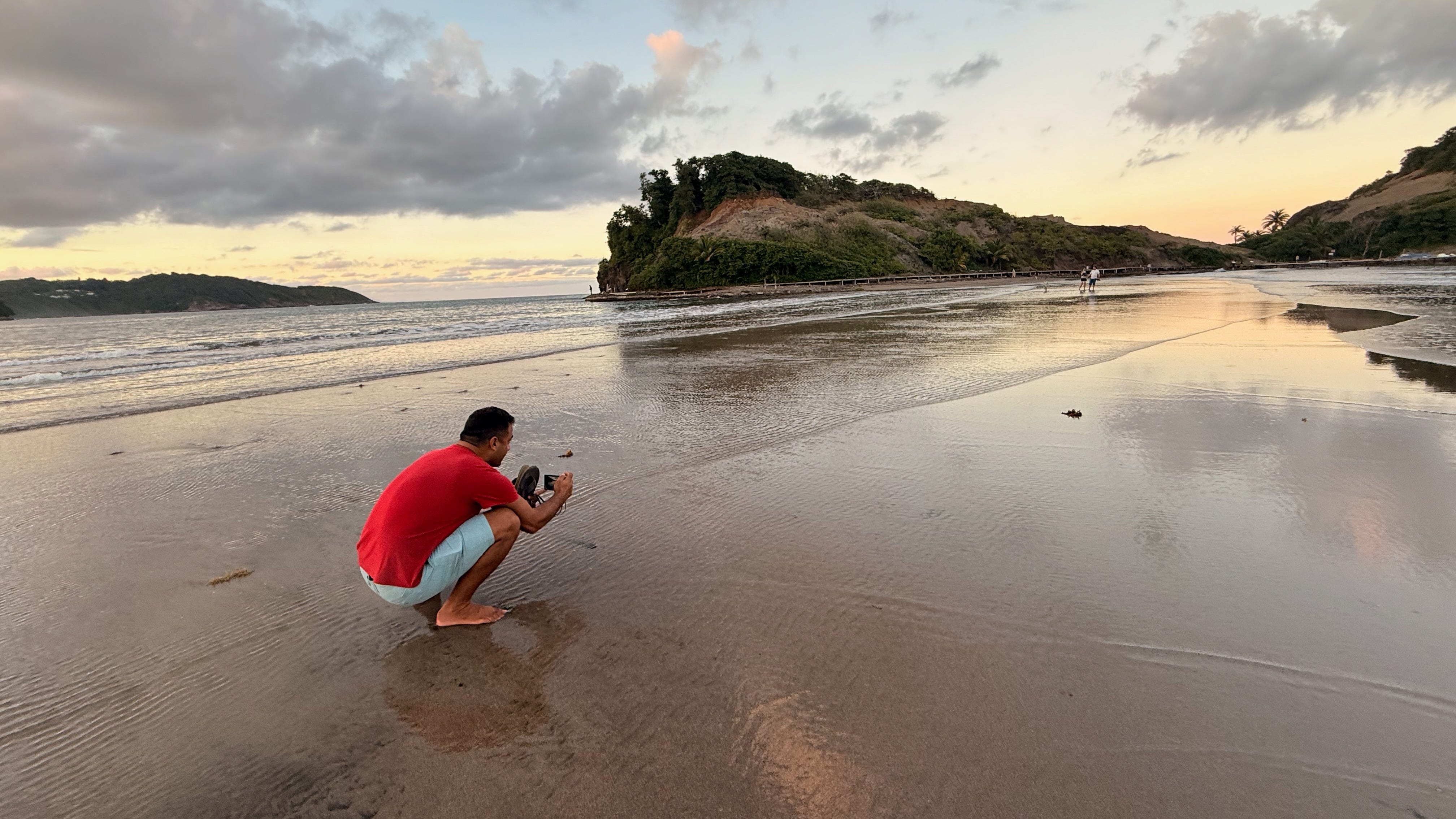
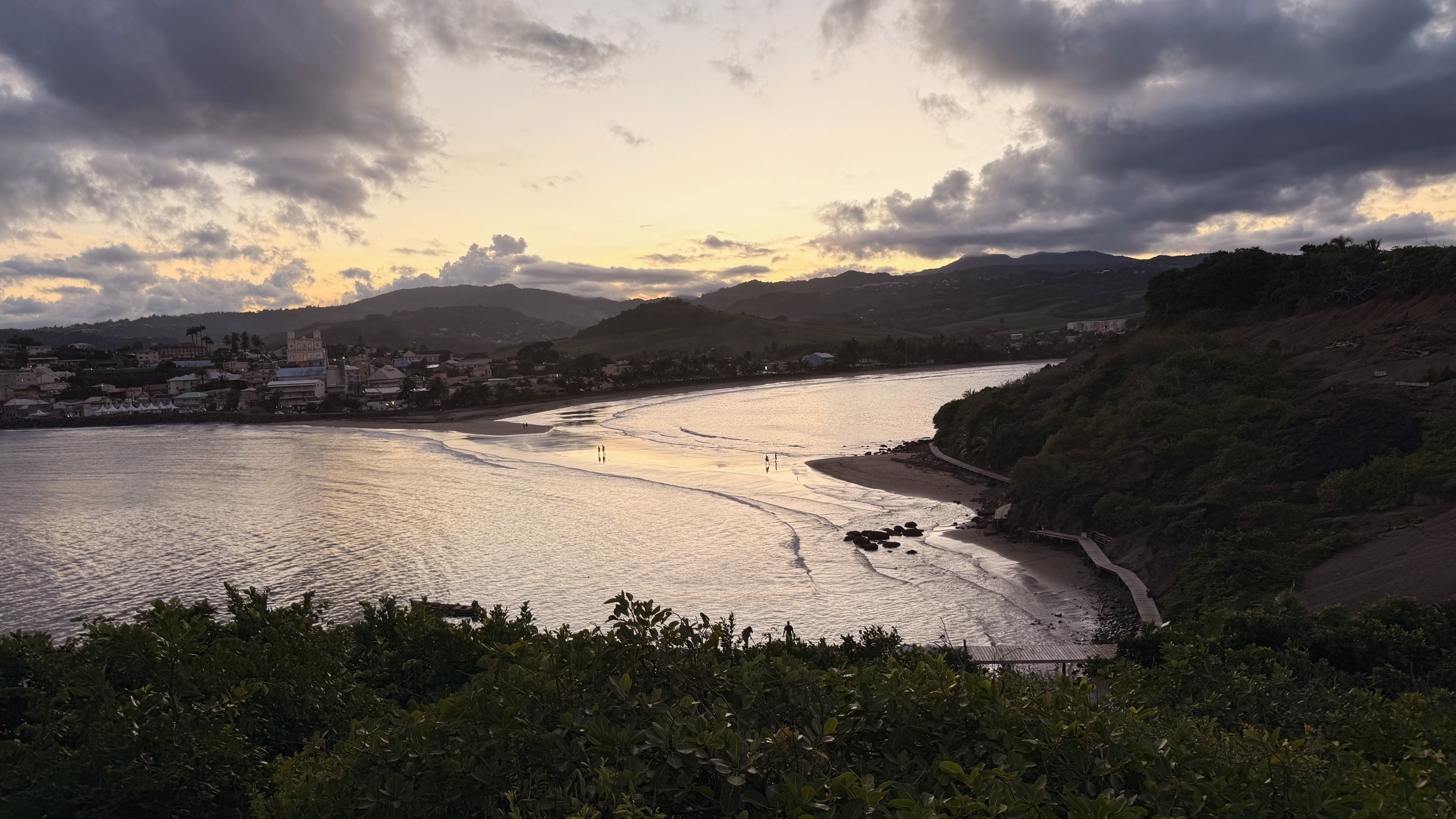
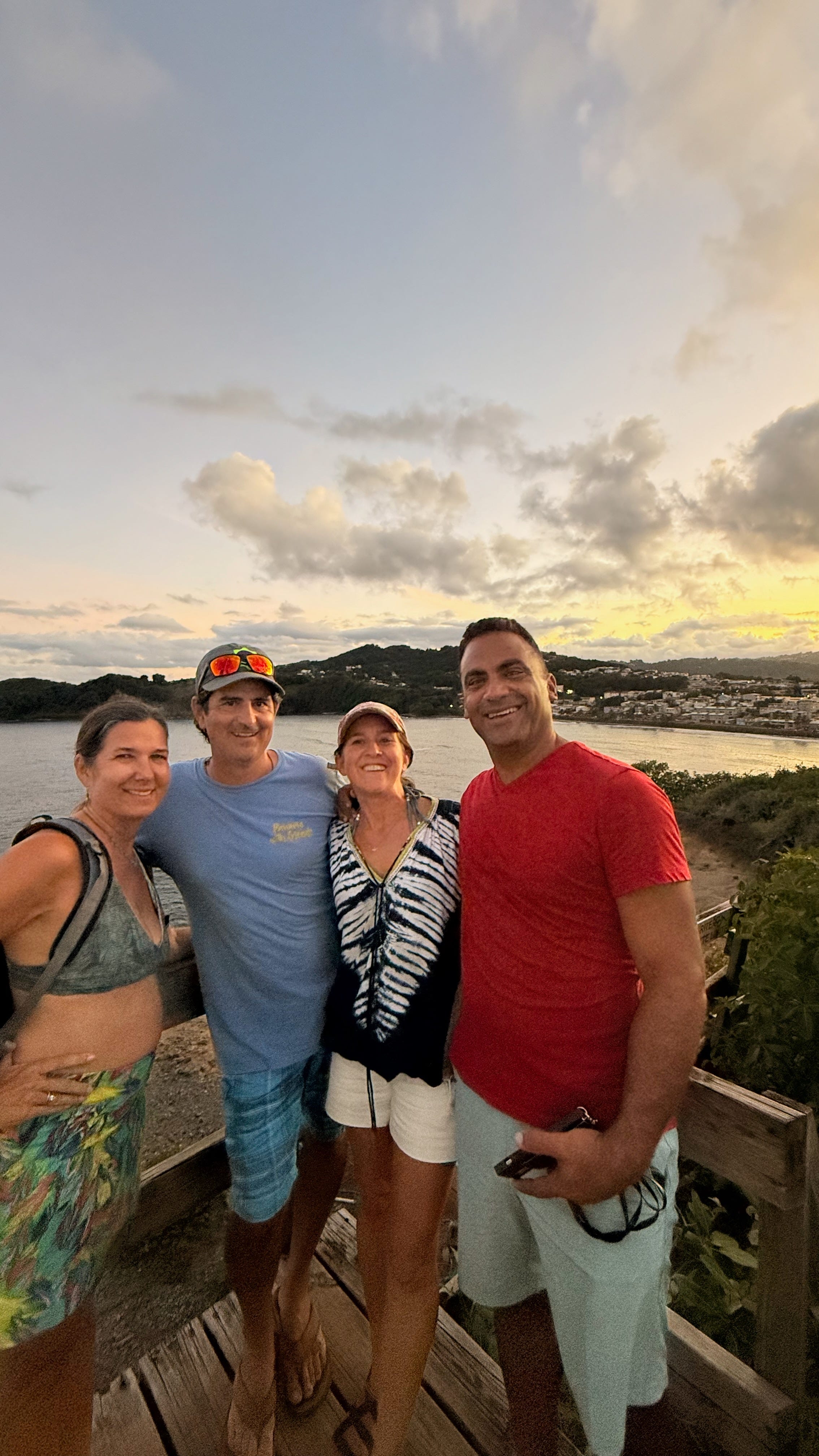
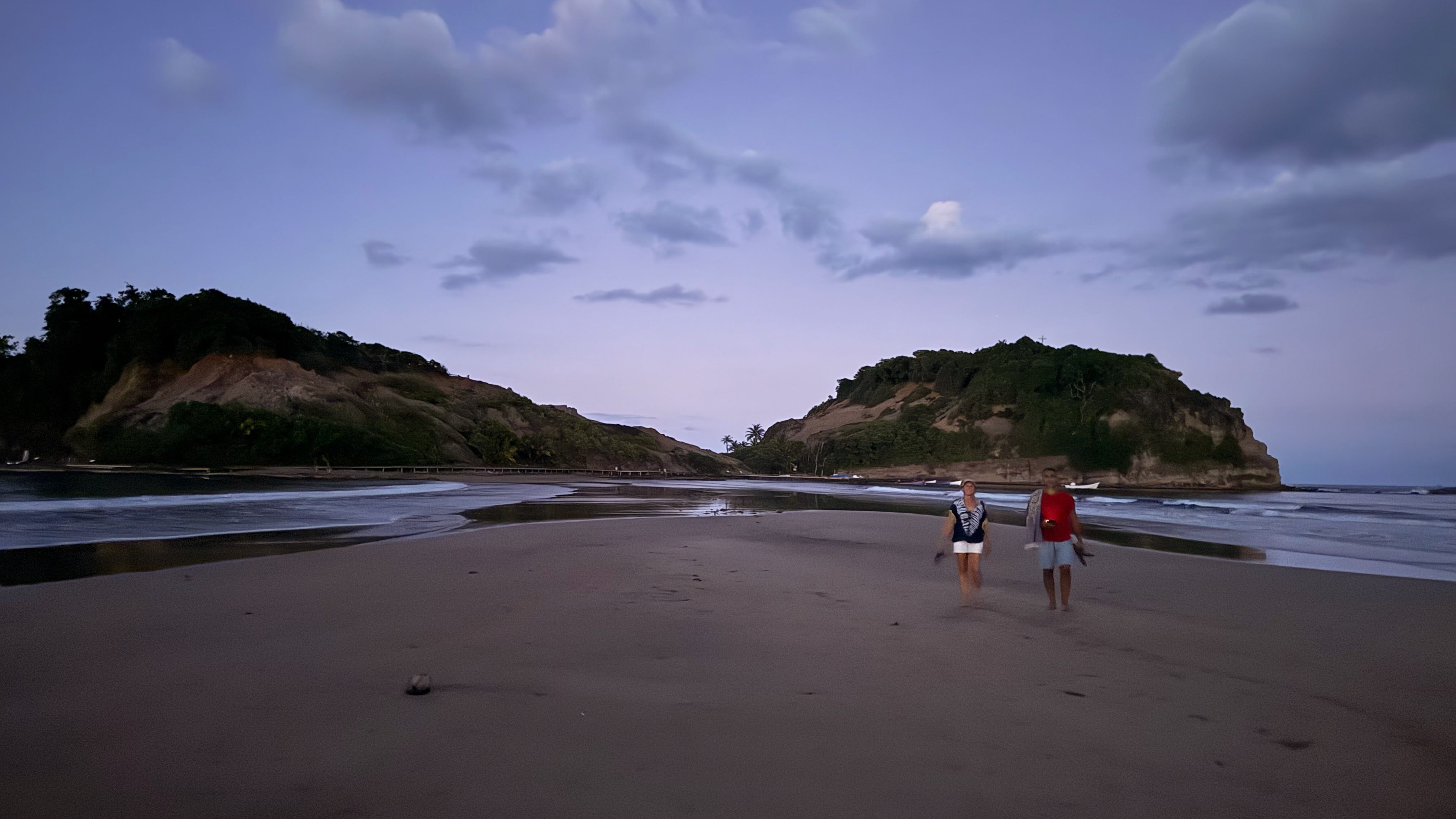
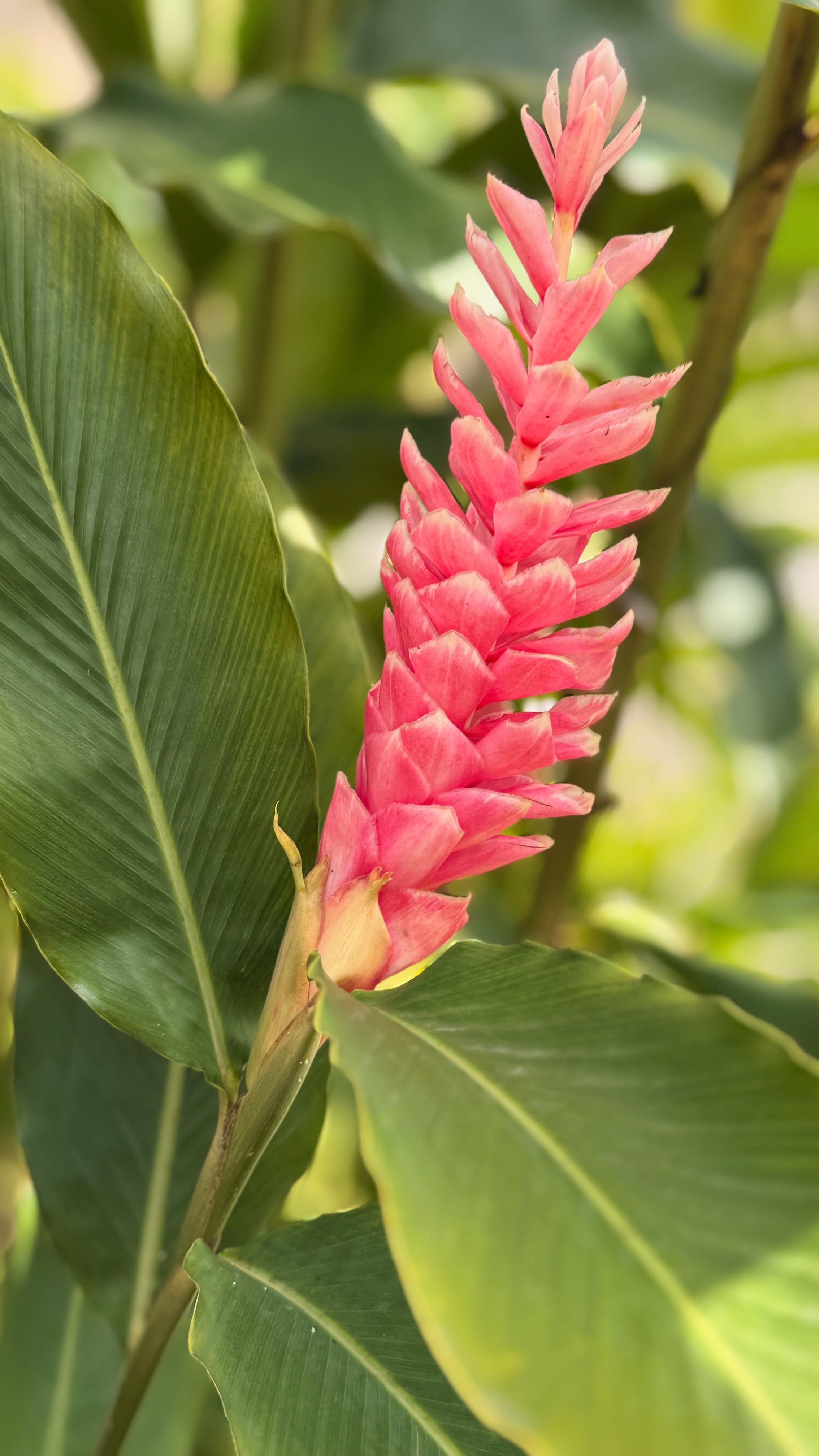
When we reached Martinique, we rented a car with Kenzy and Karyne so we could explore the island beyond the waterfront. It was wonderful to get off the boat for a while and see more of the island, its towns and its beautiful countryside.
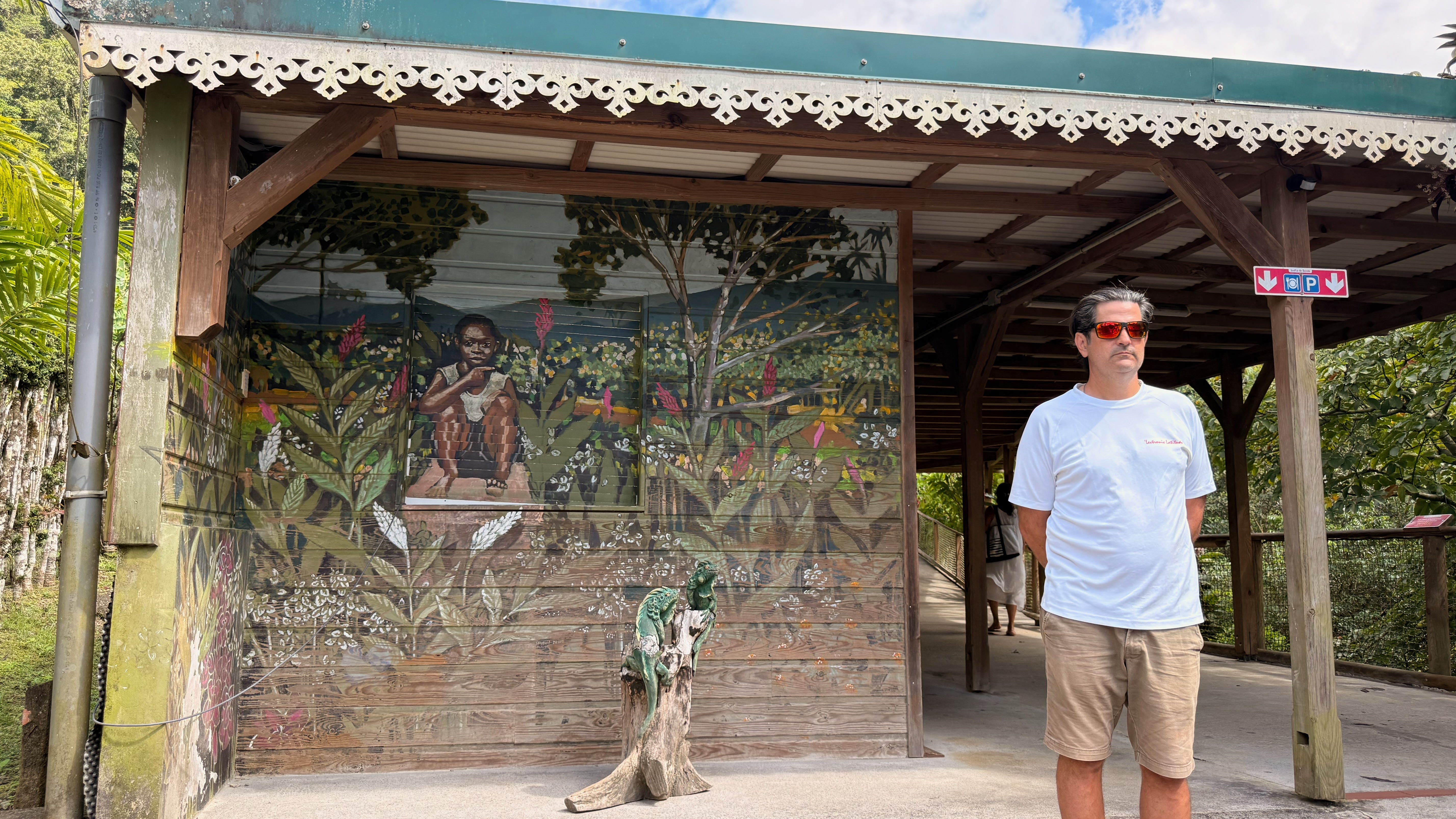
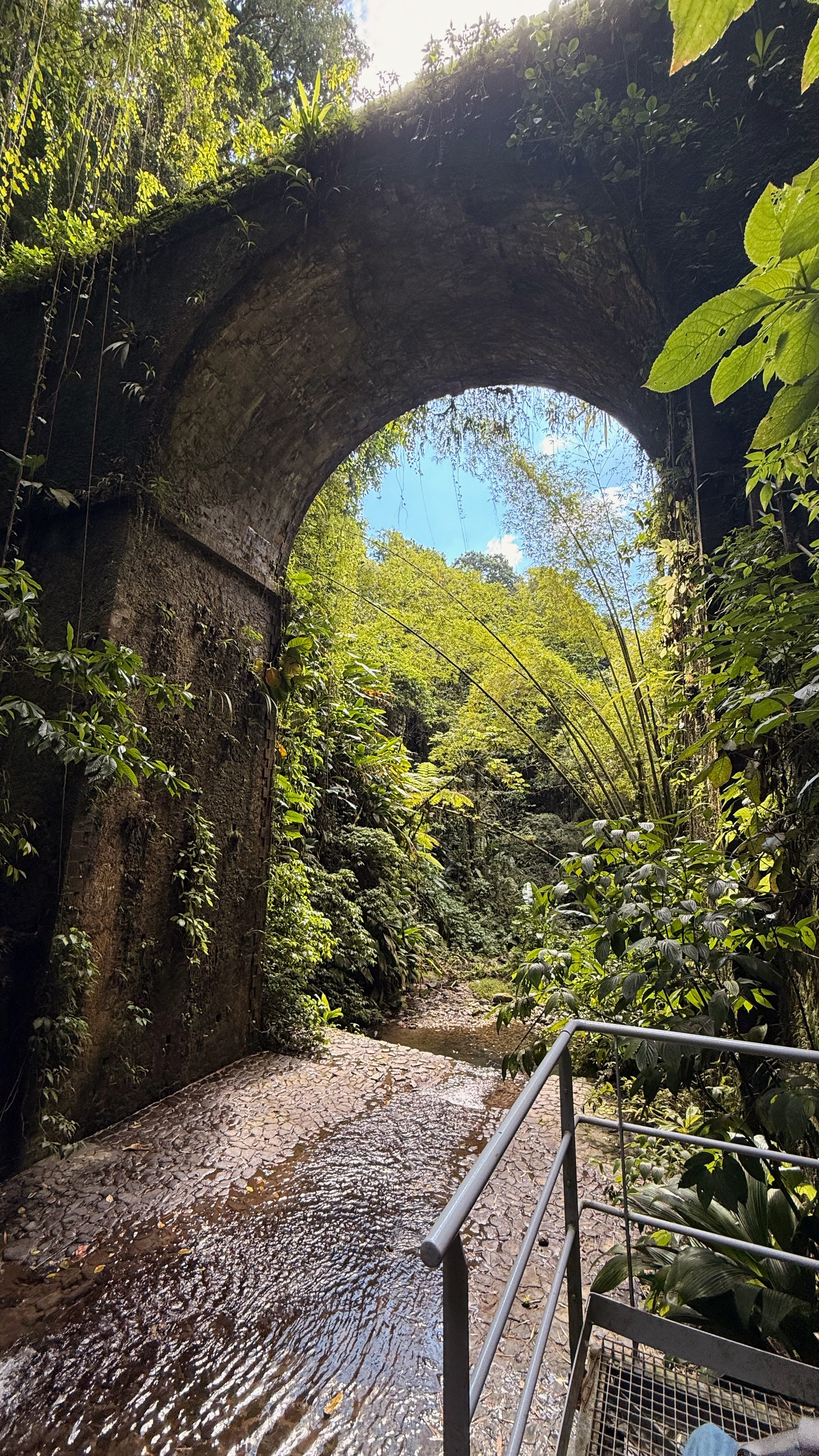
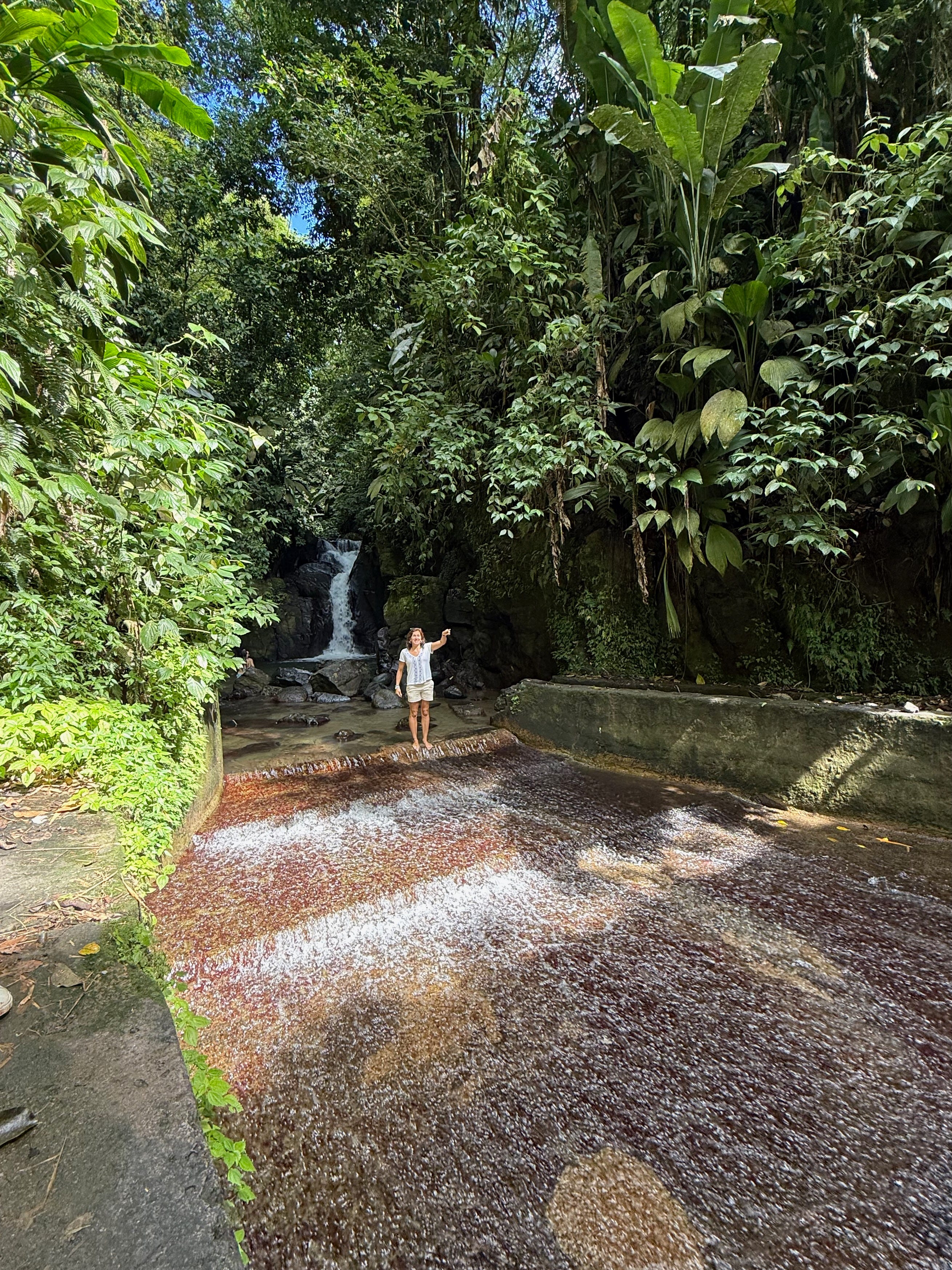
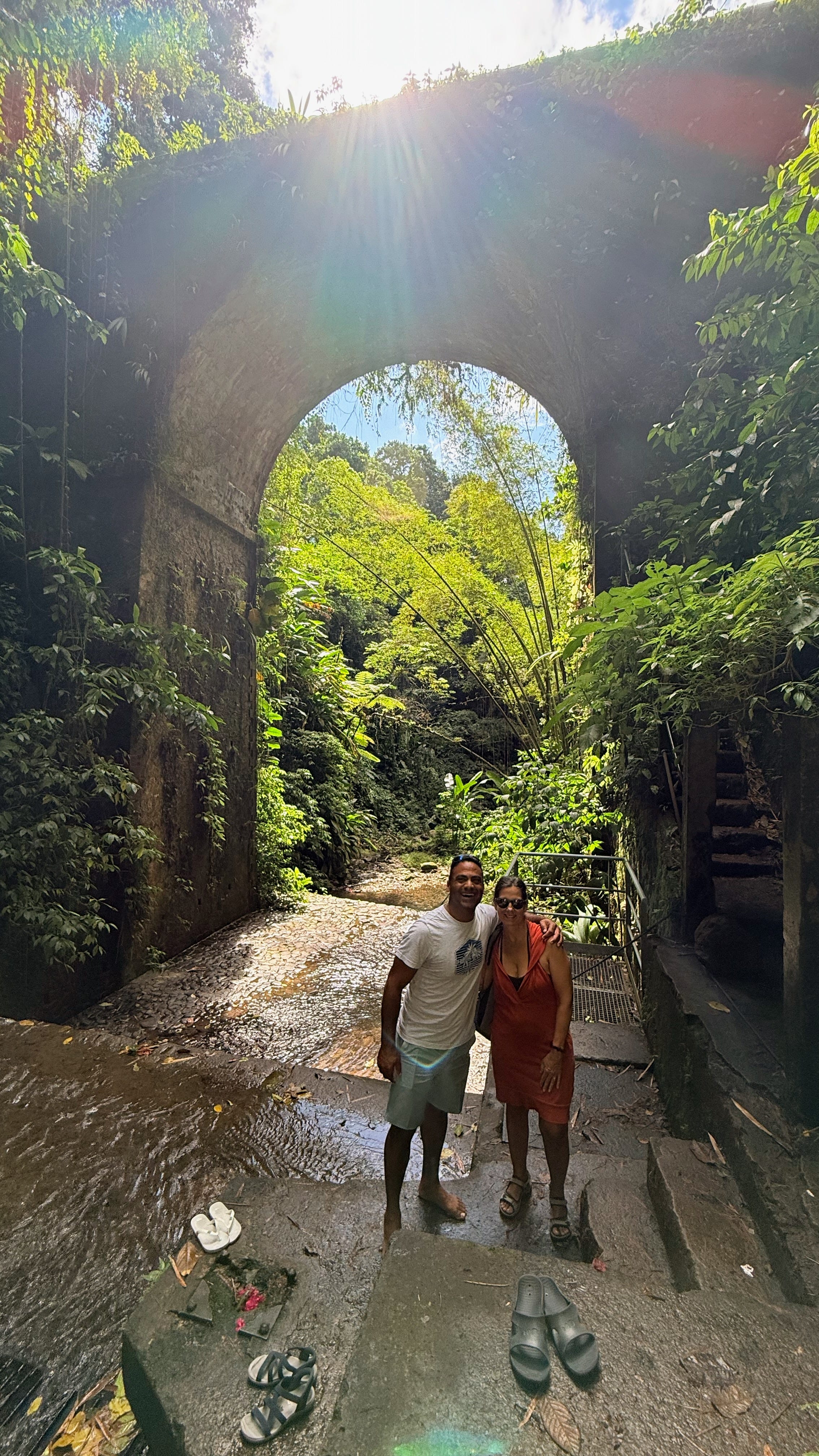
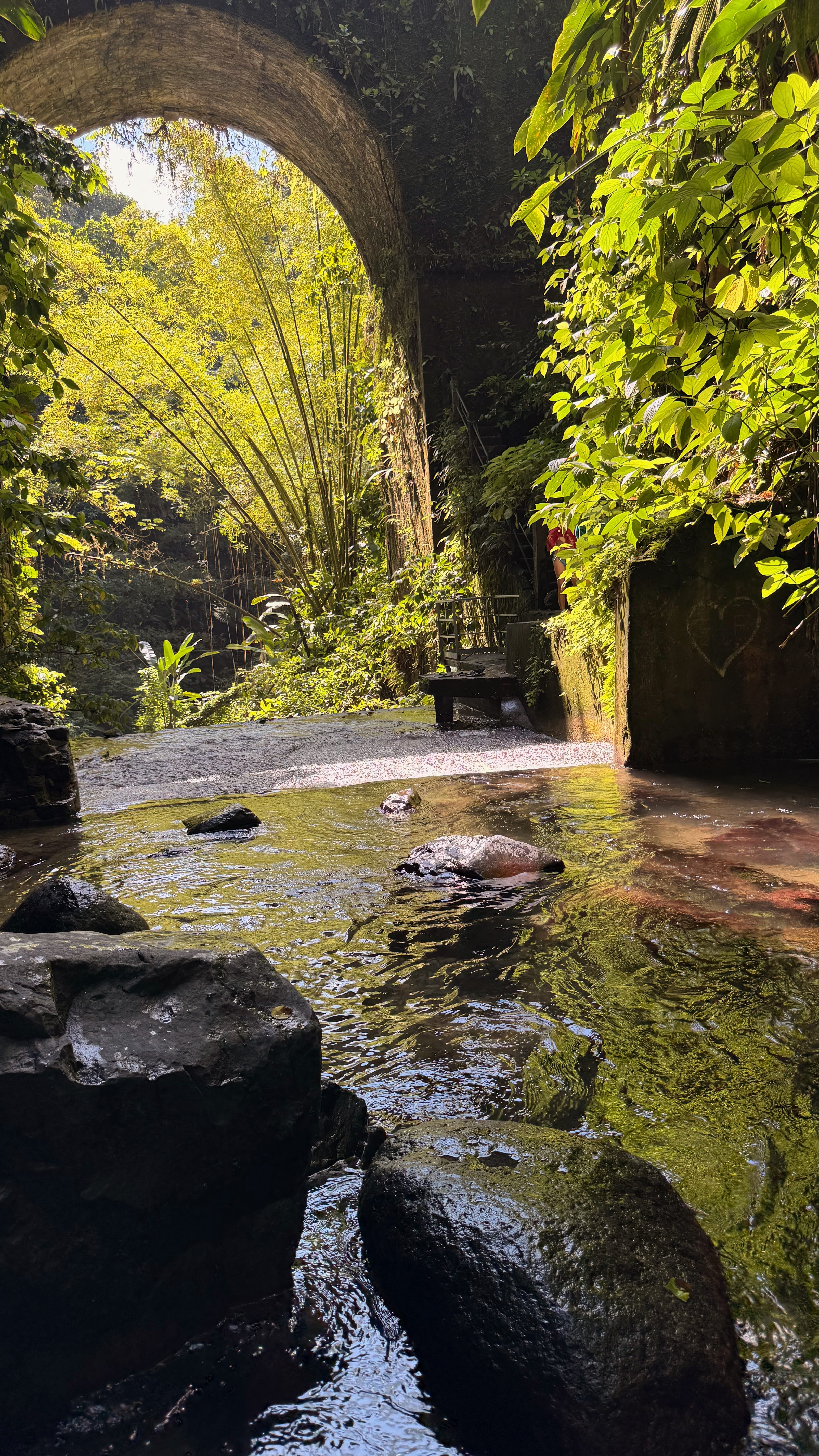


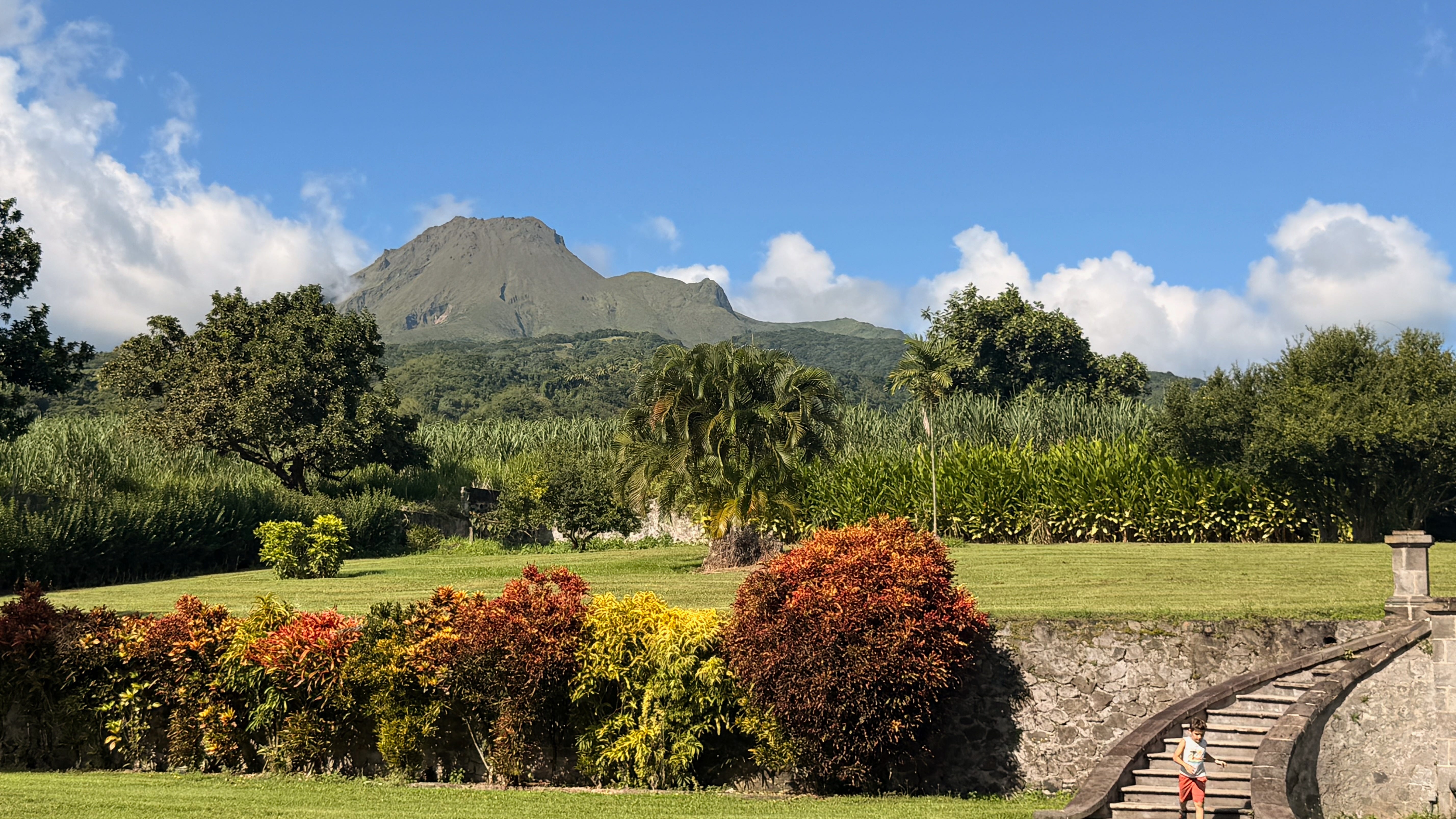
Mount Pelée erupted in 1902. The eruption devastated the surrounding area and completely destroyed the town of Saint-Pierre below the mountain. Nearly everyone in the town was killed. The story that stayed with us was that only one person survived—a prisoner who was being held underground in a heavily protected cell.
The Depaz family was also devastated by the eruption.
Victor Depaz, who was studying in Europe at the time, was away from Martinique when Mount Pelée erupted. He lost his entire family and the family’s estate in the disaster.
It would have been understandable if he had never returned.
But he did.
Victor Depaz eventually came back to Martinique and rebuilt on the family property. Rather than simply trying to recreate what had been lost, he began something new: he established a rum distillery.
That distillery became what is now Depaz, one of Martinique’s historic rum producers.
Standing there and hearing the story made the beautiful estate feel very different. It wasn’t just another picturesque Caribbean destination. Beneath the beautiful grounds and the rum production was a story of unimaginable loss, resilience and rebuilding after one of the most devastating volcanic eruptions in recorded history.
It was another reminder that when you travel by boat, you don’t just discover beautiful places.
You discover their stories.
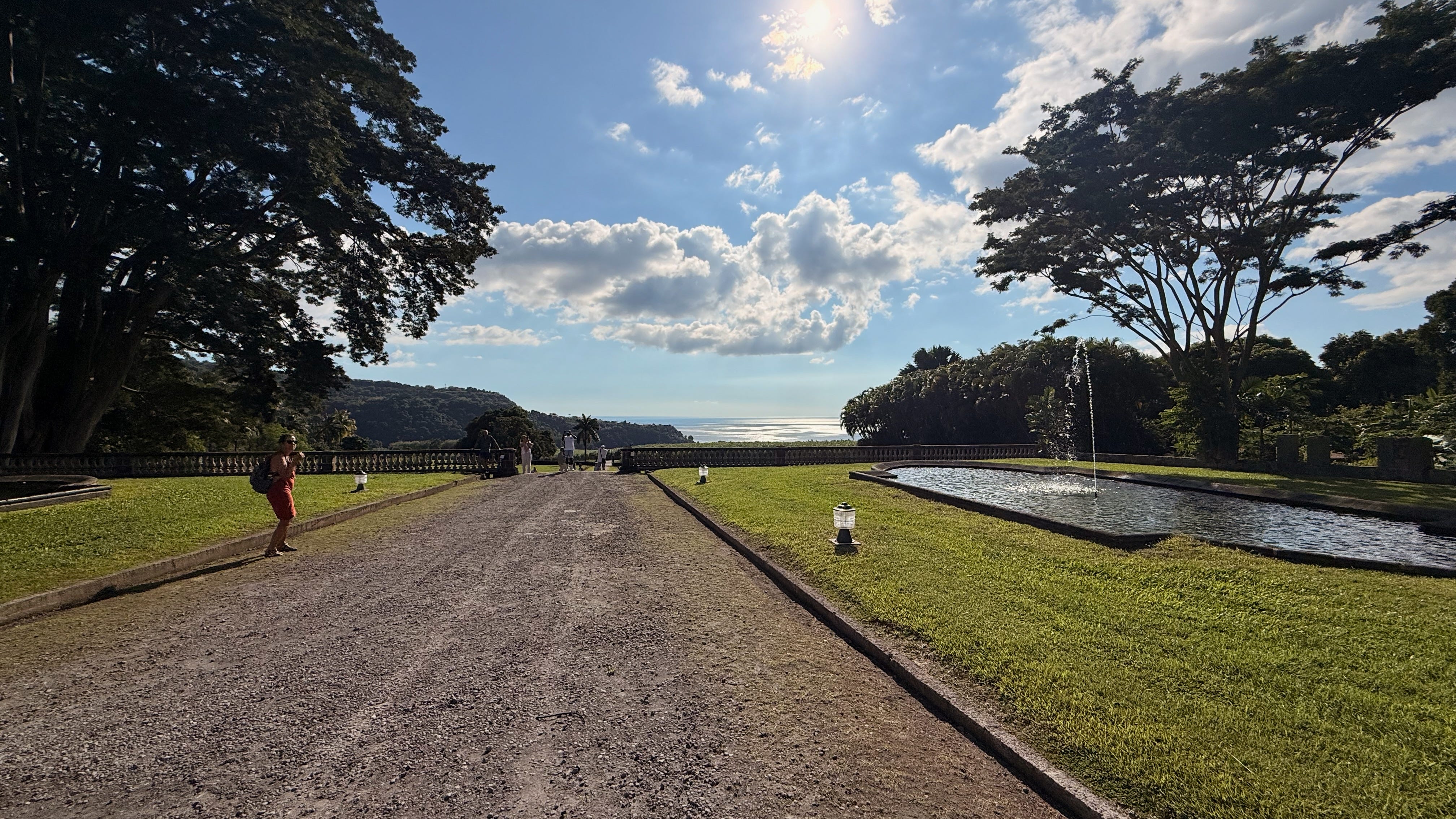
Eventually, though, after so much fun exploring Martinique together, it was time to say our farewells so Karyne and Kenzy could get further north to meet up with family. We said our “fair winds and following seas” with the hope that we will see them again one day, and moved on to another anchorage at Trois-Ilêts.
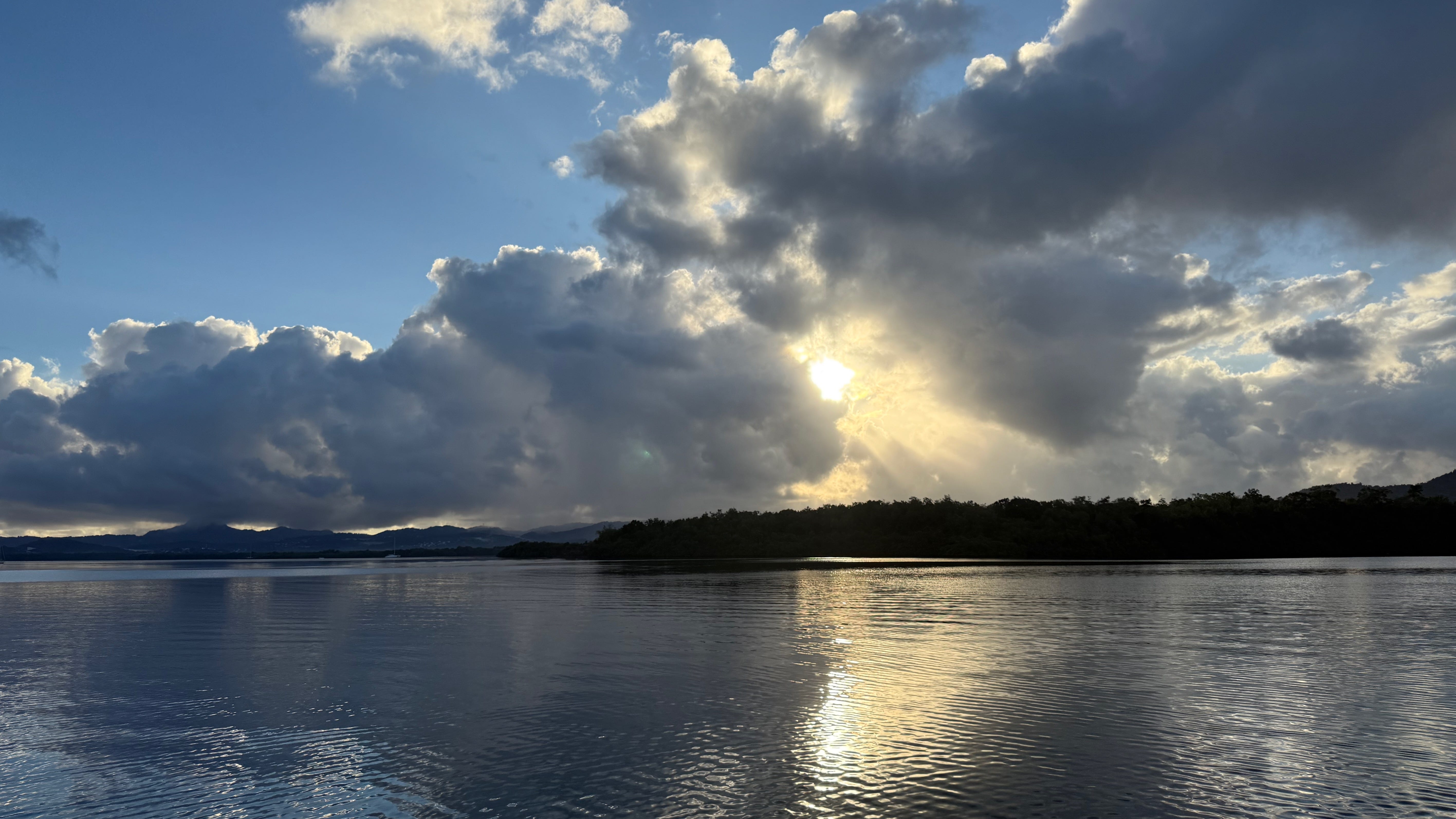
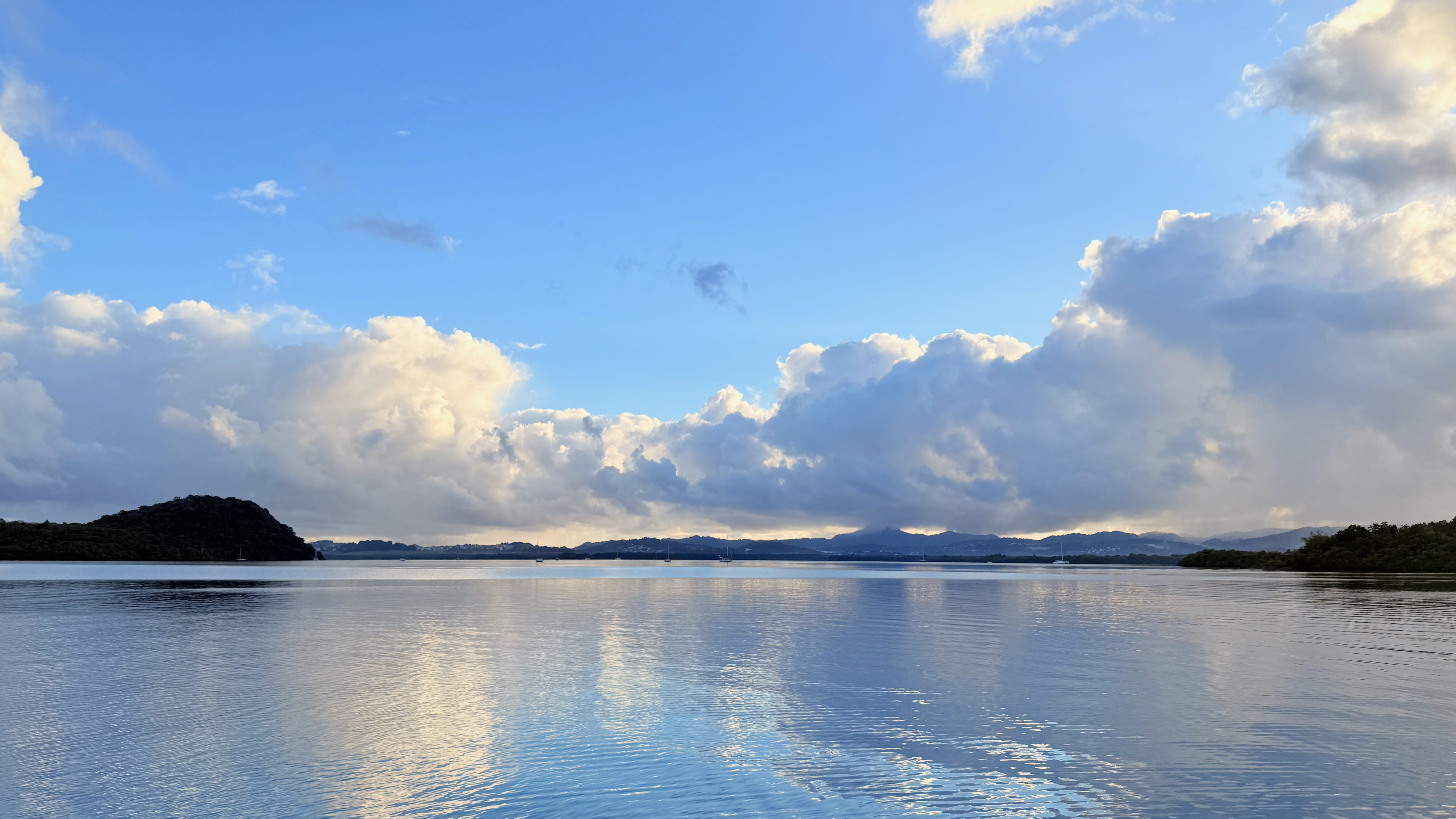
The change was dramatic.
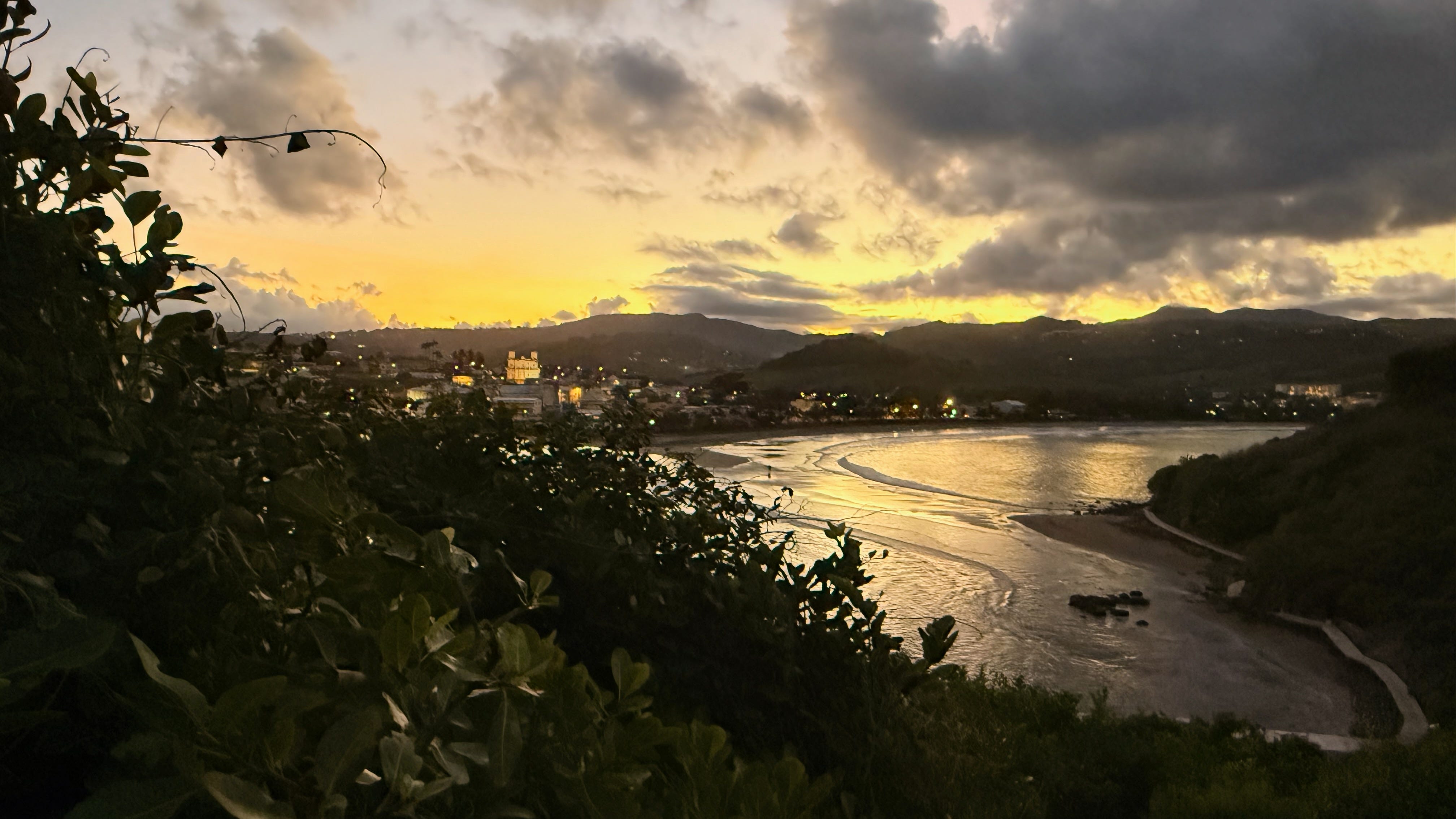
Tucked deep inside the Bay of Fort de France, the anchorage was incredibly calm. After all the movement of the previous weeks, it felt almost surreal to be sitting in such peaceful water.
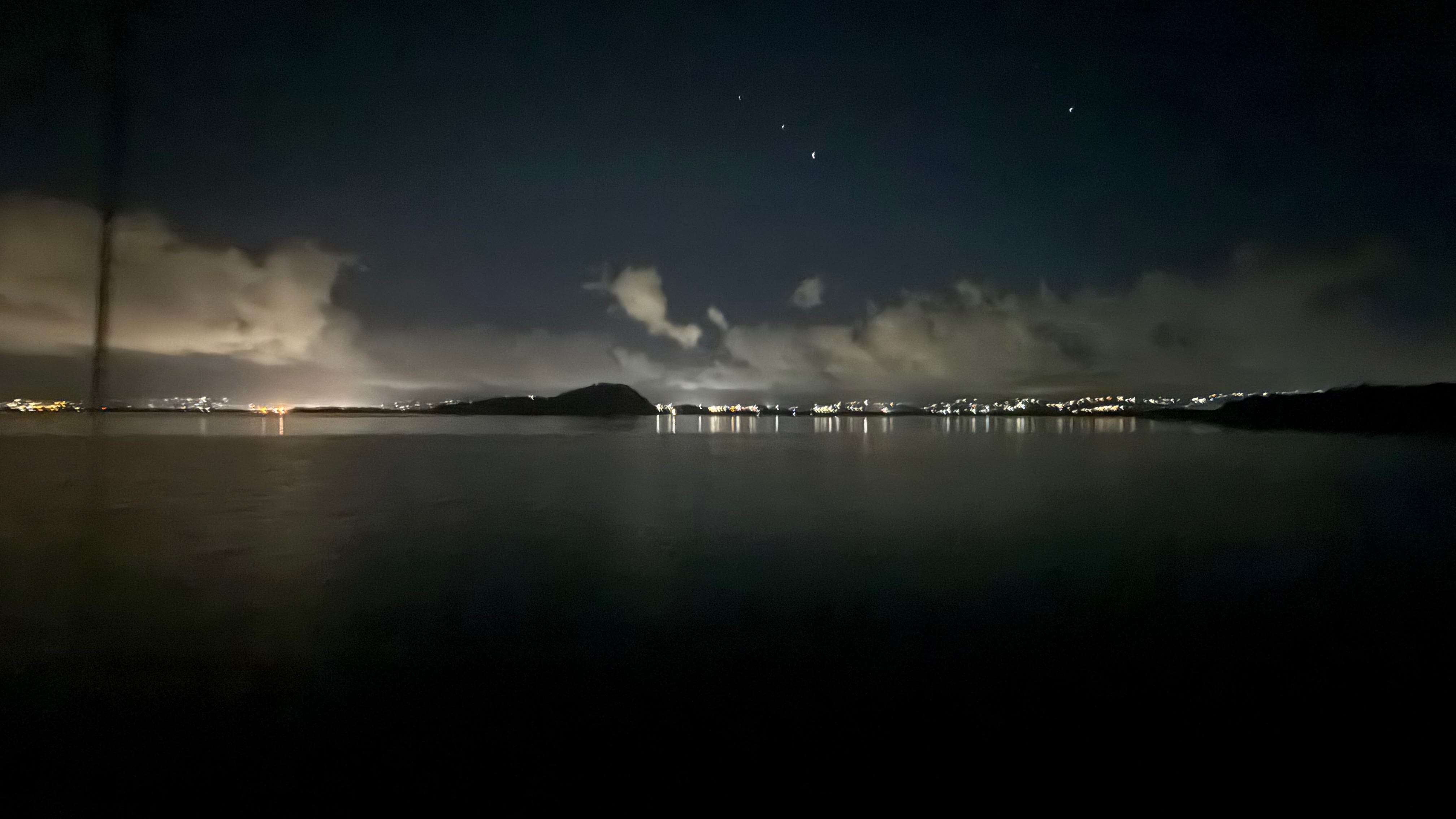
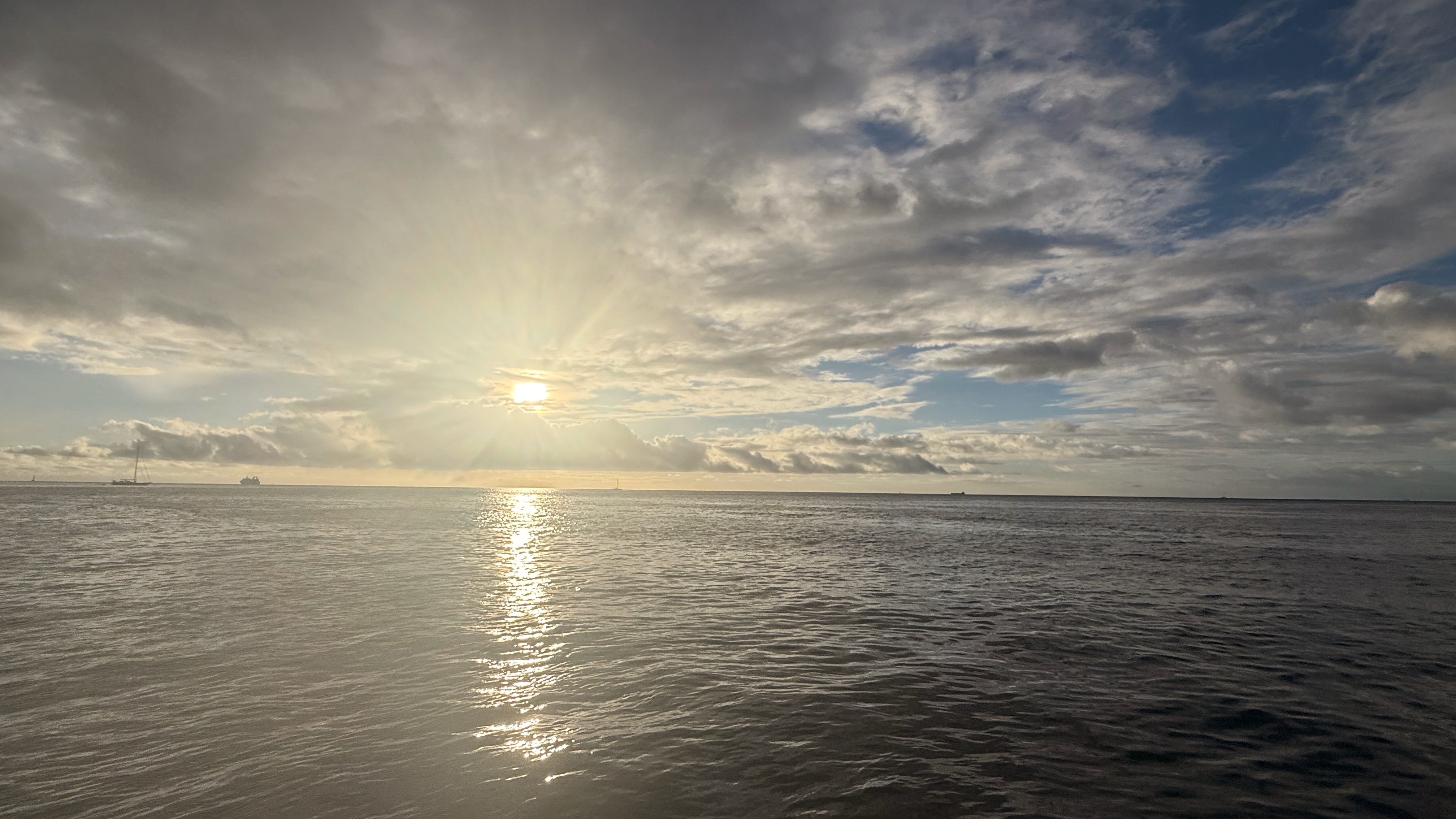
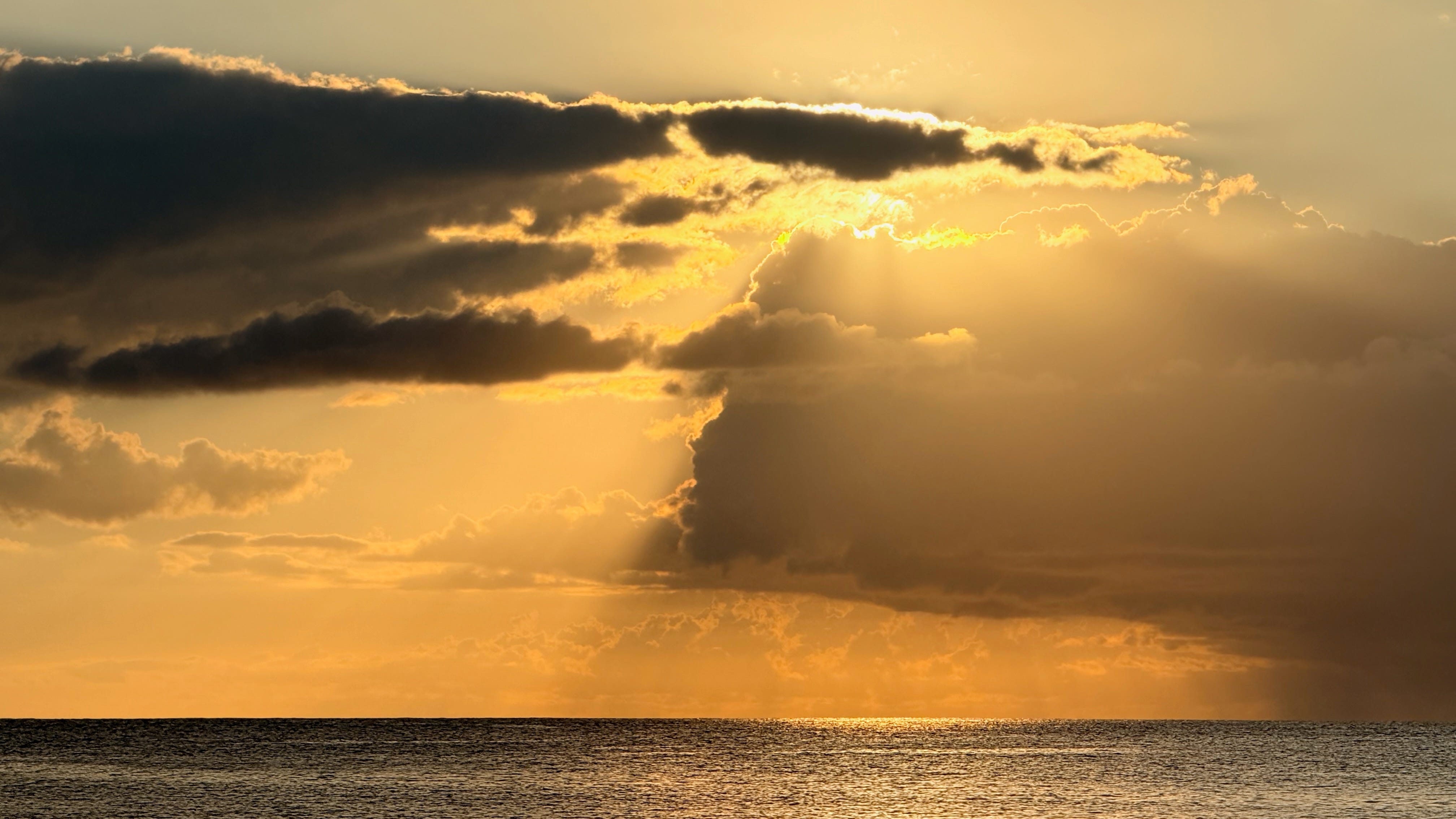
We watched the clouds drift across the sky.
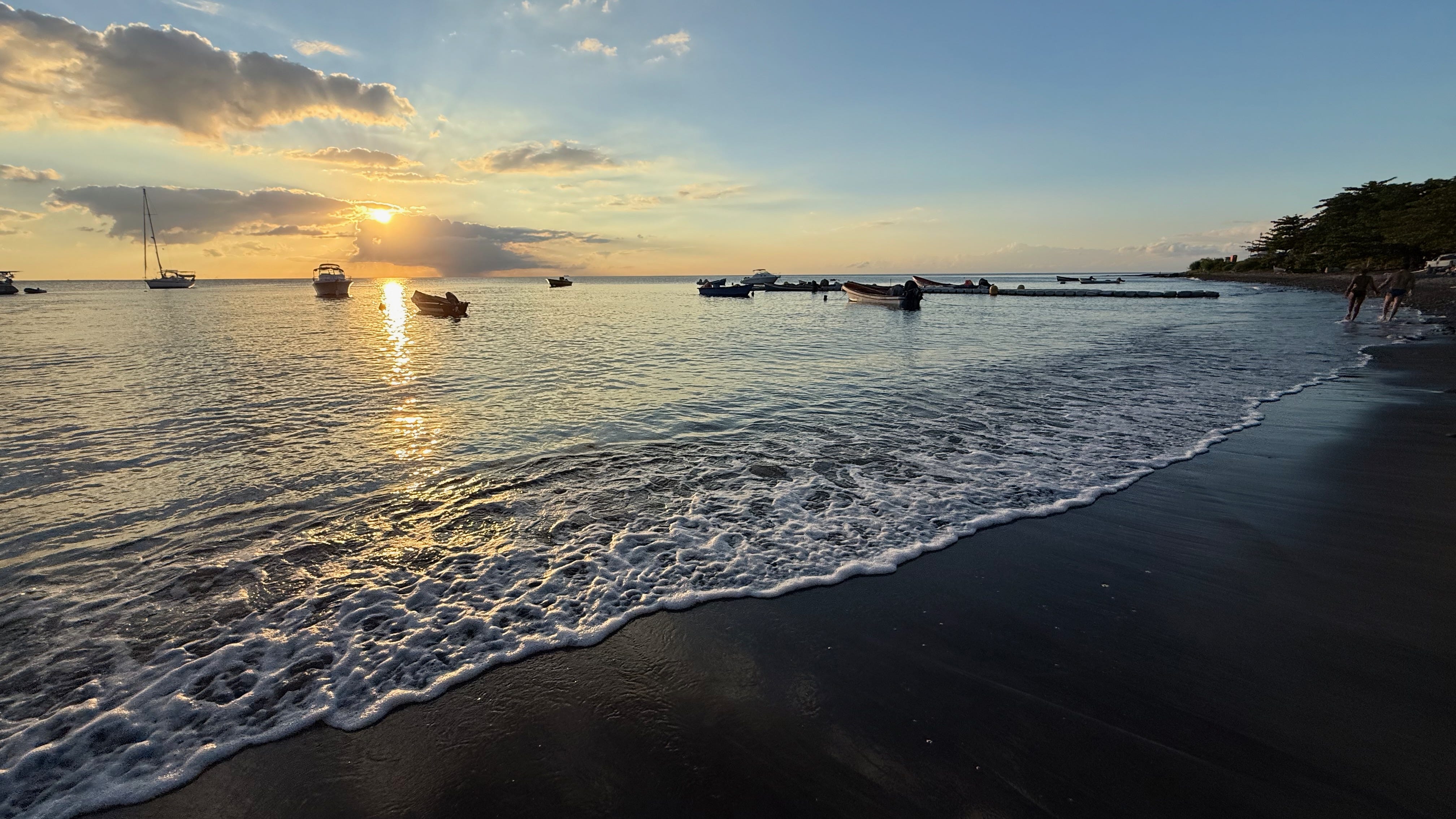
We watched the sunsets.
We watched the weather.
We saw rainbows.
A couple of fronts were moving through, so we decided to wait them out in the protection of the anchorage.
There are moments when life aboard a sailboat feels almost unreal, and this was one of them. The boat gently rocking beneath us, the changing colors of the sky, the clouds moving across the bay—it felt like we were living inside a dream.
After all the delays in Trinidad, the long passage, the miles between islands and the excitement of reconnecting with friends, Peter and I decided to take a few days just for ourselves.
We needed the rest.
We also needed to get ready.
Our next adventure was about to become a lot more crowded.
We were expecting guests aboard.
Two of our guests were members of our yacht club. We had donated a sailing trip to the club’s fundraiser, and now the winning guests were coming to experience a little taste of our cruising life.
Our third guest was our dear friend Nicole, who would stay with us for several weeks.
And then my sweet sister Jen was coming to join us for about a week.
One of the best parts of this lifestyle is being able to share it with the people we love. The Caribbean is beautiful on its own, but experiencing it with family and friends creates an entirely different kind of memory.
We had spent months getting the boat ready, sailing thousands of miles and dreaming about exploring these islands.
Now we were going to get to share it.
After a little more time in Martinique which we love, our next stop —Dominica—was going to give us plenty to share.
Stay tuned!