Heading South in Search of the Perfect Spot
Before our guests arrived, we asked them what kind of sailing experience they were hoping for. Did they want to spend their time exploring quaint villages, swimming in beautiful anchorages, experiencing local culture, or getting in some good sailing? Their answers helped us decide how to plan the next part of our journey.
We had already spent quite a bit of time exploring central Martinique, so we were ready for a change of scenery. We wanted to head somewhere that would give us access to boat parts, good provisioning, and a convenient starting point for our guests’ sailing adventure.
Our choice was Le Marin, at the southern tip of Martinique. It’s a large, well-protected bay, right next to the enormous anchorage of St. Anne. It turned out to be the perfect combination of convenience and Caribbean charm, with plenty of places to shop, explore, and keep ourselves entertained while we waited for our guests.
Waiting Out the Weather in Le Marin
We also had another important reason for choosing Le Marin. A forecast of some very strong winds over the coming week meant we needed somewhere protected to ride them out.
The only drawback was that we had to take a mooring ball because there was no longer any room in the designated anchoring areas. We don’t feel quite as comfortable on a mooring as we do at anchor. There’s always the possibility that a line could chafe through, and these particular moorings were showing quite a bit of rust where our lines rested. The risk isn’t that the rusty ring would break, but rather that the rough rust will chafe through the lines.
We decided to double up on our lines and kept a close eye on everything as we hunkered down. With winds expected to reach 30 knots, even getting to shore and back in the dinghy wasn’t going to be easy.
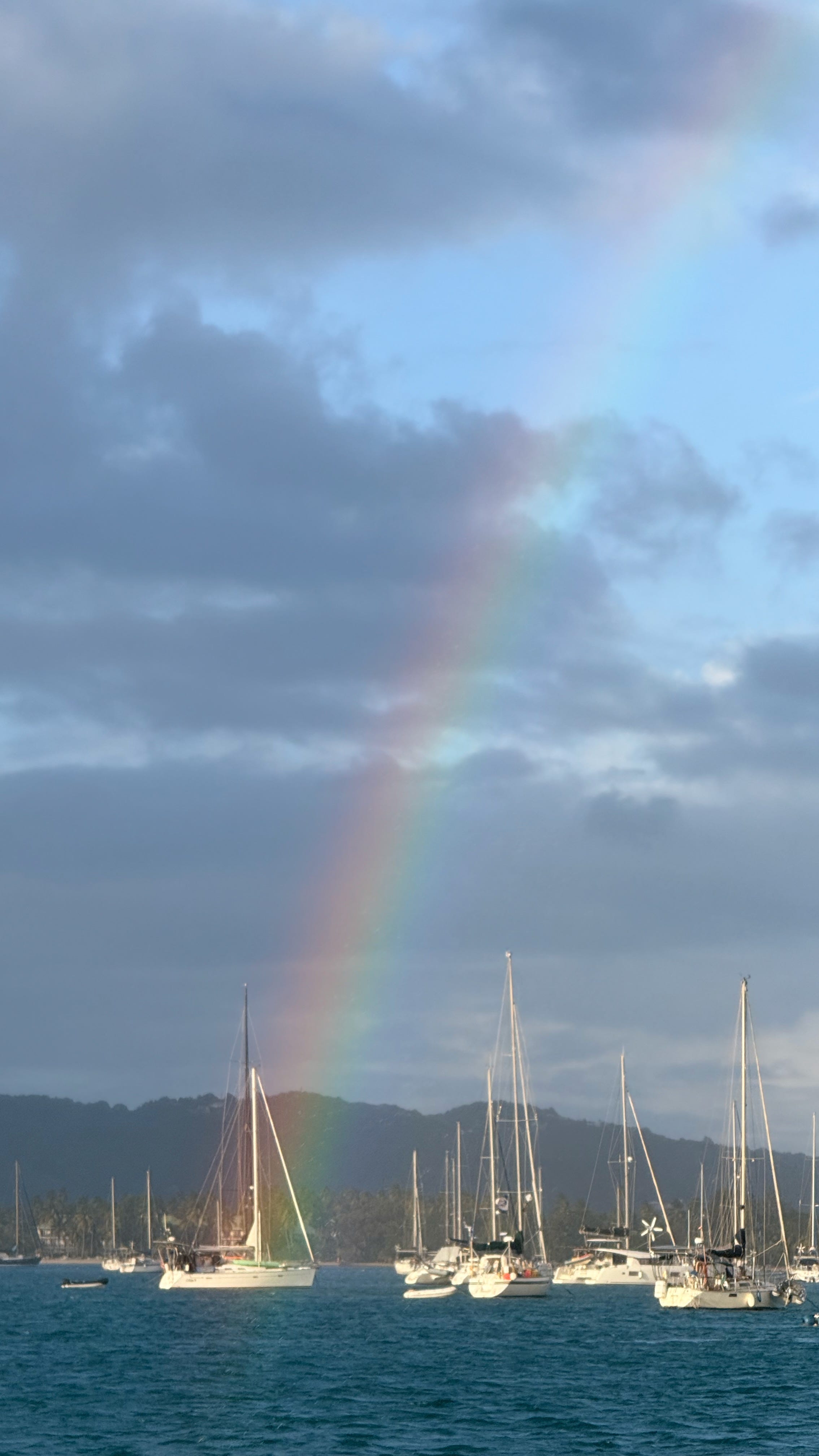
Fortunately, we found a little entertainment without having to leave the boat. We had a front-row seat to watch the local sailors practicing for some major boat races that were about to take place in the harbor. It was fascinating to watch them maneuver their unusual sailboats and see how differently they raced. There was a real sense of local tradition and pride.
A Little Taste of Martinique
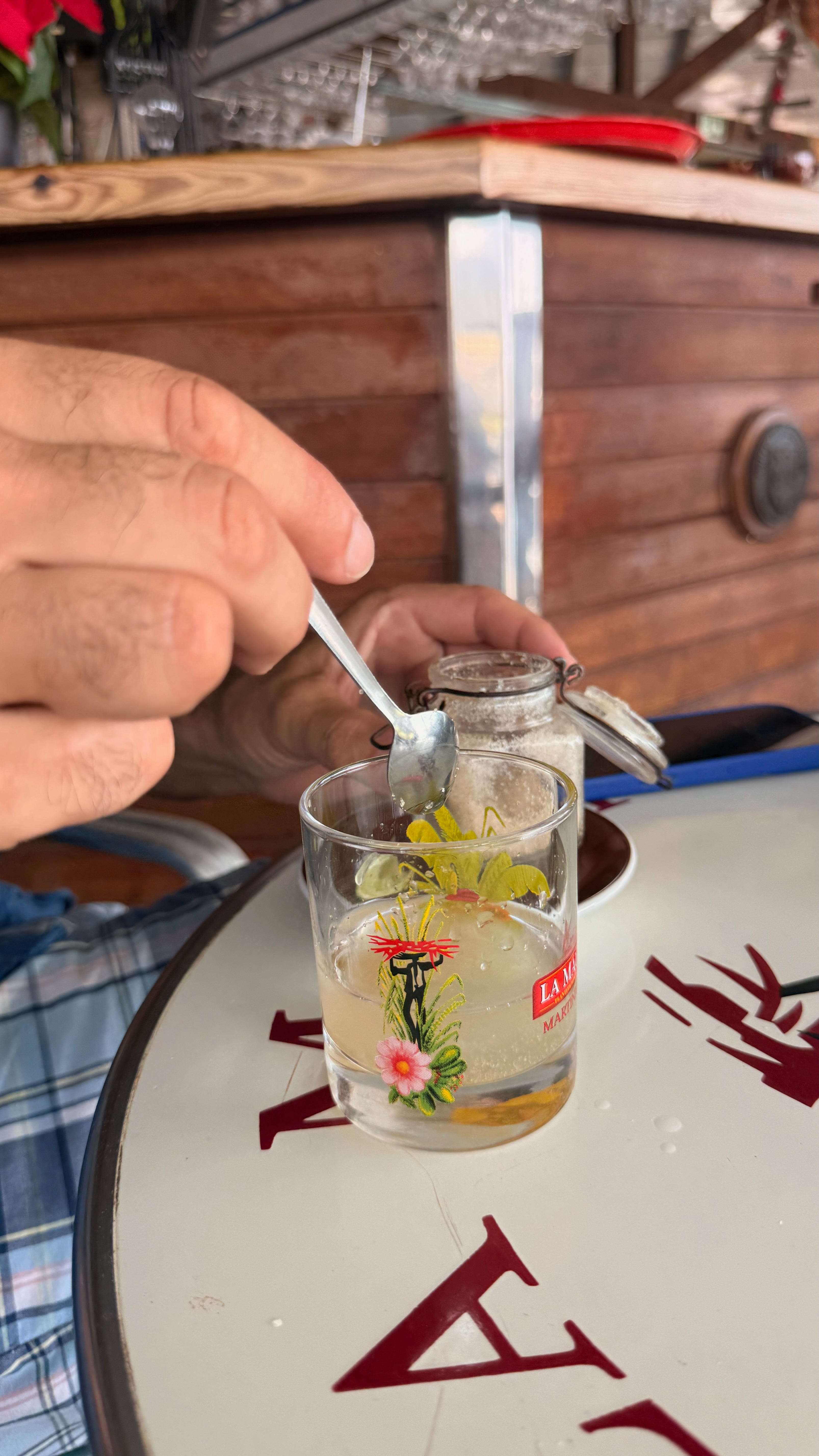
When we did manage to get ashore, we discovered one of our favorite French Caribbean traditions: ti’ punch.
It’s a traditional Martinican aperitif made with agricole rum, a little sugar or cane syrup, and fresh lime. Simple ingredients, but somehow the combination is just right. We first discovered it in Le Marin, and it quickly became a favorite ritual.
There’s something lovely about the way the French enjoy their rum. It’s not just about having a drink; it’s about taking a little time to enjoy it.
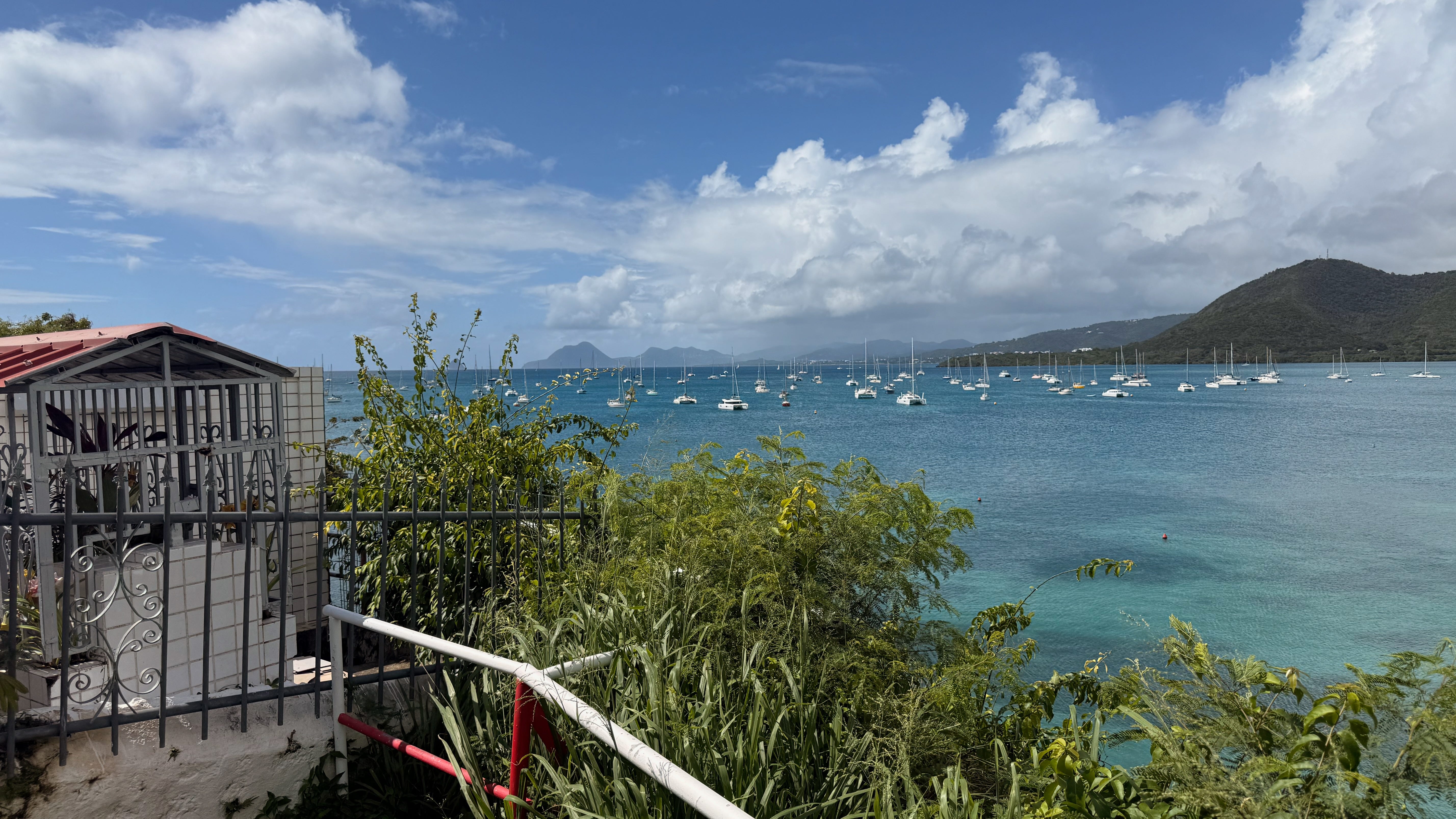
Once the weather cleared, we moved over to St. Anne, the enormous anchorage just south of Le Marin. We absolutely loved it there!
There were beautiful beaches, plenty of places within walking distance, and a lovely town center where locals gathered and socialized. It was a great place to spend some time on land without having to go very far from the boat.
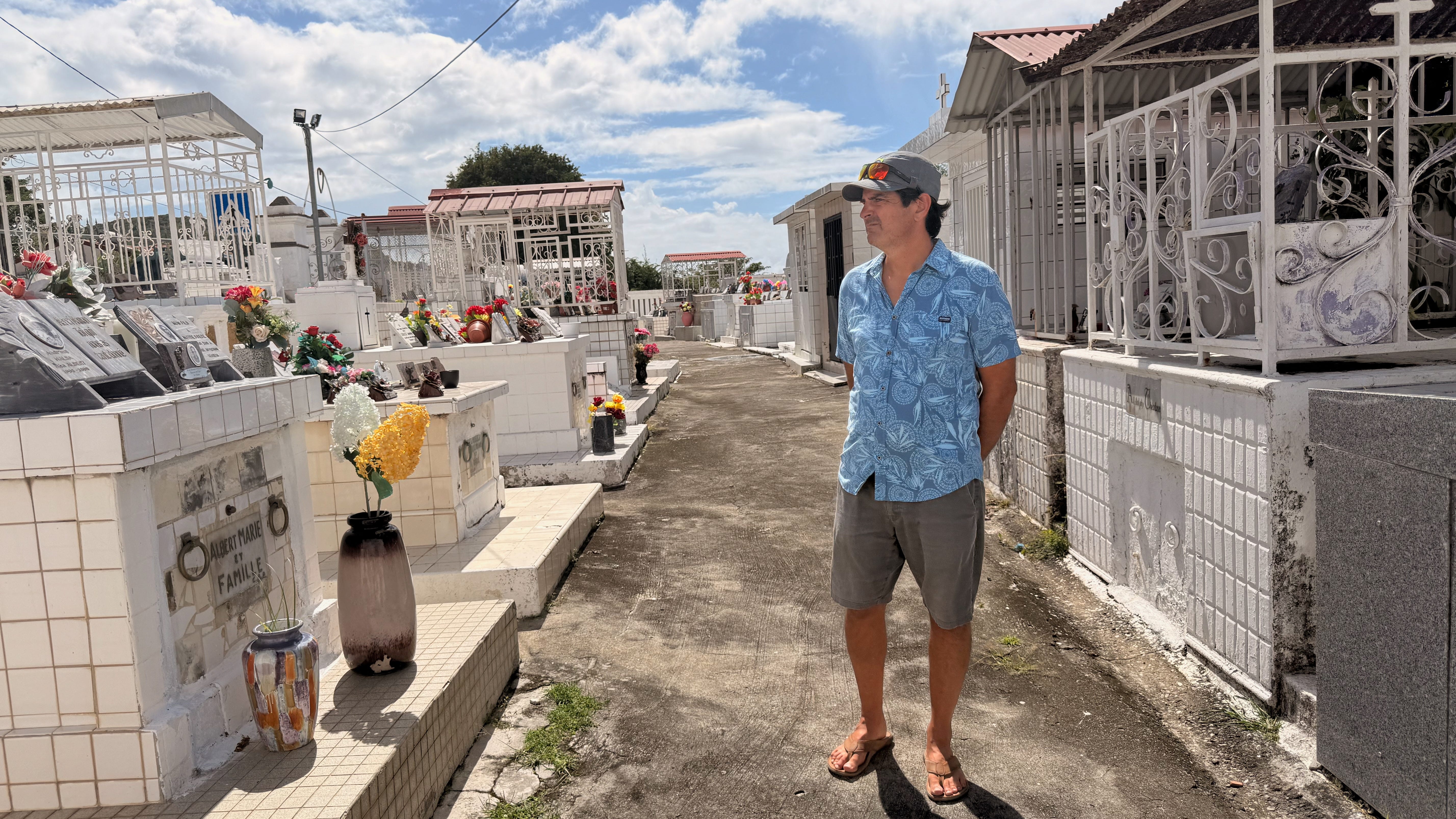
We also discovered that the cemetery offered a wonderful vantage point overlooking the anchorage. It’s always interesting to find unexpected places that give you a different perspective on life!
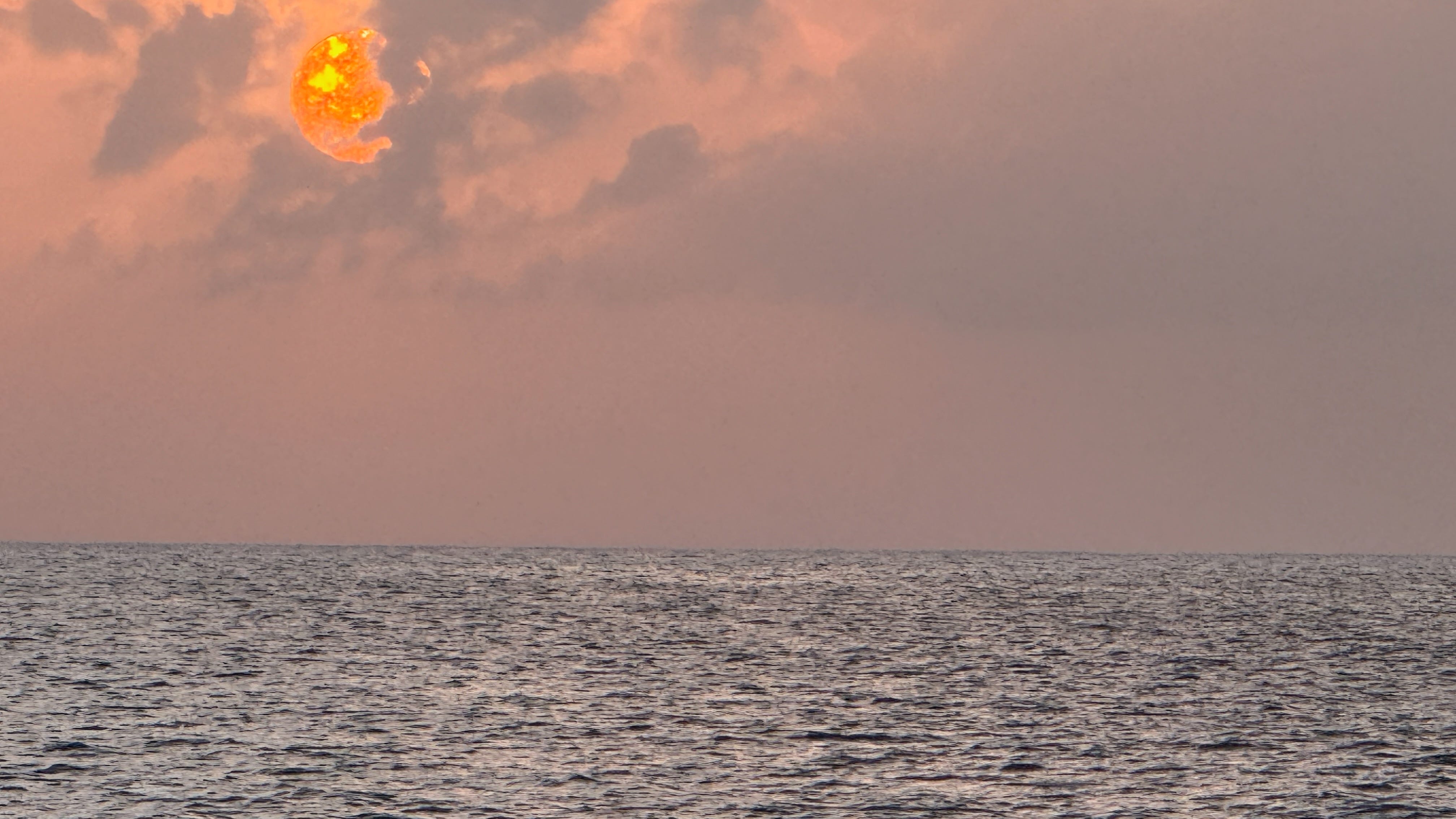
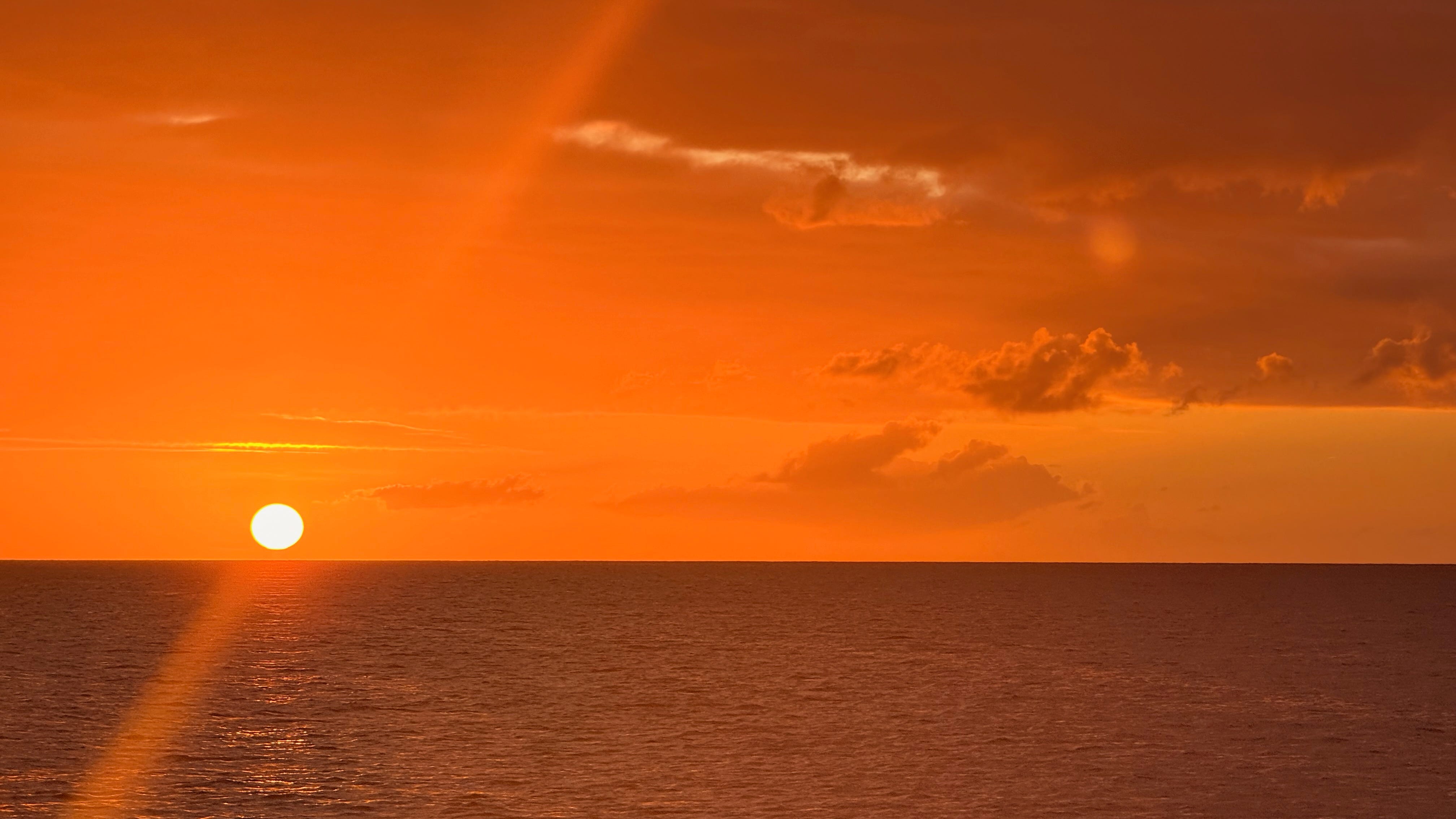
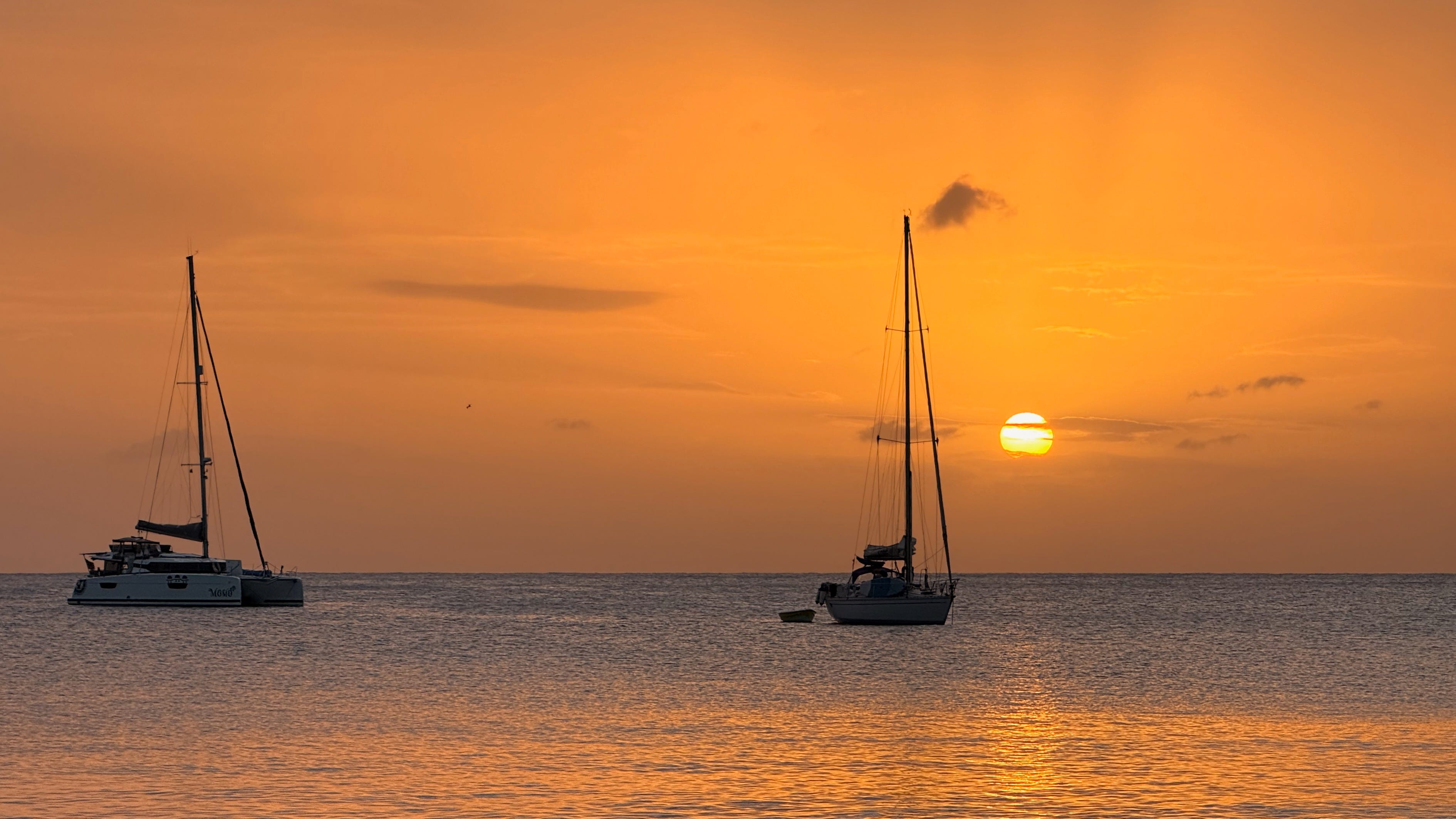
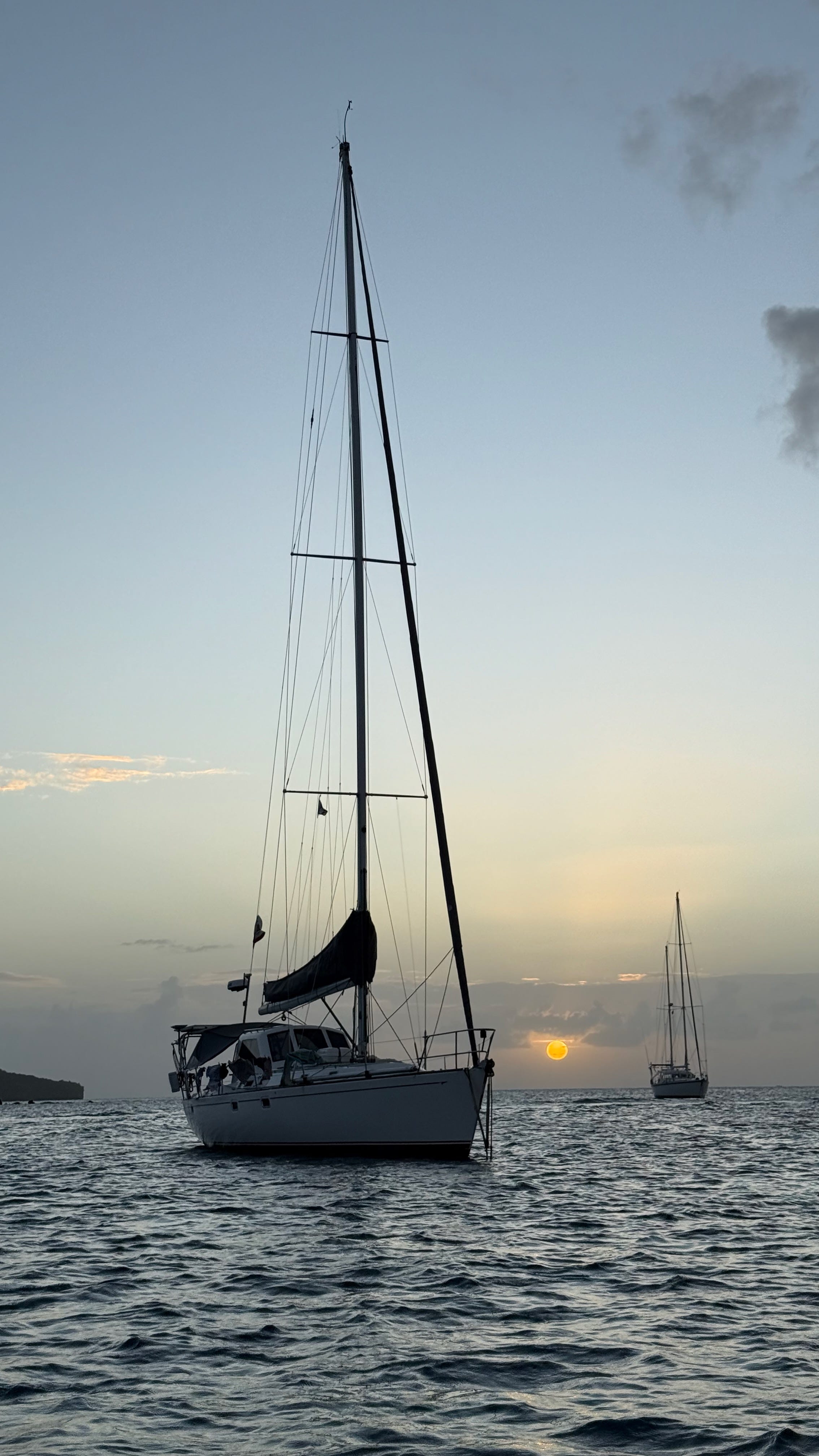
And then there was the sun. Peter managed to capture the surface of the sun from our boat while we were anchored. One of those moments when the light is just right and you happen to know how to create this kind of exposure!
Sharing Martinique with Suni and Lisa
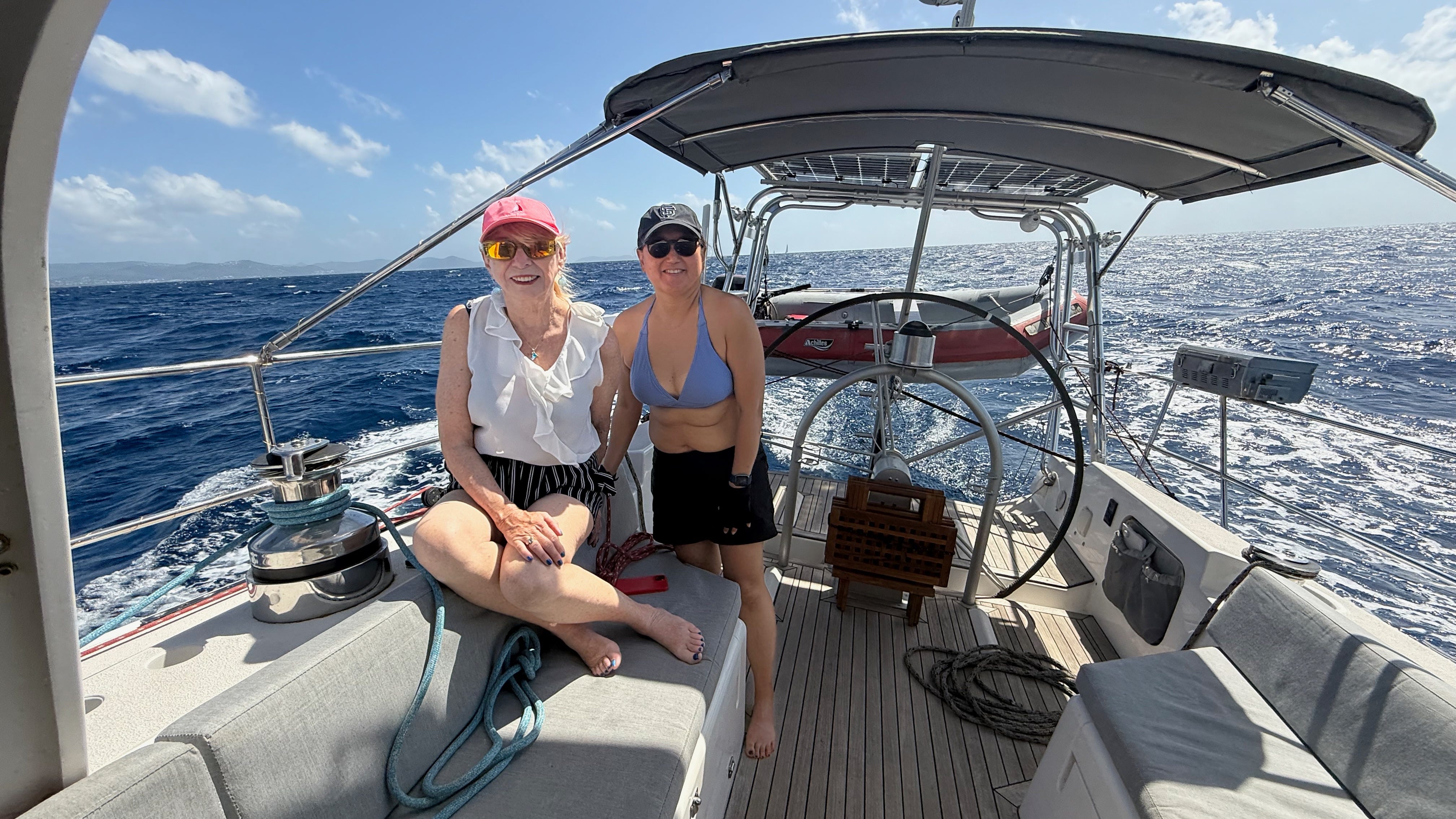
Finally, our guests arrived! Suni and Lisa were the lucky winners of a fundraiser at our yacht club, South Beach Yacht Club in San Francisco. Their winning bid was a stay aboard Salacia, and we were delighted to have them join us.
They wanted to experience different parts of Martinique while living aboard a sailboat, with a good mix of sailing, local culture, and exploring. We had a pretty good idea of where to take them.
We picked them up in Le Marin, and the following day we set sail north with the wind purposely behind us. It was a gorgeous day, with nearly perfect conditions. What a wonderful way to begin their sailing adventure!
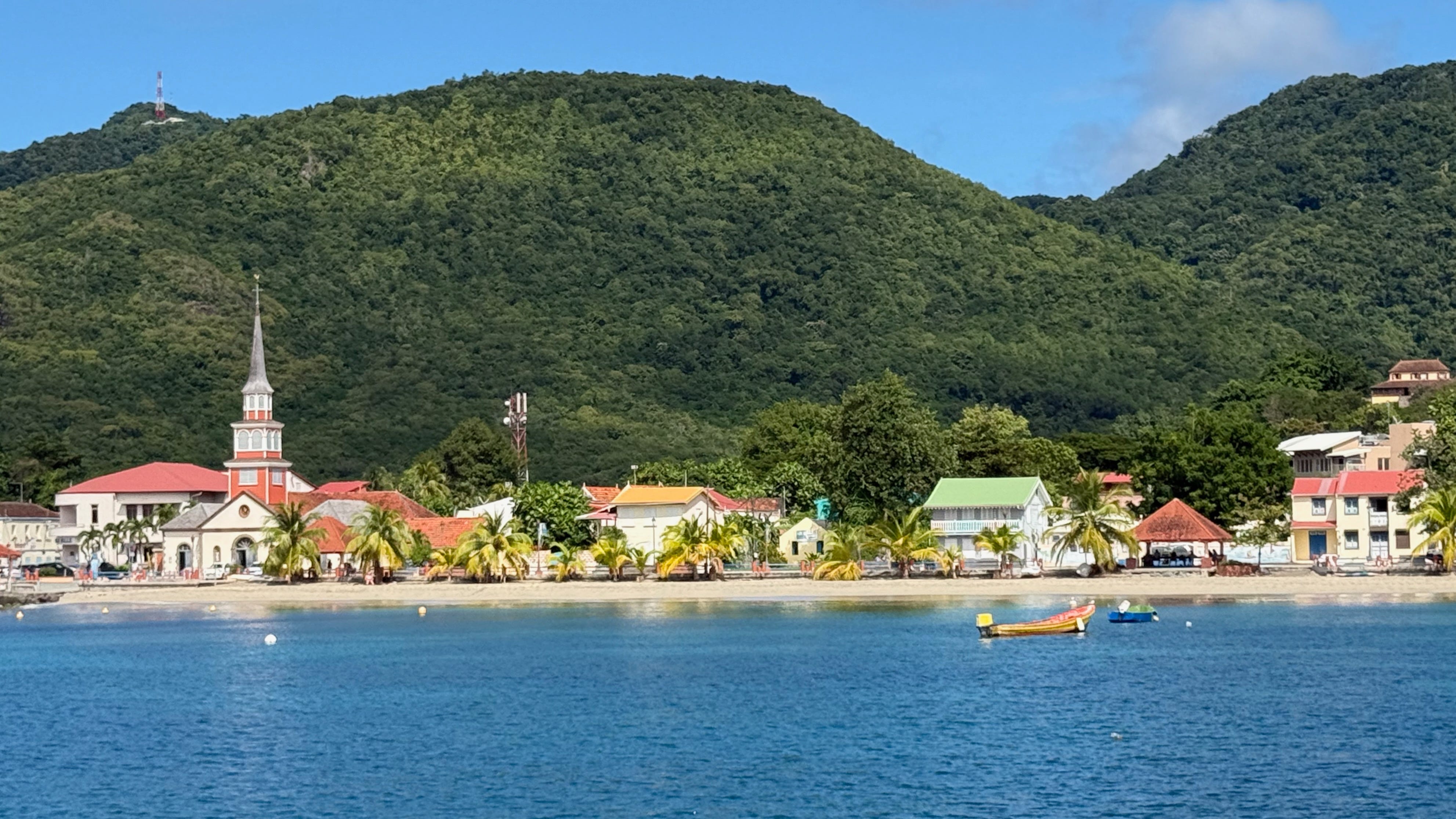
Our first stop, after a three hour sail, was a small anchorage called Les Anses-d’Arlet.
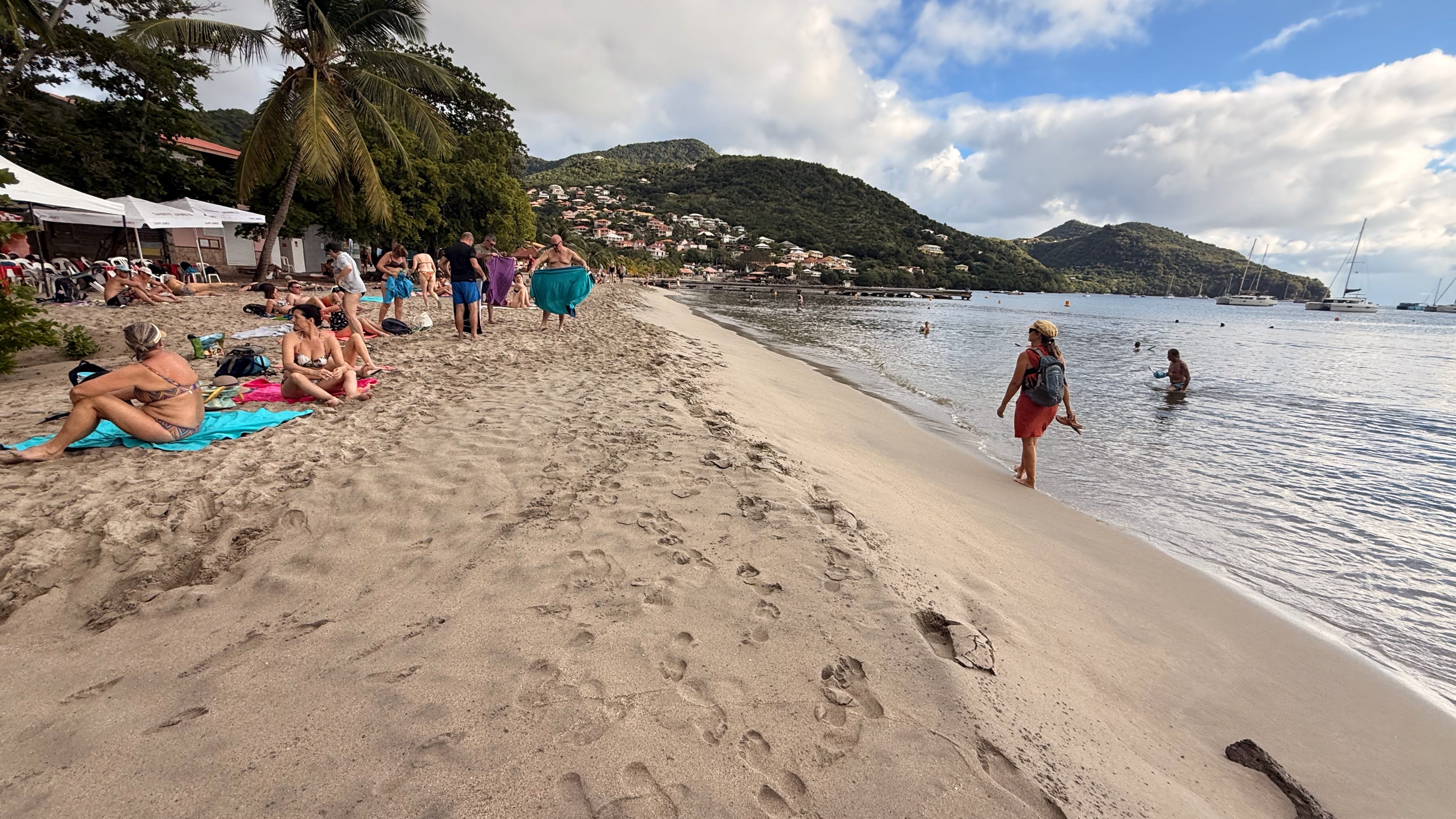
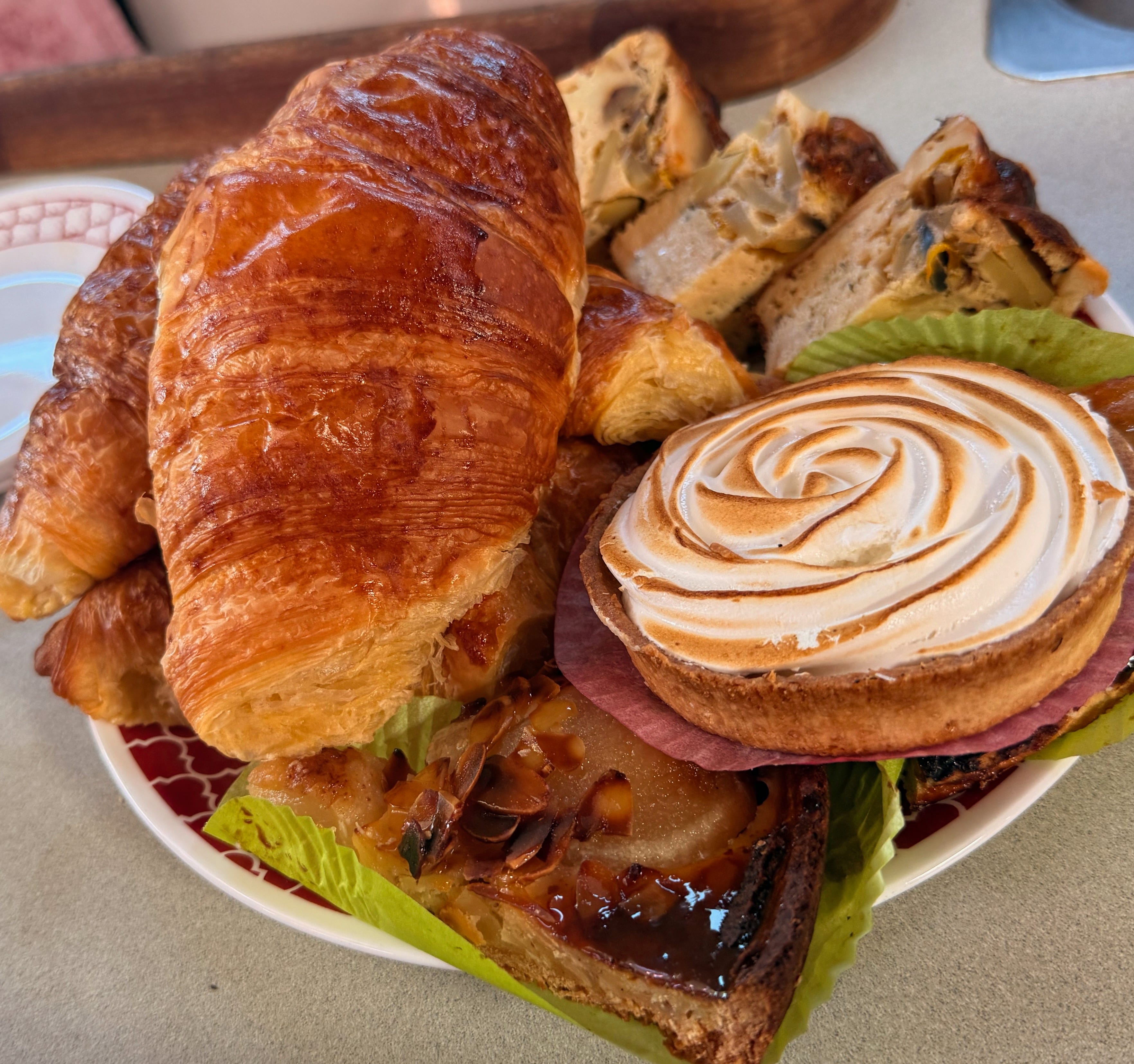
It has such a sweet, French village feel, with the beautiful Saint Henri church right in the center. There was a lovely beach, wonderful snorkeling, a really good French bakery, and plenty of Caribbean island charm. It was exactly the kind of place we thought Suni and Lisa would enjoy.
A Different Side of Martinique: Schœlcher
From there, we continued north with a rather sporty sail to Schœlcher, on the other side of the main bay near Fort-de-France. It was especially nice having two sailors aboard who genuinely love sailing and were happy to lend a hand. Having extra crew who enjoy being part of the sailing experience makes a big difference!
Schœlcher gave us a completely different perspective on Martinique. We were beginning to see more of the people who actually live and work on the island.
We tied up our dinghy at the end of the fishing pier and set off along the waterfront promenade toward the town center.
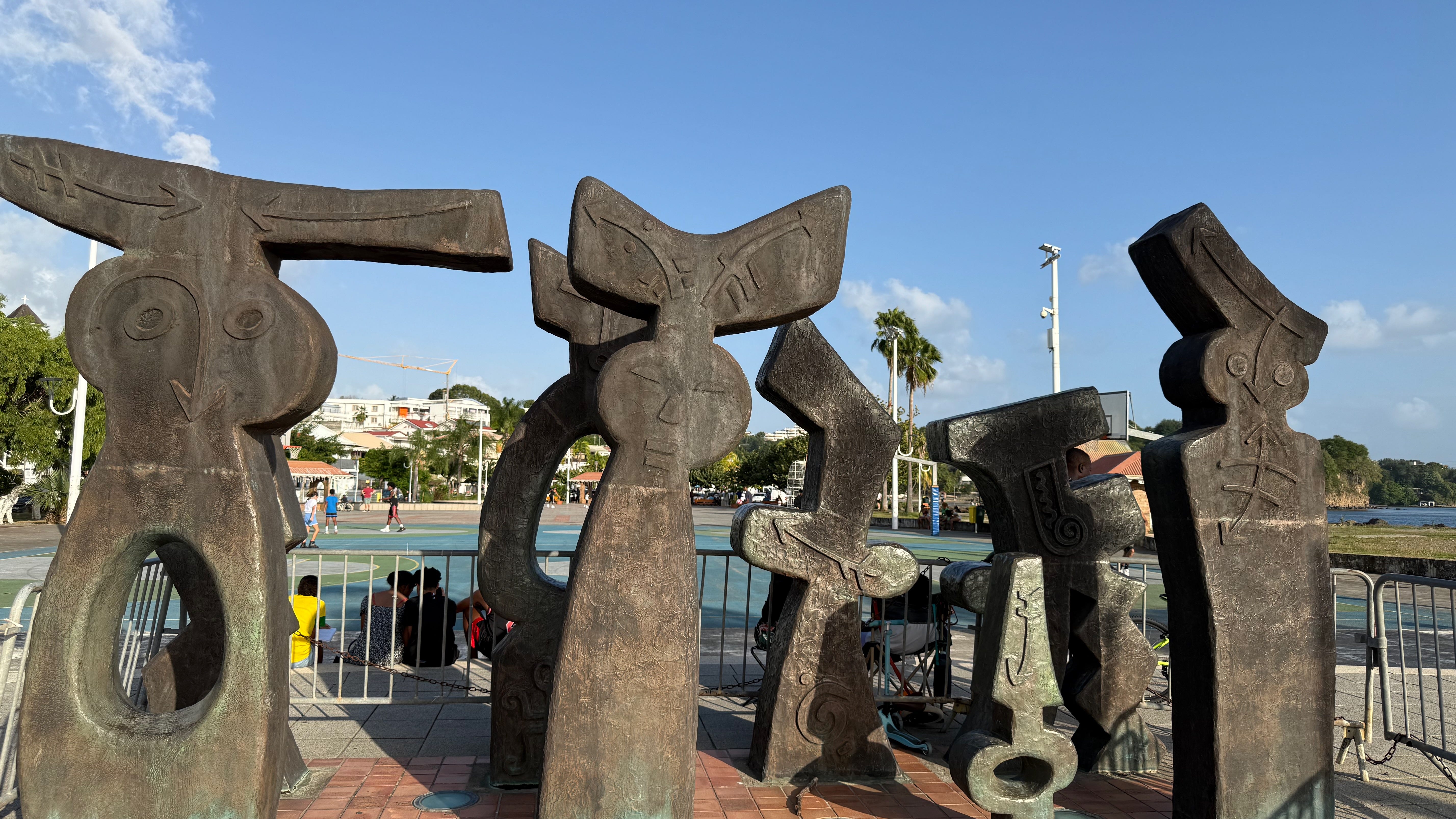
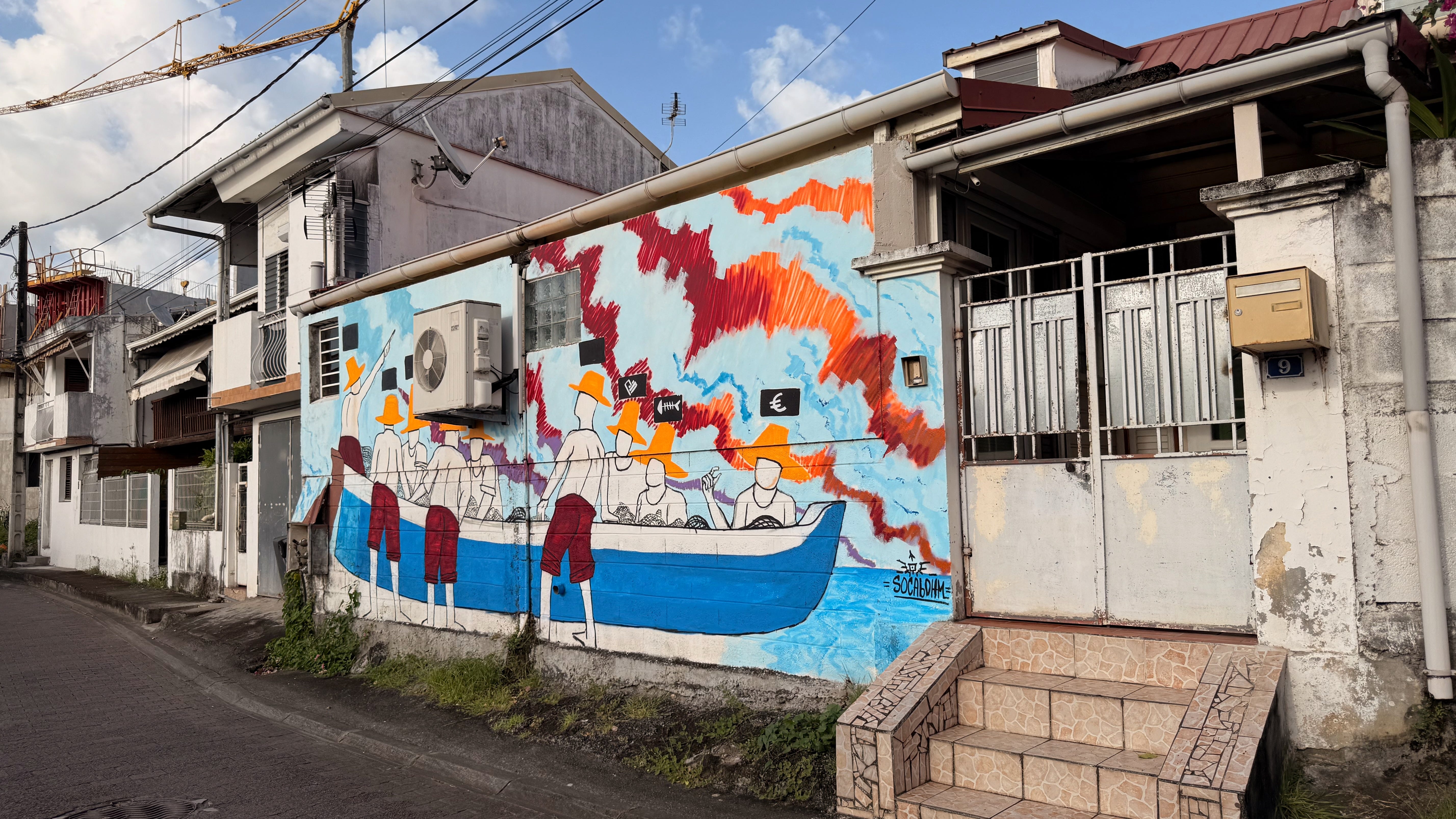
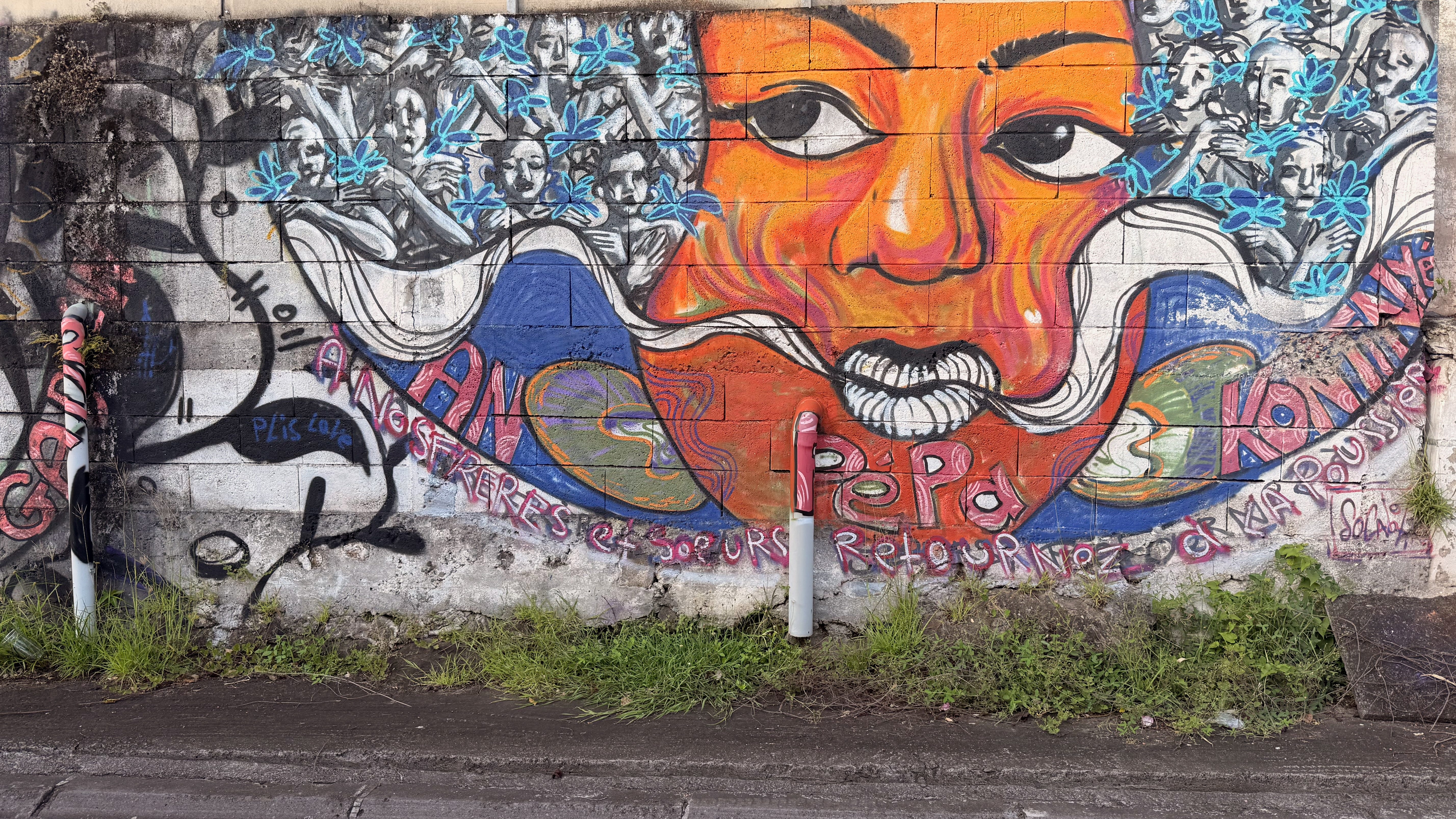
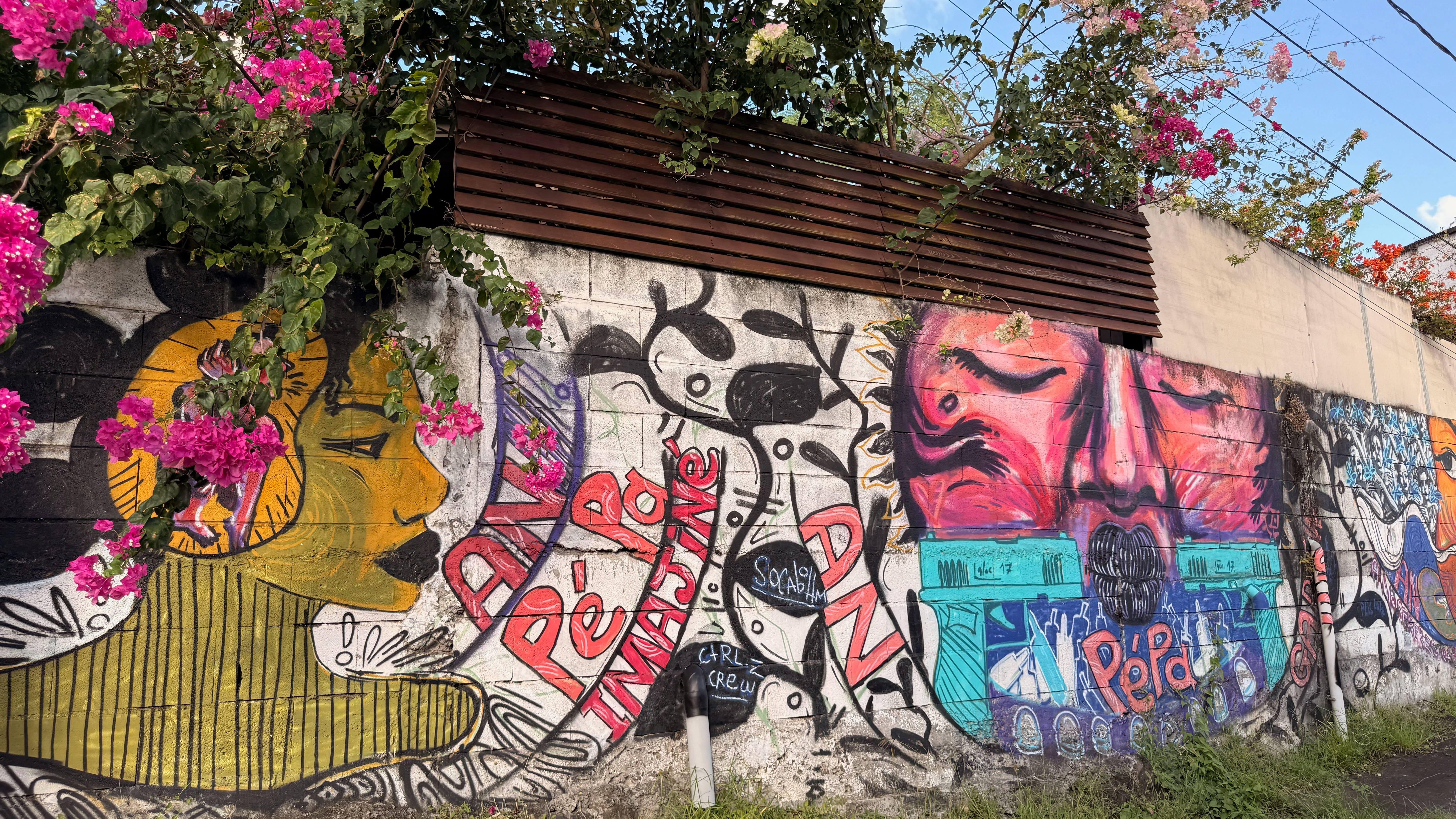
This part of the island felt much less touristy. There were families enjoying the beach, locals fishing off the pier, and colorful murals and sculptures scattered throughout the area. It gave us a much better glimpse into everyday Martinican life.
One thing we particularly loved was the drum circles that seemed to cross our paths. There was something wonderful about stumbling upon these gatherings. The rhythms, the people, and the energy gave us a little taste of the island’s cultural spirit.
It’s these kinds of unexpected discoveries that make traveling by boat so rewarding. You aren’t always following an itinerary or looking for a particular attraction. Sometimes the best experiences are the ones you happen upon.
A Little Road Trip Through Martinique
After visiting Schœlcher, we sailed back across the bay and anchored in Trois-Îlets. This gave us a convenient place to rent a car and take Suni and Lisa on a land excursion.
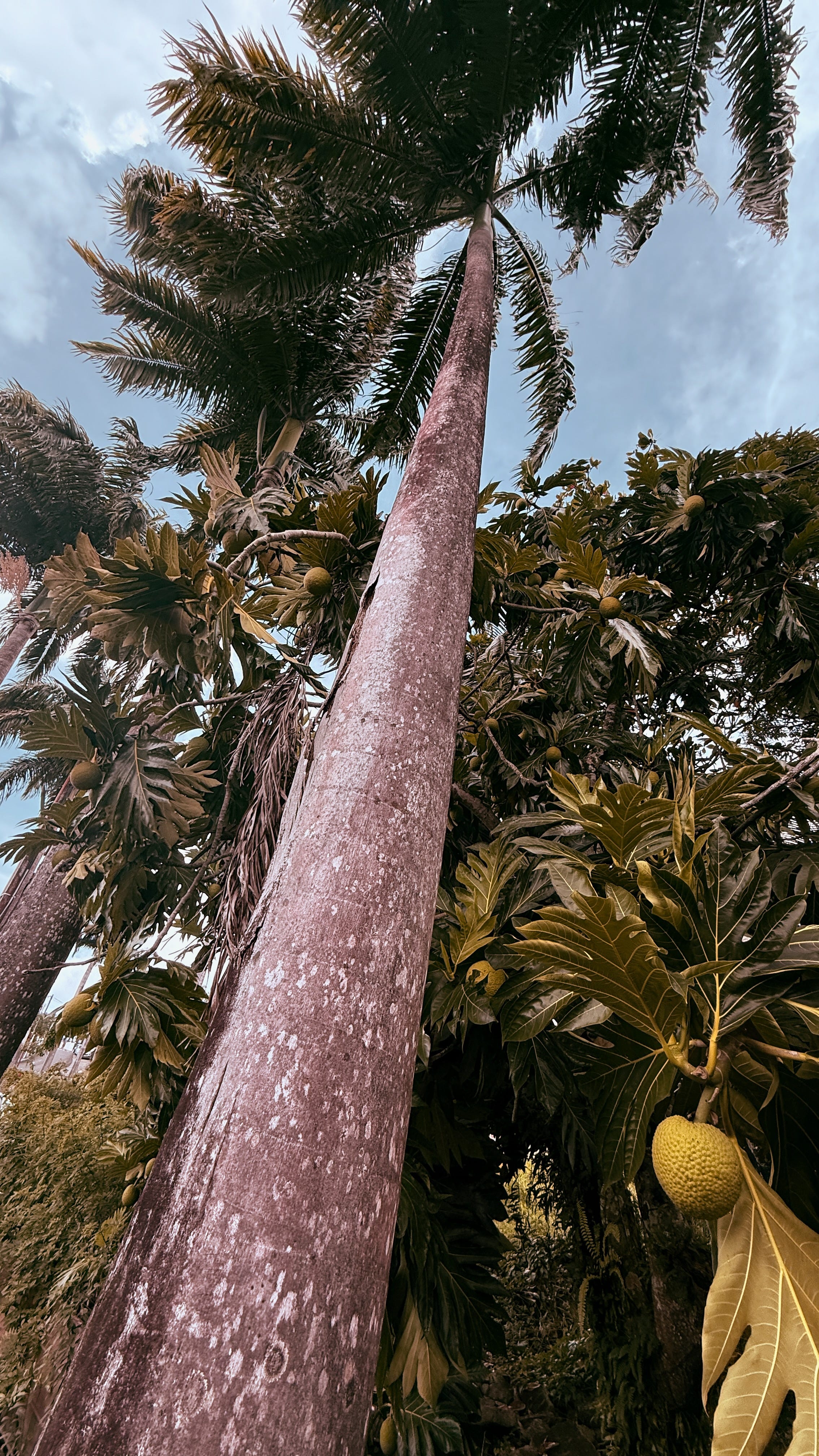
We wanted them to see another side of Martinique, beyond the coastline and villages we had been visiting by boat. The island has some spectacular tropical scenery, lush landscapes, beautiful gardens, and, of course, its famous rum heritage.
We drove north toward the Depaz rum distillery, located at the foot of Mount Pelée, the volcano that dramatically shaped the island’s history.
Before the distillery was built, Mount Pelée erupted in 1902, devastating the town of Saint-Pierre and the surrounding area. The eruption destroyed the original Depaz estate and claimed the lives of nearly everyone in Saint-Pierre. The story of the volcano and the rebuilding of the distillery is a fascinating part of Martinique’s history.
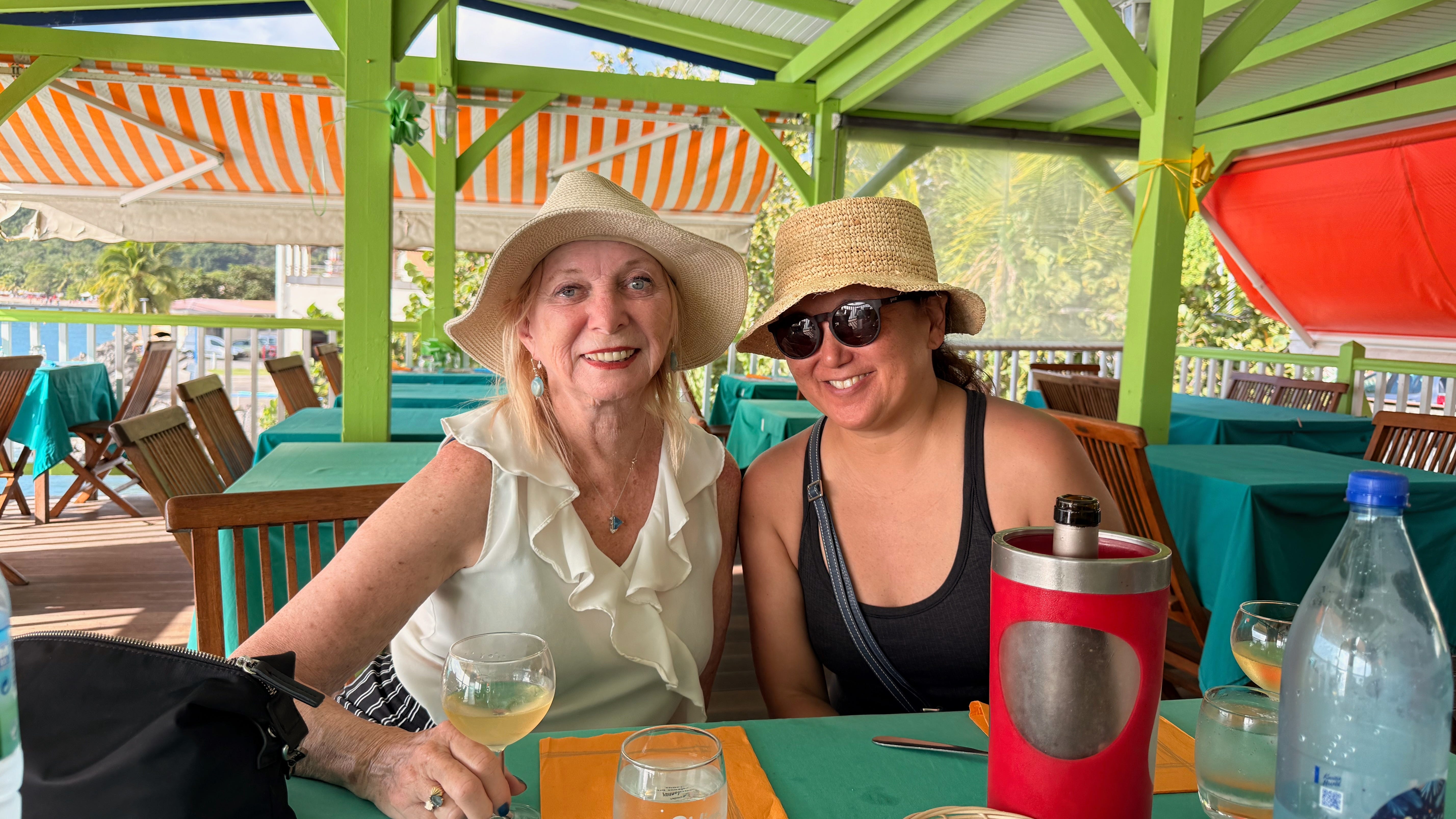
It was a wonderful way to round out Suni and Lisa’s visit, giving them a chance to experience some of the island’s interior and history as well as its sailing life.
After our land excursion, it was time to say goodbye. We had really enjoyed sharing our experience of Martinique with them and were happy that they got to see so many different sides of the island.
Reuniting with an Old Friend
We stayed anchored in Trois-Îlets while waiting for our friend Nicole, whom we affectionately call Coley, to arrive.
It was a nice spot to spend some time, with a beach nearby and cafés and laundry facilities within easy reach. Not a bad place to catch up on a few chores while waiting for company!
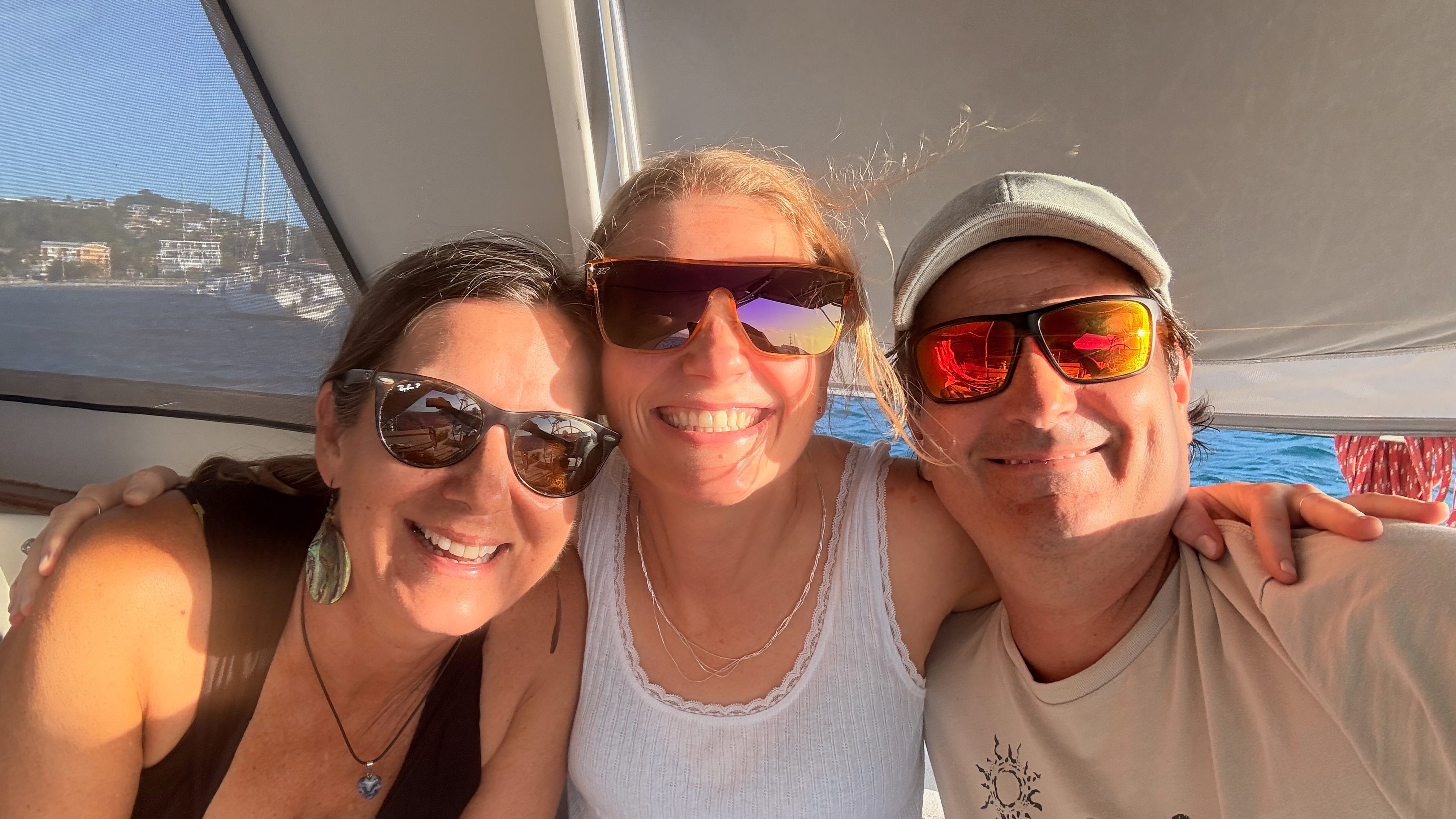
We were so happy to see Coley! Especially happy to welcome her aboard Salacia. We first met almost 20 years ago in San Francisco, and we were really looking forward to spending some quality time together on the water.
There are certainly worse ways to welcome a friend aboard! Naturally, we had to celebrate with a welcoming swim and some delicious French bakery treats!
Our plan was to sail together from Martinique to Dominica. We were looking forward to a more adventurous, wild experience, and Coley’s love of nature made her the perfect person to share this next part of the journey with.
Getting Ready for Dominica
Before we could leave Martinique, we needed to wait out another round of strong winds and take care of some logistics.
First, we sailed across the bay to Fort-de-France, where we had some paperwork to arrange so Coley could sail and then fly out of a different country later in her travels. We also needed to finish provisioning and get Salacia ready for the passage north.
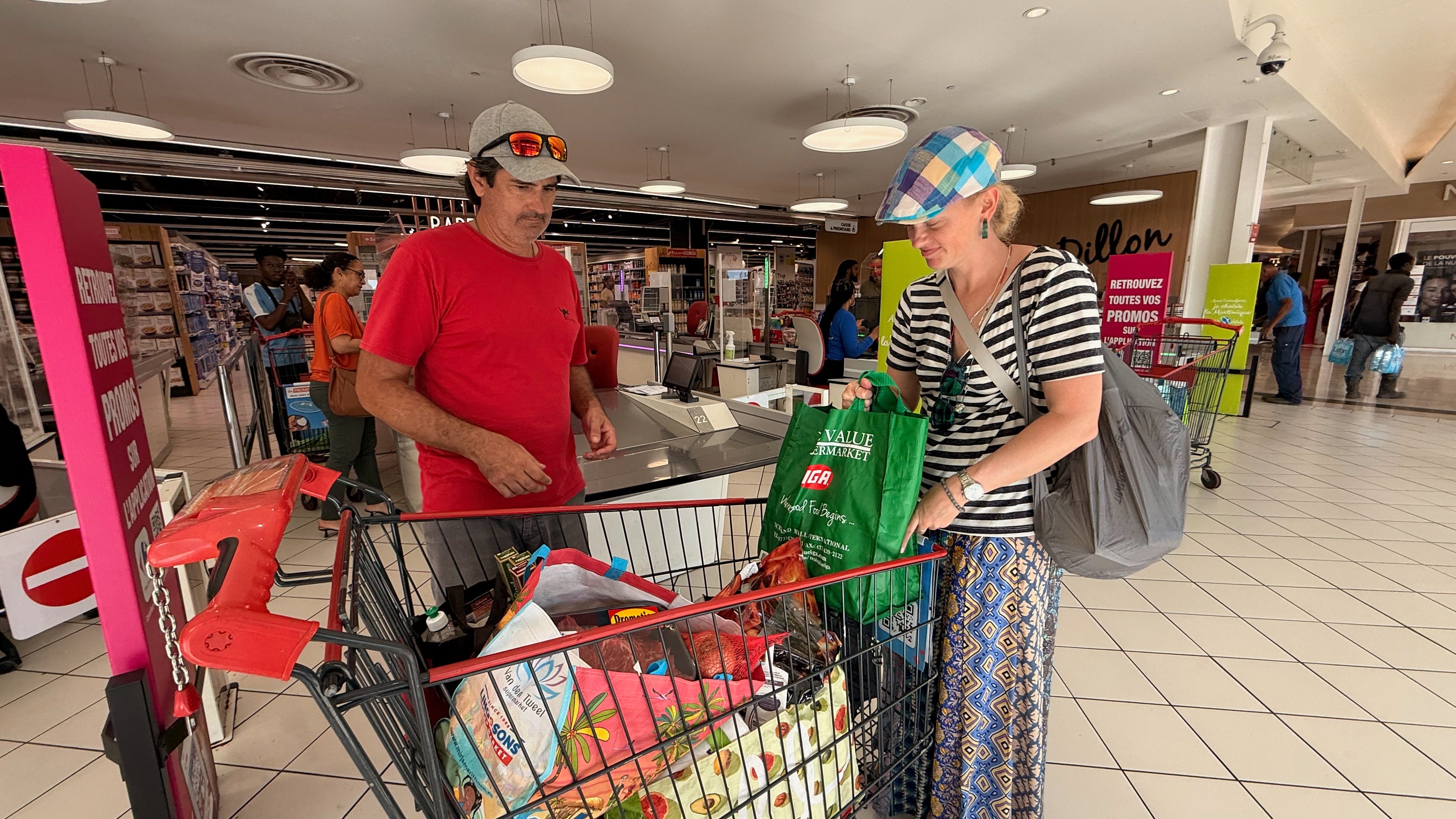
Of course, provisioning in Martinique had its advantages. We made sure to stock up on all the essentials, especially French cheese, bread, and wine!
We walked to a huge supermarché and then took a taxi back to the boat, loaded down with provisions. It was quite a haul, but we were ready to head off for our next adventure.
Saint-Pierre: A Lost Phone and a Weather Window
With everything aboard, we enjoyed a lovely sail out of Fort-de-France and headed north toward Saint-Pierre, which sits at the foot of Mount Pelée.
Saint-Pierre is a quaint fishing village with a spectacular backdrop. We anchored there to wait for the right weather window to make the crossing to Dominica.
Unfortunately, our arrival wasn’t without a little drama of a different kind.
That evening, just as the sun was setting, I managed to drop my cell phone into the water. Somehow I lost my footing, and the phone slipped out of my hand, bounced off the teak floor, and went straight overboard.
And just like that, it was gone. The water was about 30 feet deep!
The next day, we met a diver ashore who agreed to come back with us and help look for it. Coley had been searching the evening before, when the phone lit up underwater, and she remembered a detail about the seabed that helped narrow down the location.
Thanks to her sharp memory and the diver’s efforts, we actually managed to find it!
That was a huge relief, although it turned out to be a short-lived victory. Despite being recovered, the phone had stopped working. So, unfortunately, I have virtually no pictures of Saint-Pierre to share. A pretty expensive way to learn that phones and salt water don’t mix!
The Crossing to Dominica: When the Sea Had Other Plans
The passage between Martinique and Dominica has a reputation for being challenging, so we were watching the forecast carefully.
We finally chose a day with relatively low winds and short seas, thinking we had found a good weather window. Everything looked promising when we left.
What we didn’t anticipate was a very large squall. Squalls can be difficult to predict, and this one really kicked things up a notch. The seas suddenly became quite rough, with waves reaching around eight feet.
Things got intense aboard Salacia.
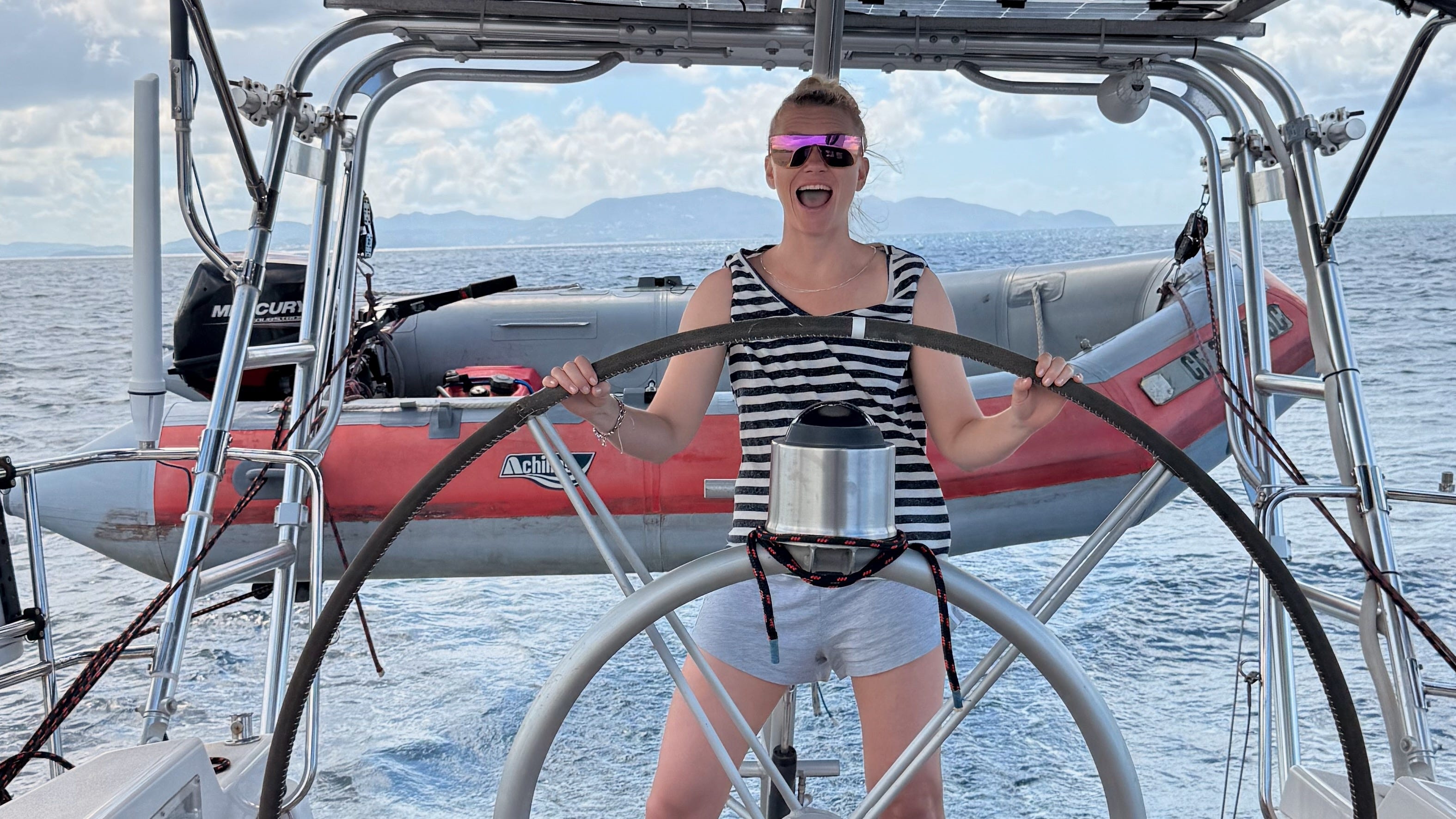
Peter took the helm while I went to get our life jackets. Getting Peter into his while he was simultaneously trying to steer through the increasingly rough seas was no easy task!
Salacia took off like a racehorse. The waves were big enough to make her slam hard as she came down, and Peter was doing his best to keep her on course. There were moments when waves actually broke over the cockpit, leaving water up to our ankles. Fortunately, the cockpit is designed to drain quickly.
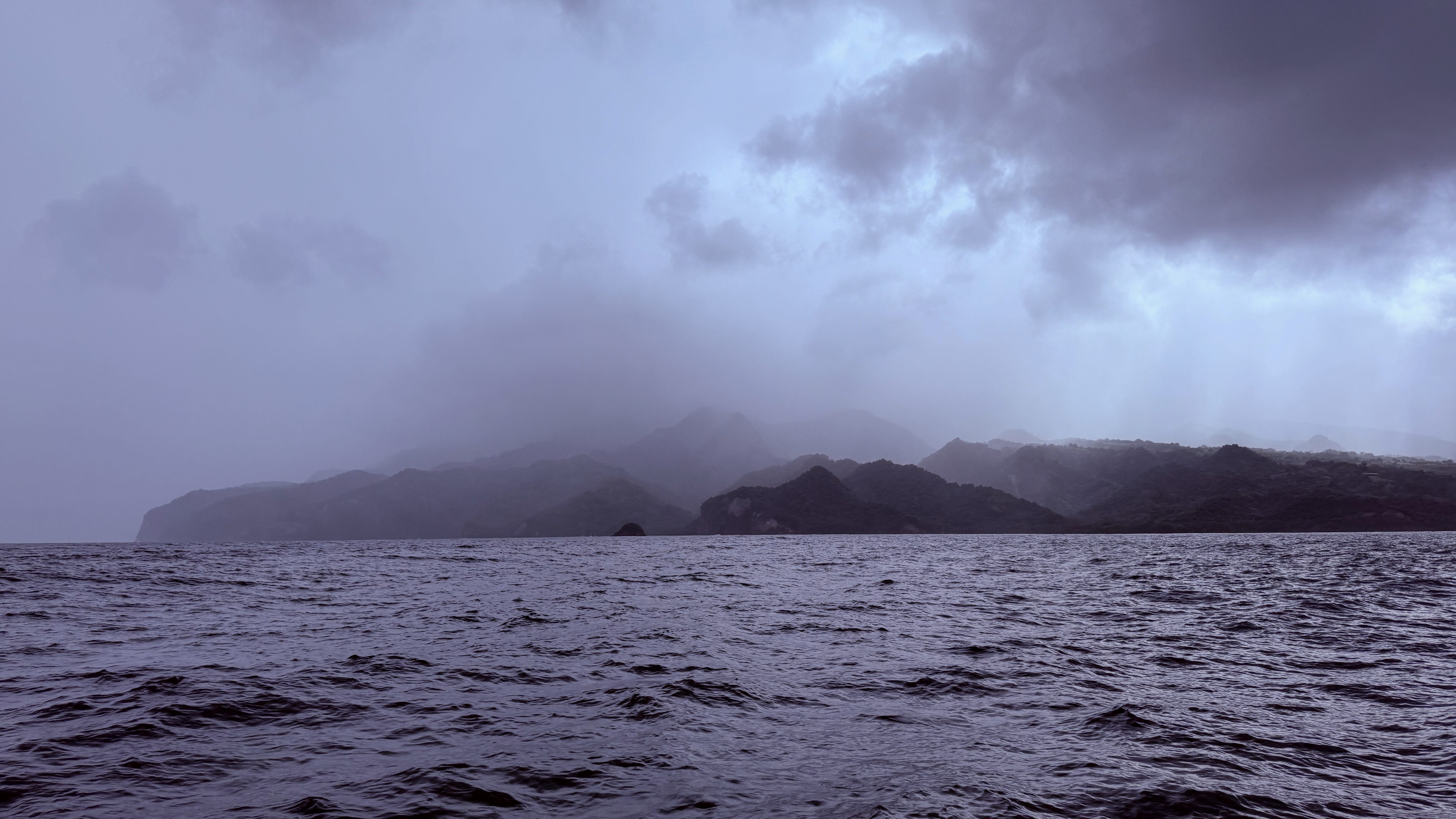
I have to admit, I was pretty scared. I was trying not to let it show because I didn’t want to frighten Coley, and I hope I was able to manage that.
Peter did an amazing job. He stayed calm and focused, concentrating on keeping everything under control and getting us safely through it.
I was especially grateful that we had decided to double-reef the sails before leaving. This might seem counterintuitive when the weather looks relatively calm, but it’s something we do before a longer passage. Reefing means reducing the size of the mainsail, and it’s much easier to do when conditions are manageable than when you’re suddenly dealing with a squall and rough seas. The downside is the boat ends up going slower which adds time to the passage.
Having less sail up was definitely the right decision when this one hit!
It’s one of those experiences that reminds you that no matter how carefully you plan, the sea always has the final say.
The Calm After the Storm
And then, just like that, once we got behind the island, everything calmed down.
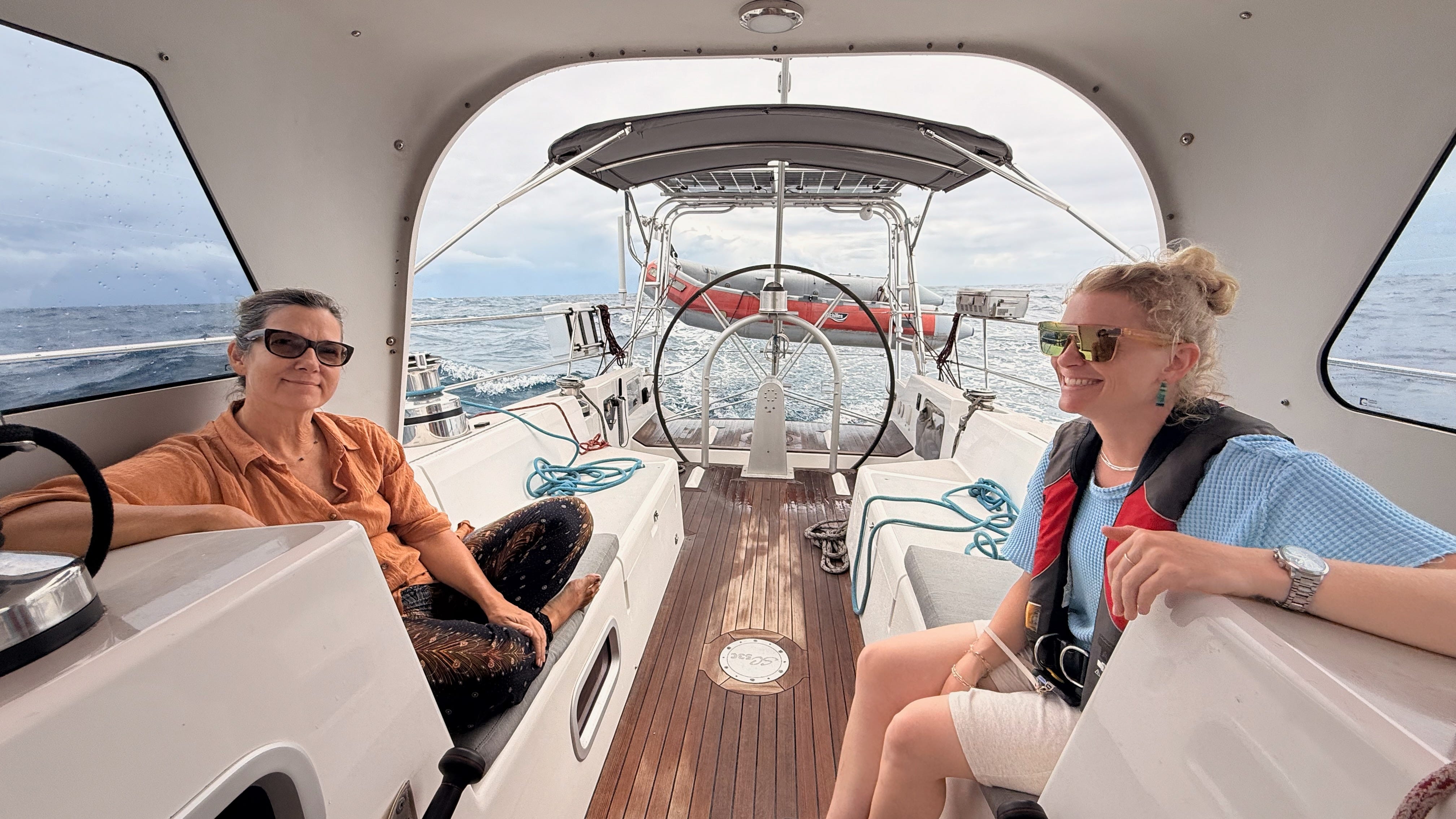
The seas became wonderfully peaceful, and you can see how relaxed we all look. It was such a contrast to what we had just experienced!
Well, almost everyone was relaxed. Coley was still wearing her life jacket!
I can’t blame her. It was quite a wild ride. And funny enough, wasn’t adventure and a little wildness exactly what we had signed up for?
We were just very happy to have made it safely to the other side.
Welcome to Dominica!
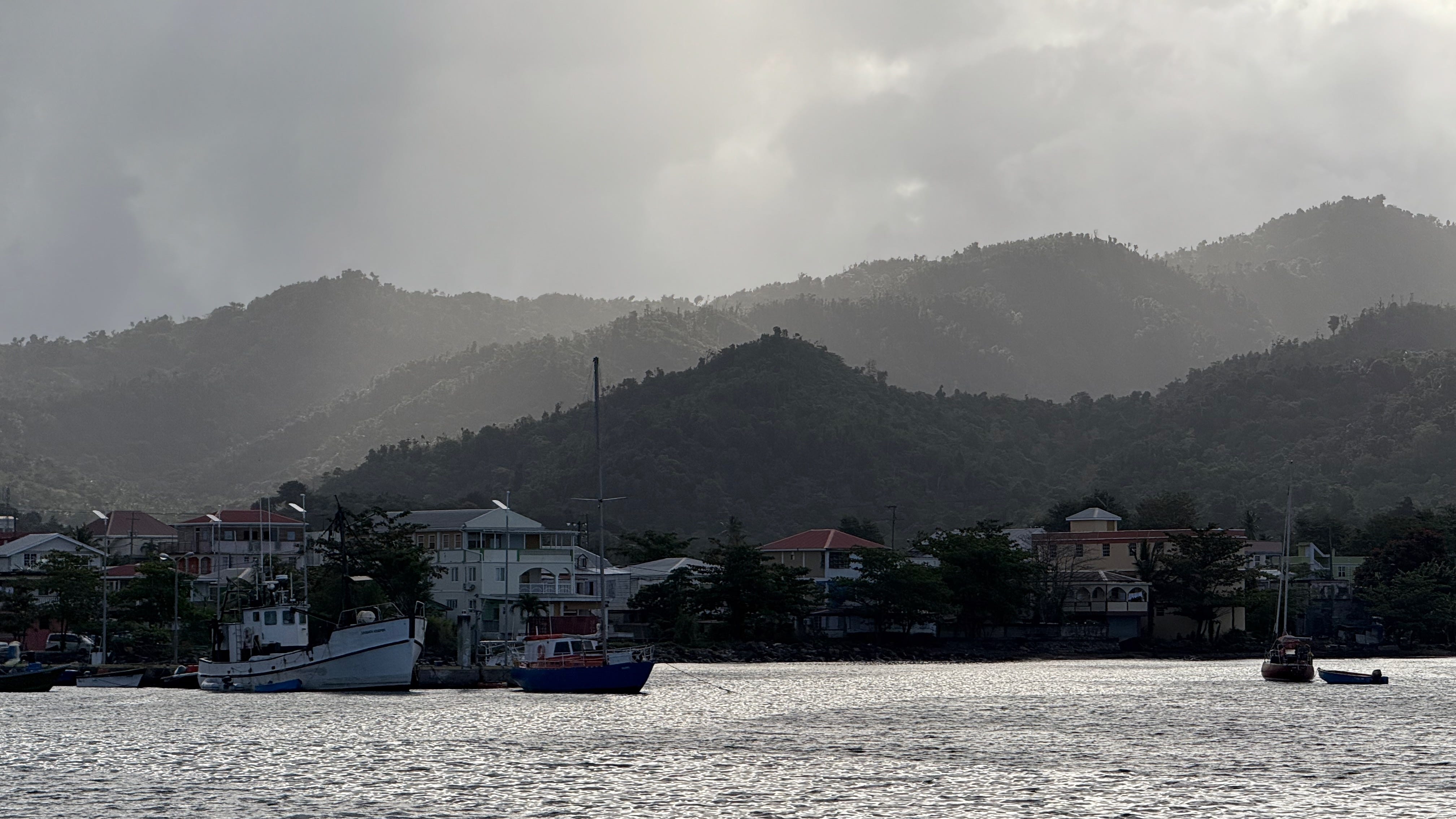
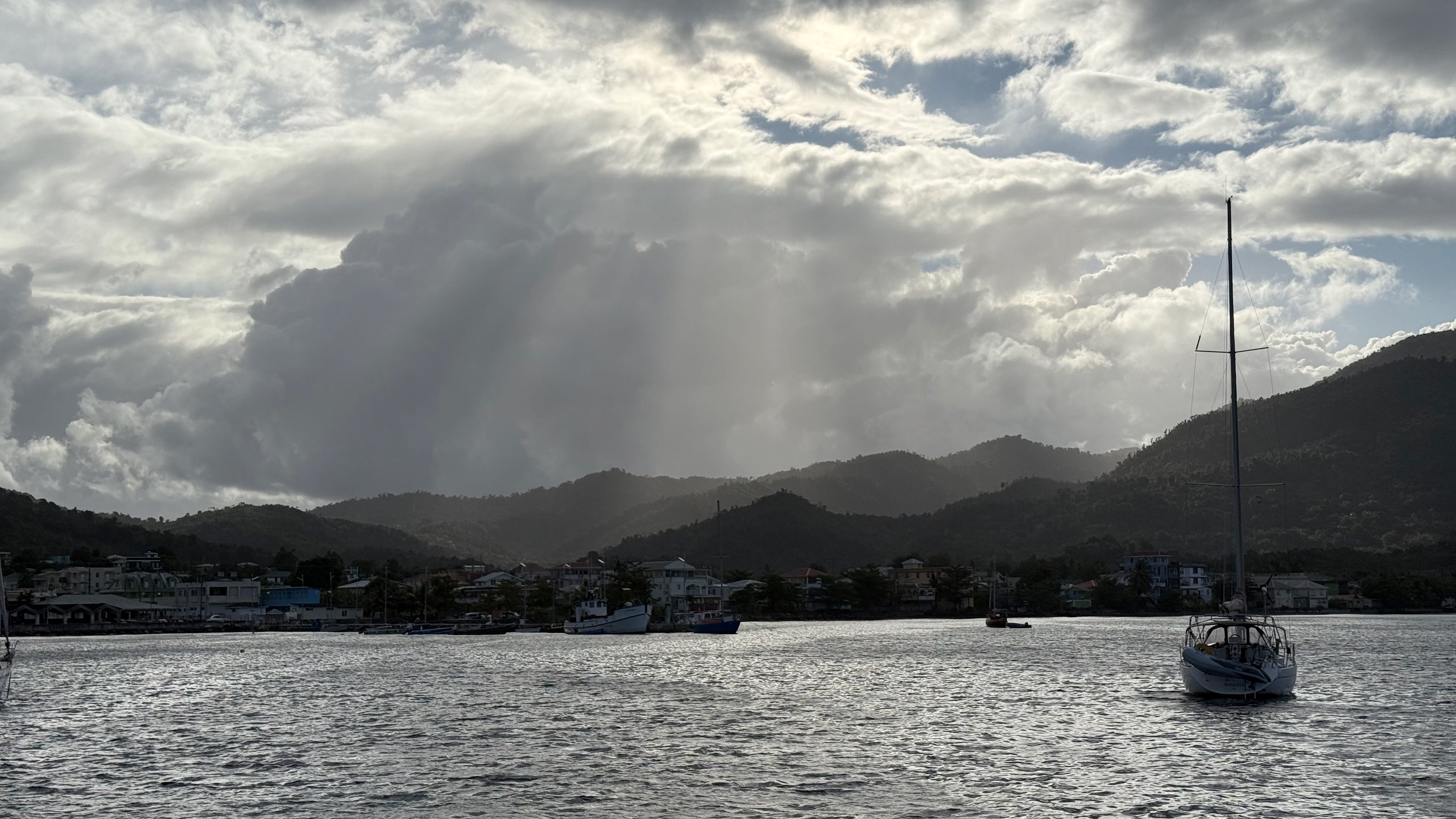
We continued north along the coast of Dominica and eventually made our way around to Portsmouth, where we anchored in a beautiful, expansive bay.
What a welcoming sight! The bay was filled with all sorts of boats, and there was an immediate feeling that we had entered a very different kind of cruising destination. Dominica has a reputation for being one of the wilder and more natural islands in the Caribbean, and we were excited to begin exploring.
Meet Titus, Our Guide to the Wild Side
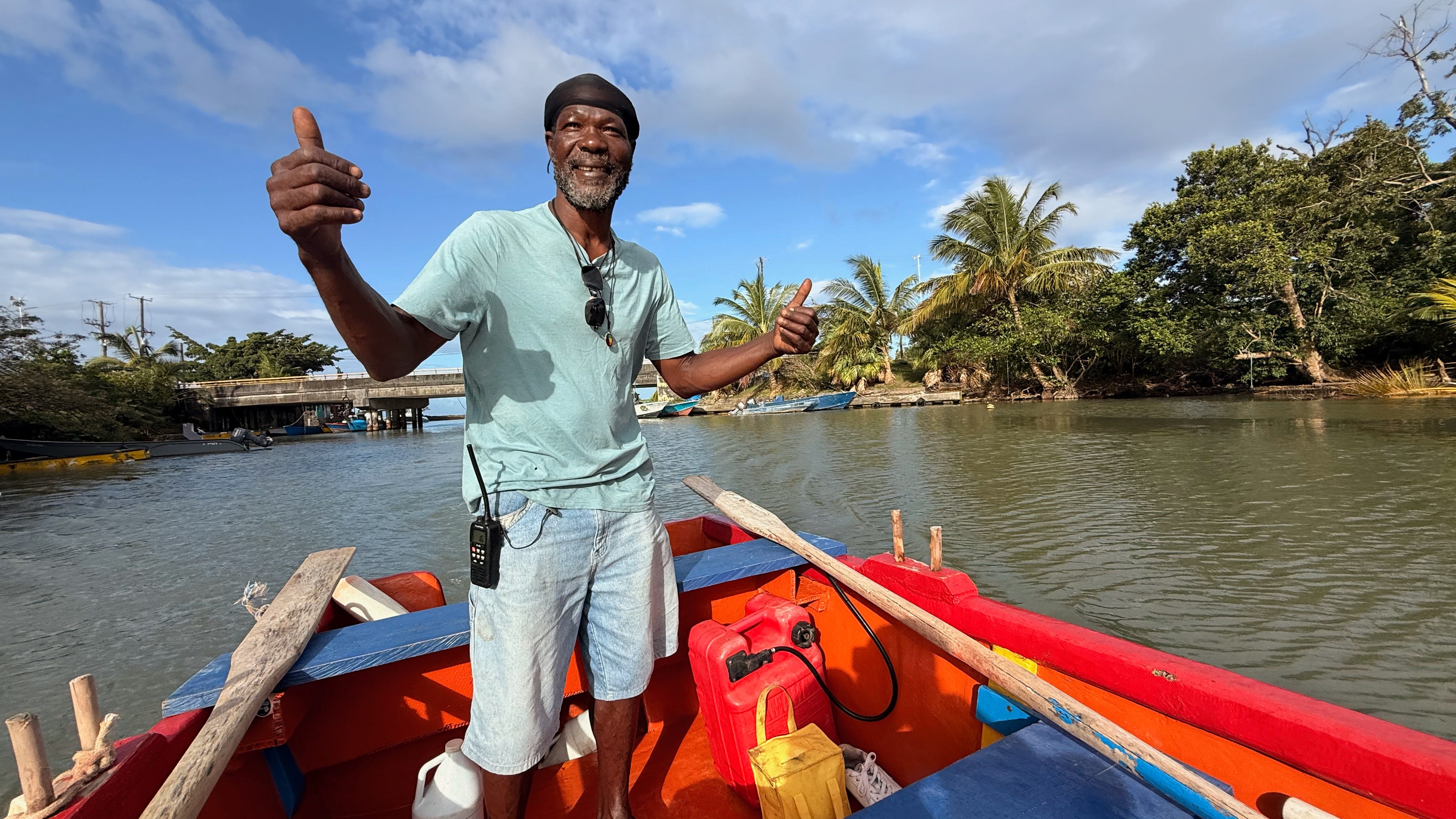
Soon after we anchored, a local boatman named Titus came over to introduce himself. He would become our guide to exploring this part of Dominica.
Dominica has an interesting system for welcoming visiting yachts. The local boatmen are organized through an official, self-regulated collective called PAYS, which stands for Portsmouth Association of Yacht Services.
Rather than having a chaotic swarm of competing boatmen approaching every incoming yacht, PAYS coordinates the service so that visiting boats are typically met by a designated representative. Titus was our representative.
And what a character he was!
Titus was free-spirited and enthusiastic, with just the right amount of peaceful island energy. He seemed to have an endless supply of knowledge about Dominica, particularly its indigenous plants, herbs, and native wildlife.
We immediately felt we were in good hands and were excited about all the different excursions he suggested.
Our first adventure would be a boat tour of the Indian River, which flows out into Prince Rupert Bay. The river is famous for its lush tropical vegetation, colorful birds, reptiles and was also one of the filming locations for Pirates of the Caribbean.
But that was just the beginning.
The next adventure Titus proposed was an eight-hour rugged hike to Boiling Lake, one of Dominica’s most famous natural wonders.
We had absolutely no idea what we were getting ourselves into!
Stay tuned. The real adventure in the wild terrain of beautiful Dominica is just beginning!